Xiaomi Launches 38-Billion-Parameter Embodied Model, Boosting Efficiency by 82.9 Times
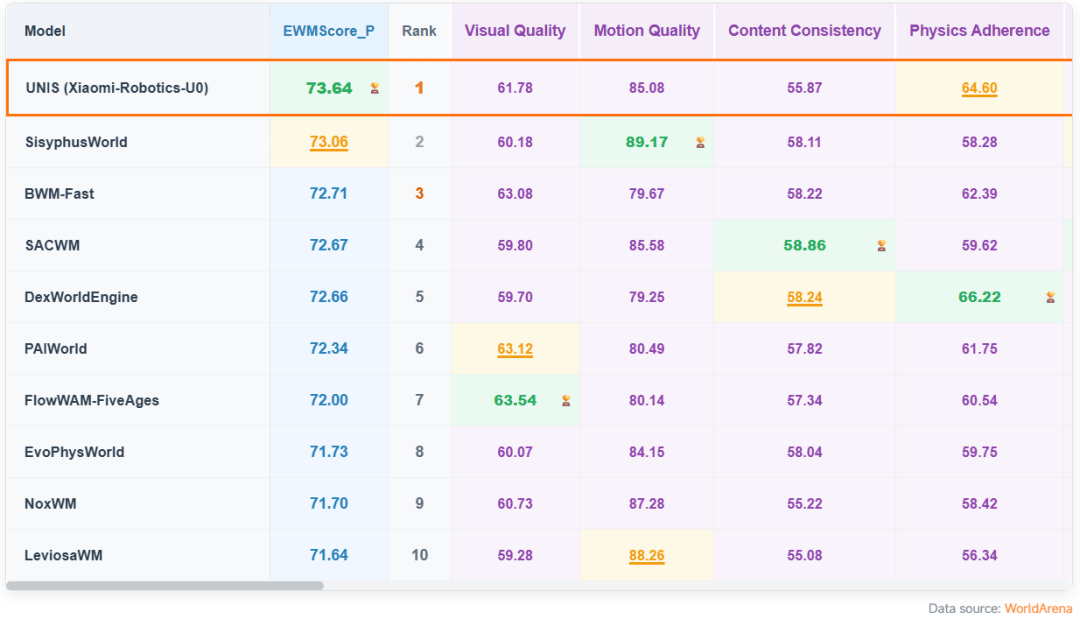
en.Wedoany.com Reported - On July 15, Xiaomi officially launched Xiaomi-Robotics-U0, an autoregressive world foundation model with 38 billion parameters. This is the first unified embodied generative model that combines an image generation foundation model with embodied world modeling, ranking first in embodied video generation on World Arena and achieving an average task completion progress improvement of over 26% in challenging real-robot evaluations.
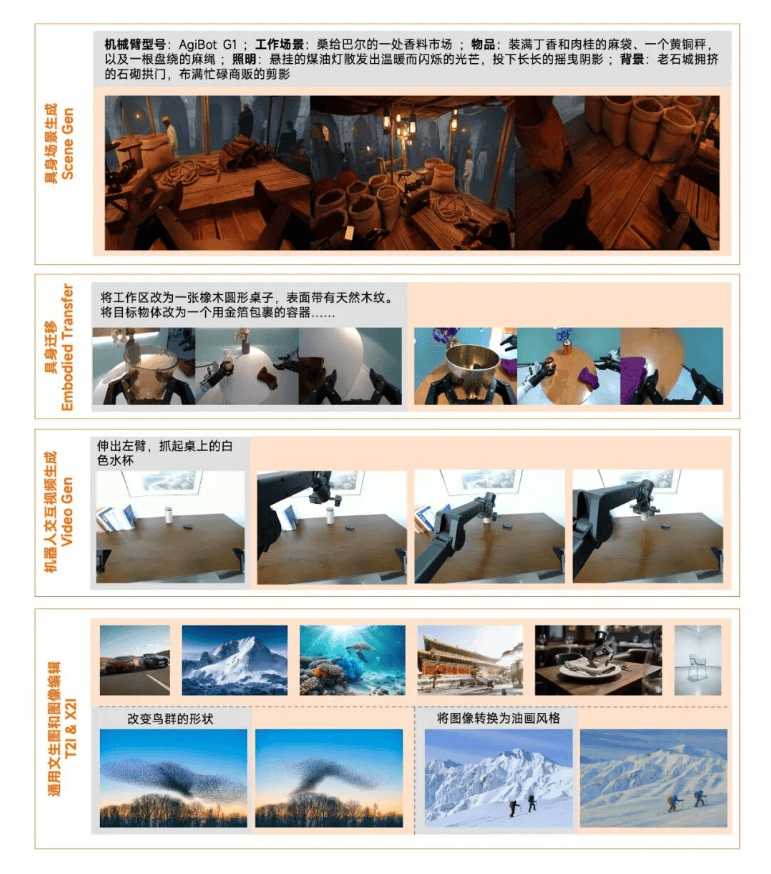
Unlike traditional embodied world models trained solely on robot trajectories, Xiaomi-Robotics-U0 unifies multi-view embodied scene generation, embodied transfer, robot interaction video generation, general text-to-image, and image editing within a single autoregressive framework. The model treats embodied generation as an extension of foundational image and video generation, directly generating multi-view robot observation data that adheres to physical laws based on language instructions.
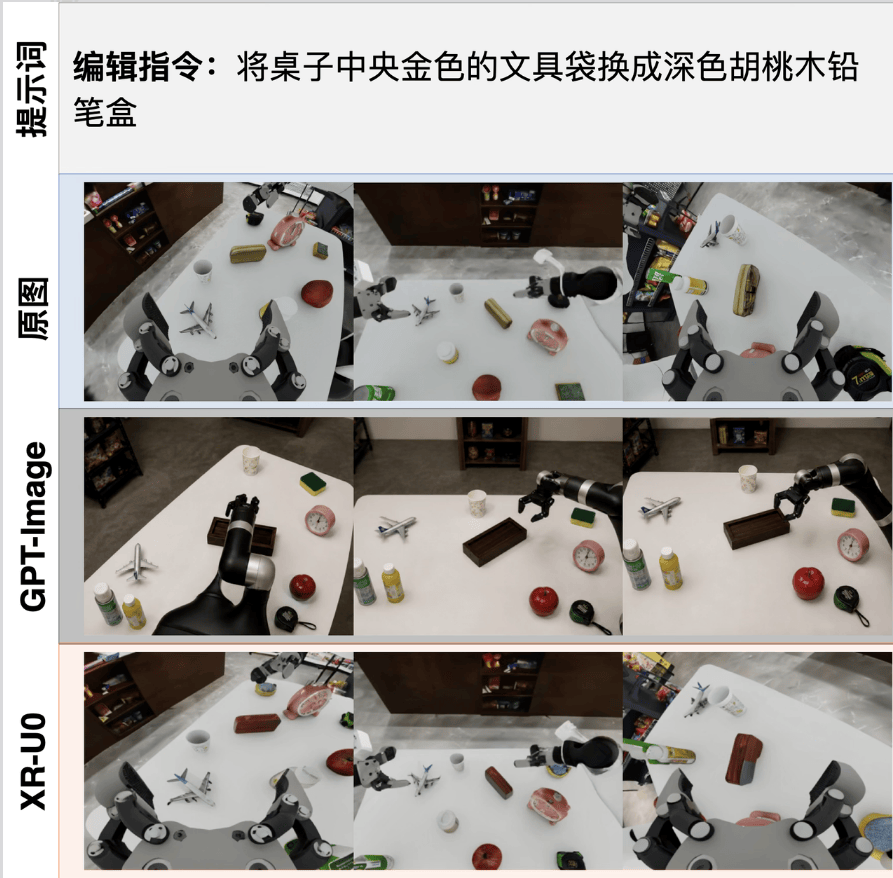
In embodied scene generation, the model supports multi-view generation. In embodied transfer, Xiaomi-Robotics-U0 can migrate existing scenes to new scenes while preserving robot interaction behaviors, achieving exponential scene expansion by decoupling dimensions such as workspace, background, and lighting. In robot interaction video generation, the model predicts future interaction processes based on initial observations and operation instructions, supporting scene scrolling and multi-view prediction with zero-shot generalization capabilities.
In general text-to-image and image editing, Xiaomi-Robotics-U0 retains relevant capabilities, enabling high-fidelity visual synthesis across scenes, targets, and styles, and supporting instruction-following editing that maintains structure while altering intent.
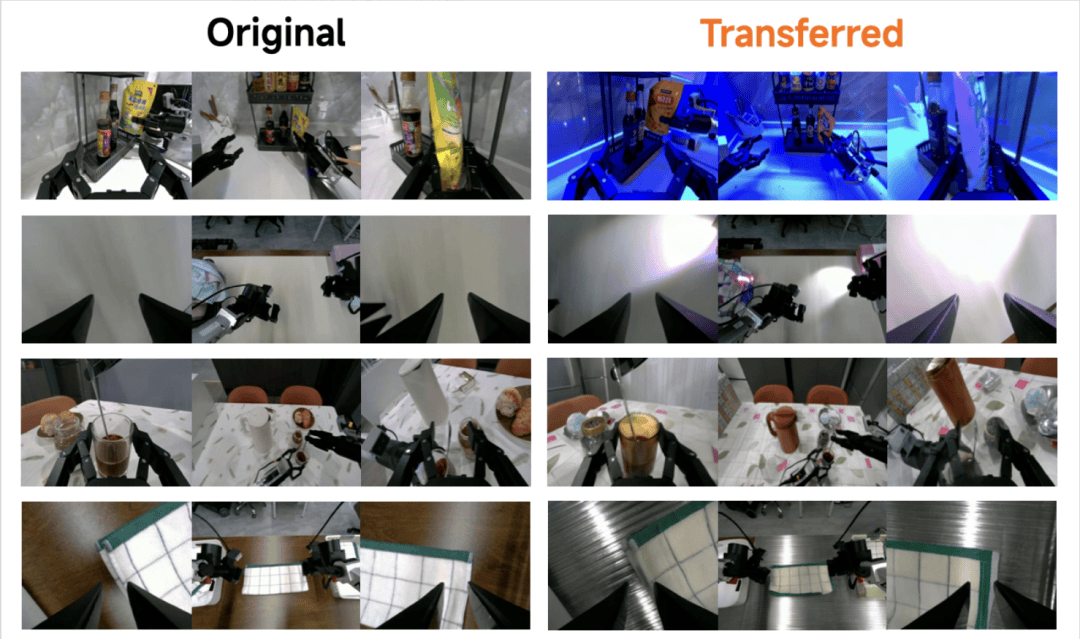
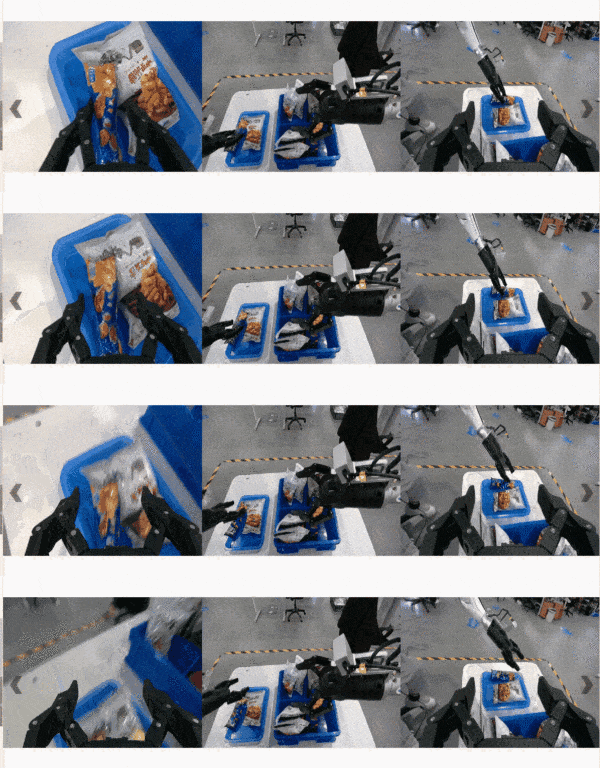

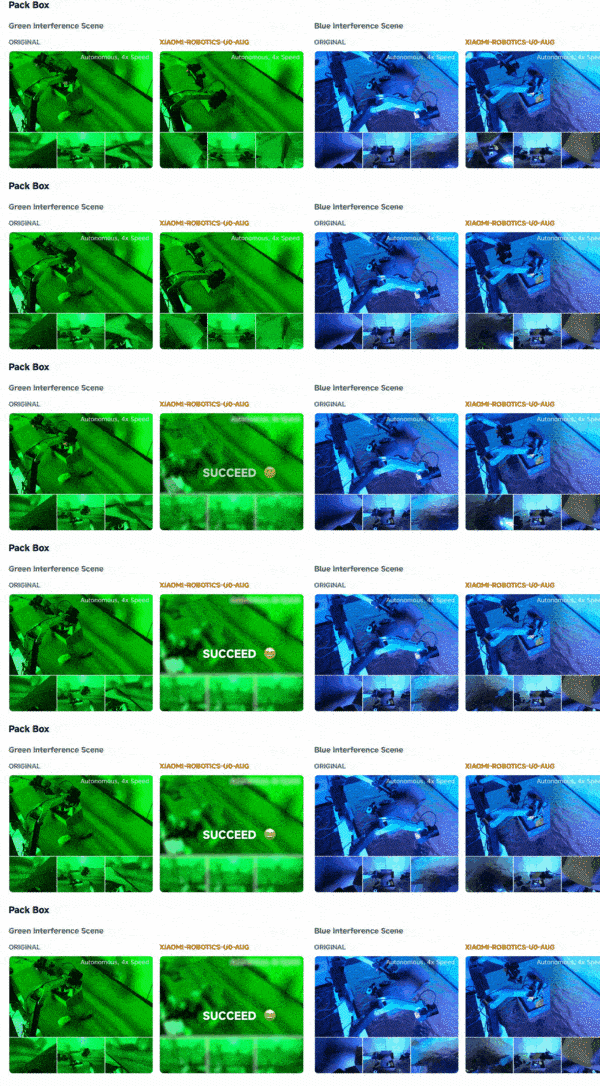
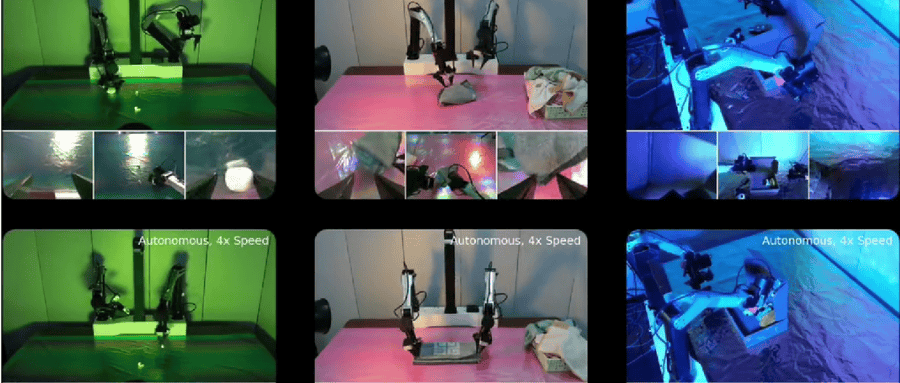
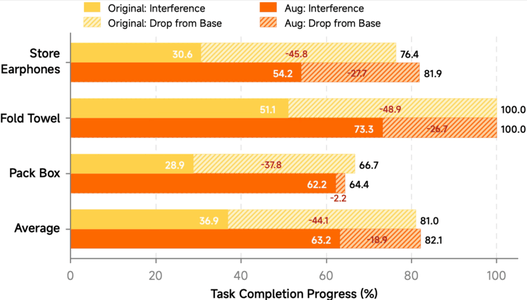
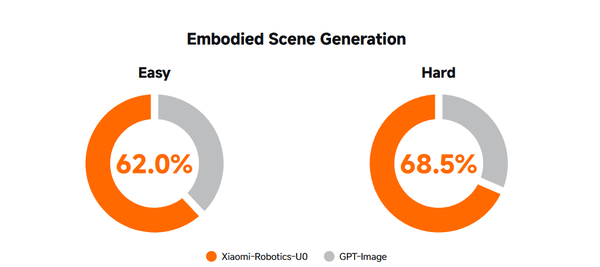
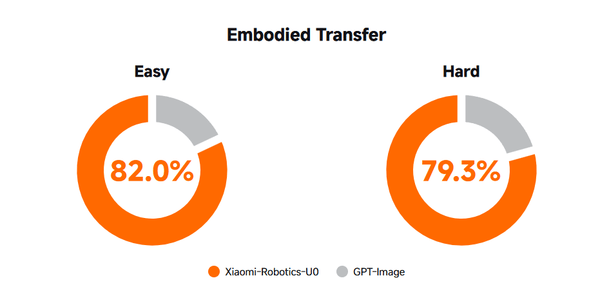
In human evaluations, Xiaomi-Robotics-U0 outperformed GPT-Image-2.0 in embodied scene generation and embodied transfer. In fine manipulation, deformable object handling, and long-horizon tasks, strategies trained with data augmented by this model achieved an average task completion progress improvement of 26.3% under unknown lighting and unfamiliar background interference. Compared to GPT-Image-2, Xiaomi-Robotics-U0 demonstrated significant advantages in multi-view consistency, fine-grained controllability, and transfer robustness, effectively avoiding cross-view object misalignment and spatial distortion issues.
On the World Arena benchmark jointly developed by Tsinghua University, Peking University, and others, Xiaomi-Robotics-U0 ranked first among over 100 models, achieving the highest scores in controllability, instruction following, and interaction quality.
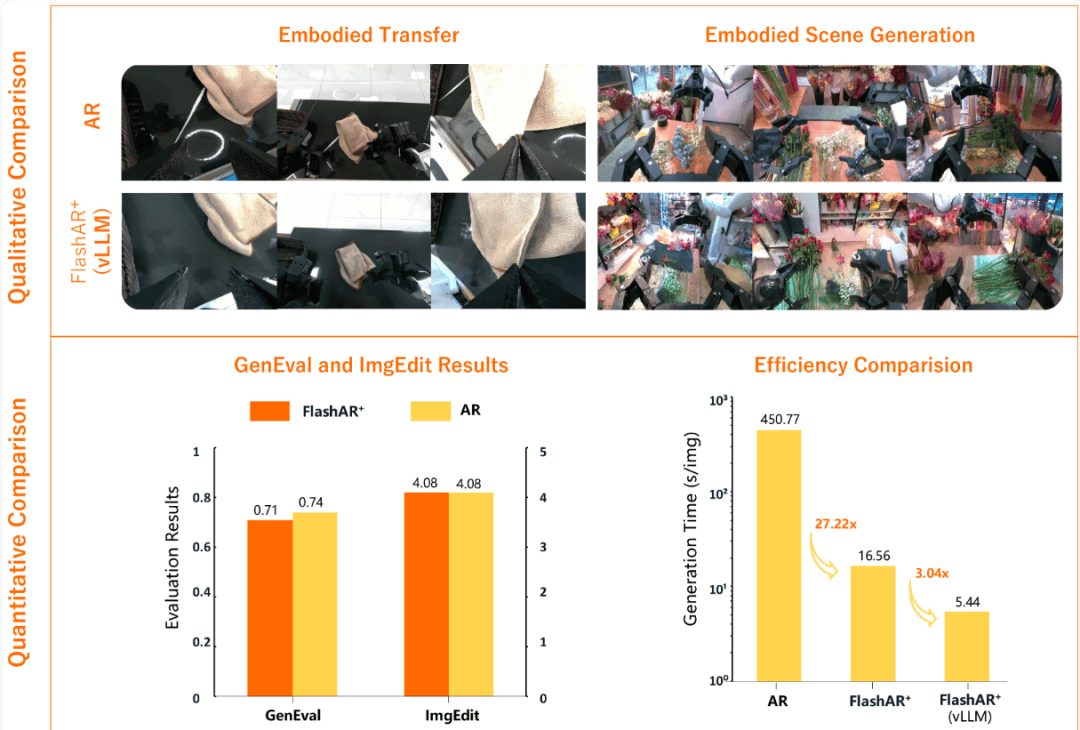
Xiaomi also introduced the FlashAR+ inference acceleration solution. Through lightweight post-training processing and vLLM technology, combined with diagonal parallel decoding and paged key-value cache batch scheduling, the single-sample generation time at 1024*1024 resolution was reduced from 450.77 seconds to 5.44 seconds, achieving an 82.9-fold efficiency improvement.
In actual deployment at Xiaomi's automobile factory, Xiaomi robots have been performing tasks at self-tapping nut installation stations, achieving a bilateral operation success rate of 98%, and reaching a 90% success rate in center console side cover sorting and bin folding and recycling tasks.
The core breakthrough of Xiaomi-Robotics-U0 lies in transferring internet-scale visual knowledge to embodied scenarios, changing the traditional approach of relying solely on robot trajectory data for fine-tuning, and providing a new technical direction for building scalable data engines for embodied intelligent systems.
Related Products




MUX Series Communication Interface Device for Security and Stability Control System
Nanjing NR Electric Co., Ltd.


Mine Explosion-proof and Intrinsically Safe Industrial Ethernet Ring Network (10 Gigabit/Gigabit)
Chongqing Mas Sci&Tech Co., Ltd.

20 Inch 1600*900 Full HD 60Hz TFT LED Monitor with VGA and DP Interfaces for Desktop Computers-Business Use
Guangzhou Zanying Optoelectronics Technology Co., Ltd.