China UWorld Unveils 10 Bespoke Haute Couture Outfits for Humanoid Robots
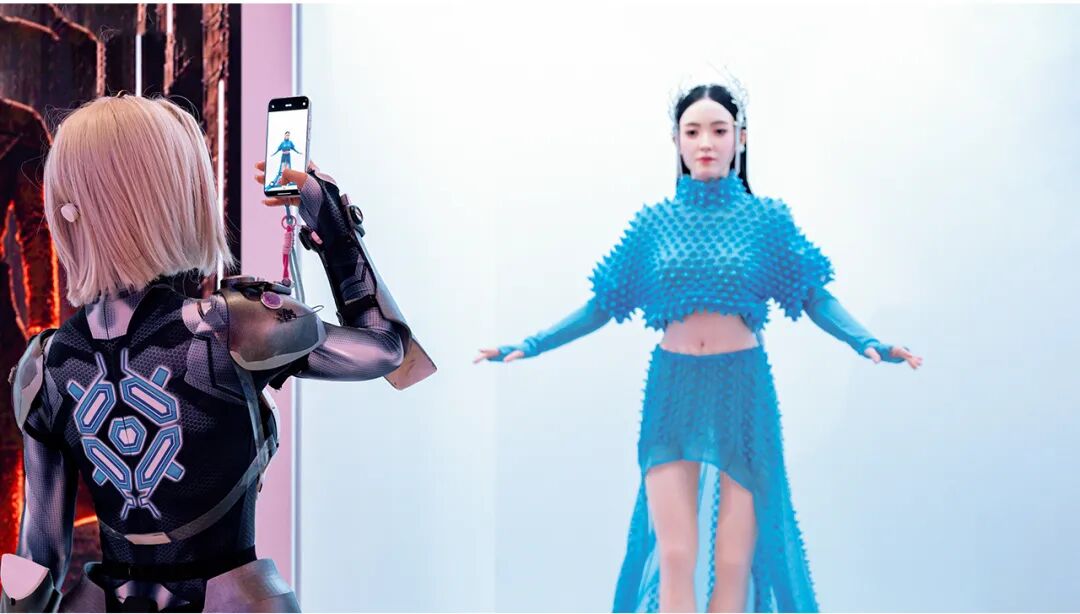
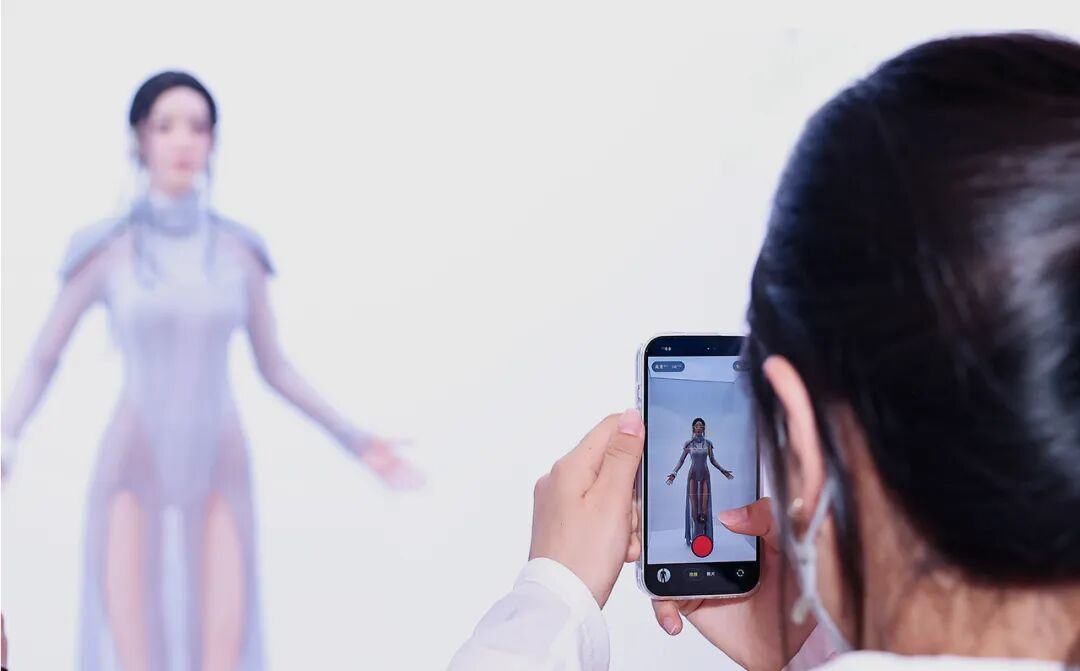
en.Wedoany.com Reported - Recently, China UWorld unveiled the new ultra-bionic humanoid robot U1 in Shenzhen, simultaneously launching 10 futuristic haute couture outfits and two exclusive inner garments. The collection was co-created by Xiamen-based designer Liu Shengyi and his WOW-IN design team in collaboration with the UWorld team, achieving bidirectional human-robot adaptability: the outfits are designed to fit both the U1 robot and everyday human wear.
The U1 ultra-bionic humanoid robot features sleek body contours, demanding high standards of fit, professionalism, and aesthetic expression from its accompanying attire. Liu Shengyi's team centered on the logic of high-end haute couture, innovating across three dimensions: design, craftsmanship, and materials.
This clothing collection innovatively achieves dual adaptability for both robots and humans, accommodating the unconventional body structure of ultra-bionic robots while aligning with human body proportions. Centered on a space sci-fi superhero theme, the collection comprises 10 stylistically distinct haute couture pieces.
Based on the robot's full-body 3D mapping data, the team implemented a "one robot, one pattern; one theme, one technique" standard to address fitting challenges for unconventional body shapes. To tackle pain points such as cumbersome dressing and undressing, difficult maintenance, and potential equipment damage, the team independently developed a multi-dimensional split-opening structure, designing a dedicated back opening channel module. This allows a single person to complete the full outfit change for the robot independently, preventing joint overload and other equipment damage during the process. It also reserves heat dissipation vents on the body without restricting the robot's joint movement.
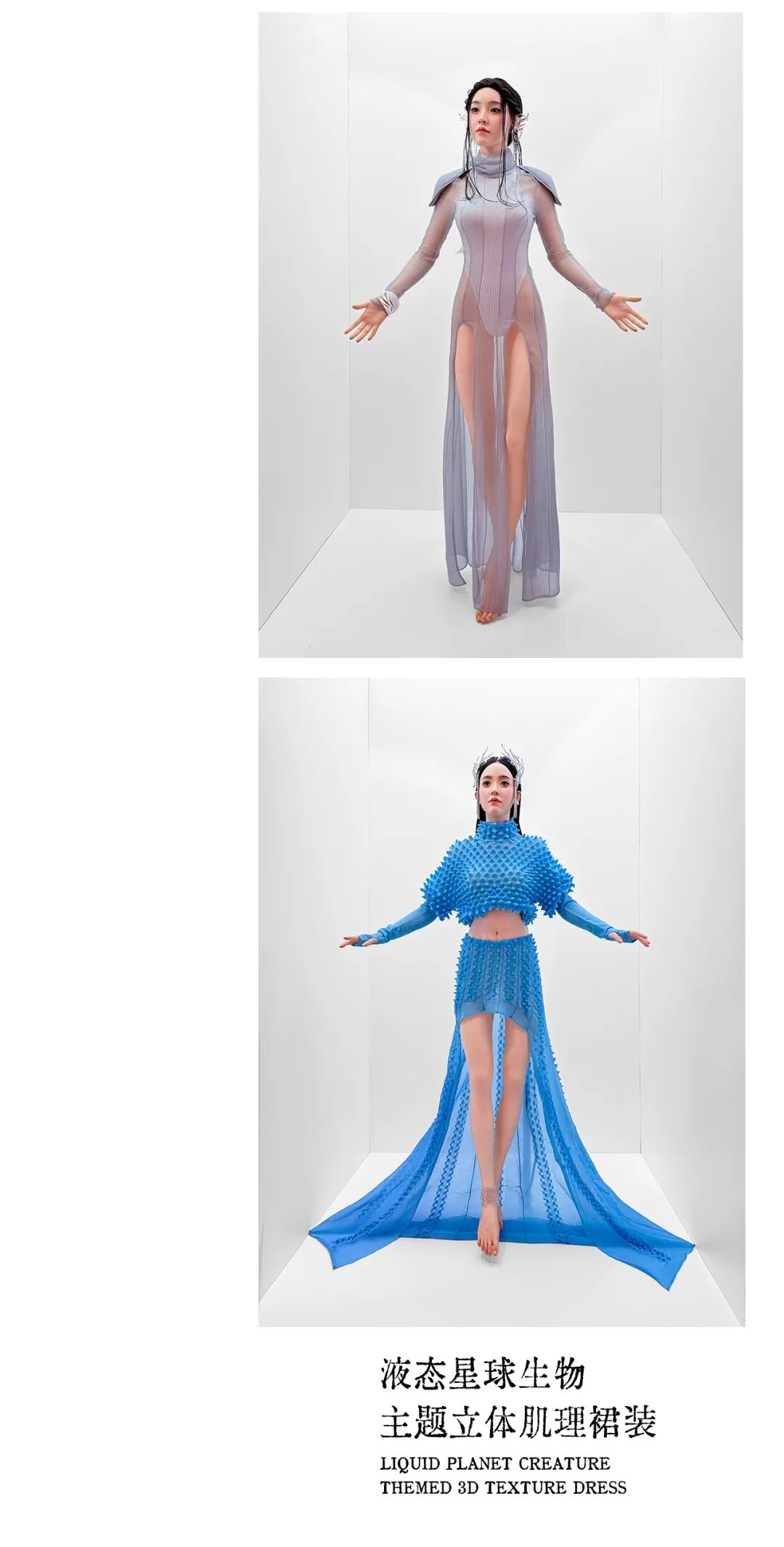
Traditional robot clothing suffers from issues like monotonous craftsmanship, rigid patterns, deformation and wrinkling of irregular fabric seams, and difficulty in shaping three-dimensional textures. Liu Shengyi's team integrated five core textile weaving techniques: knitting needle bed arrangement, combined use of woven and warp-knitted fabrics, computer flat knitting machine pattern making, French seam stitching, and manual quilting.
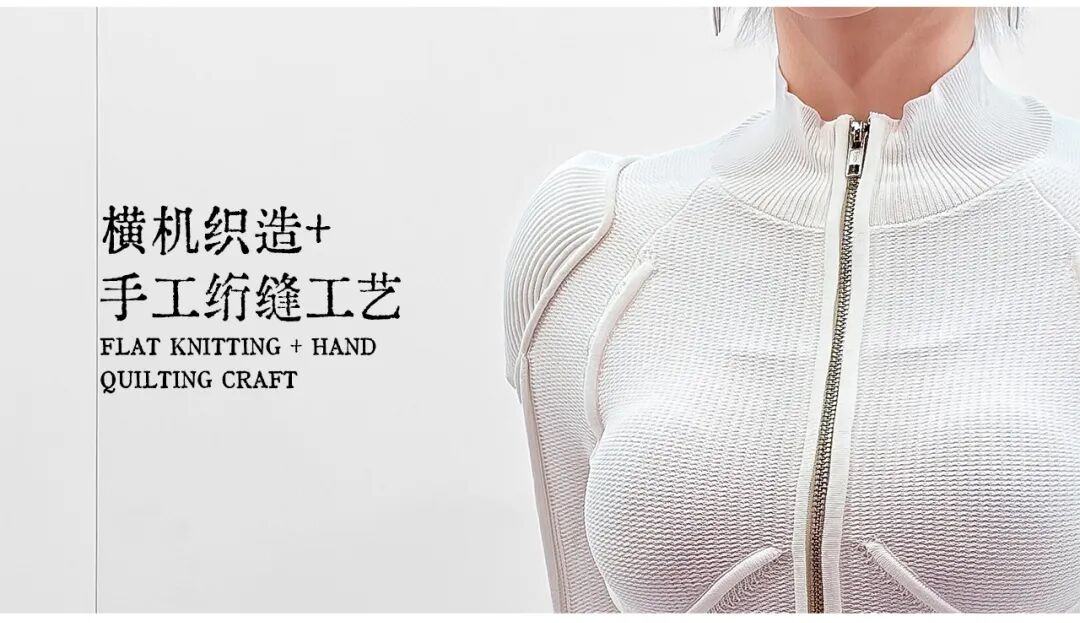
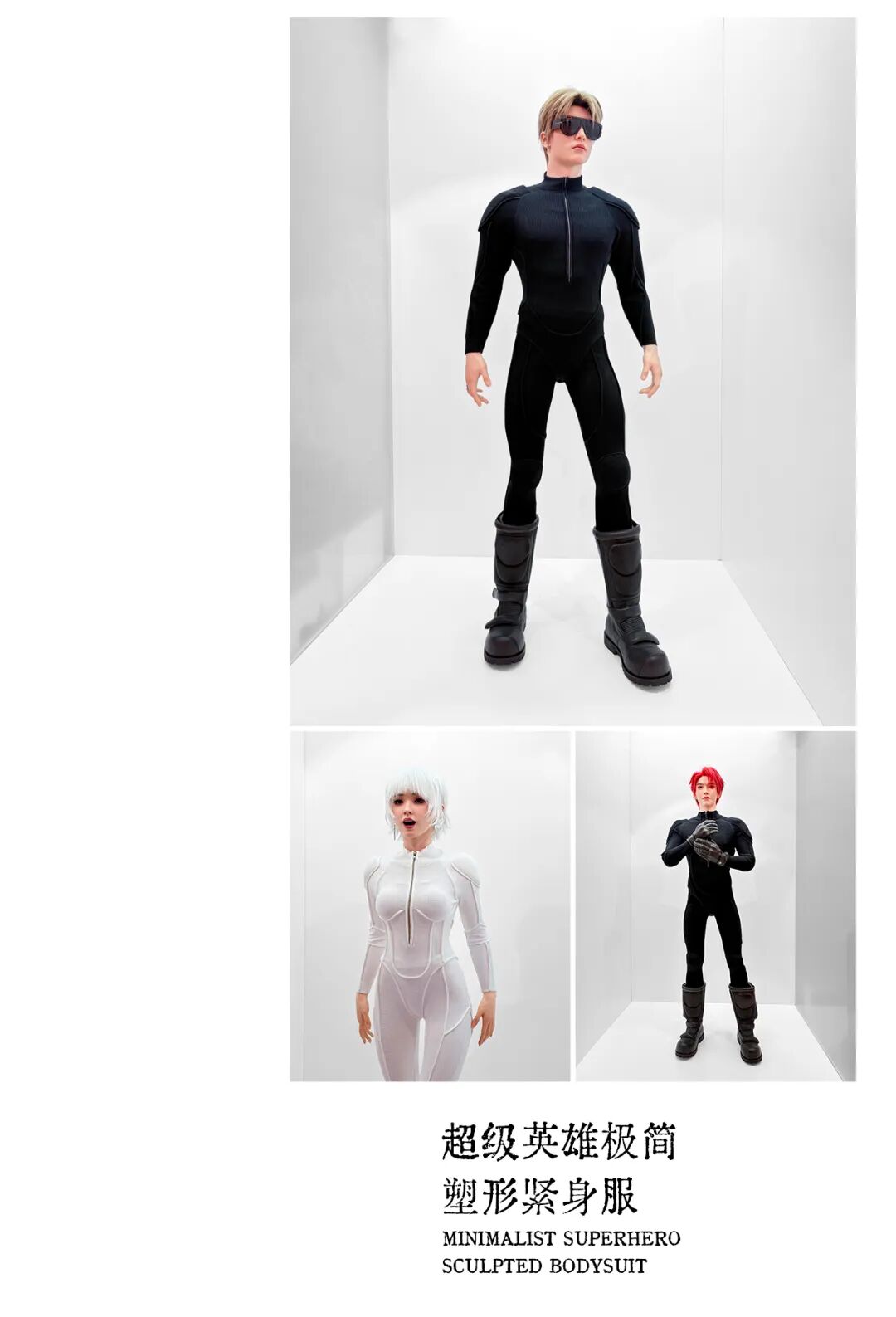
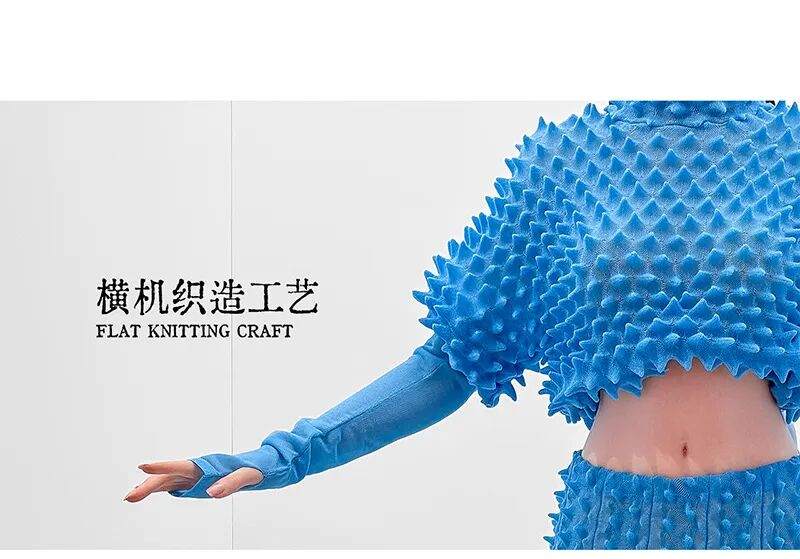
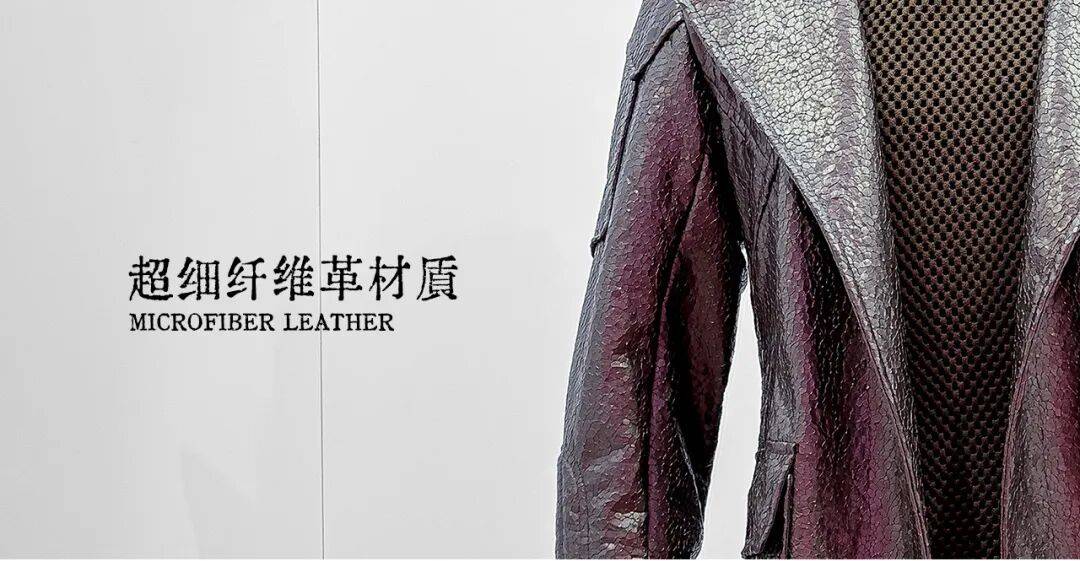
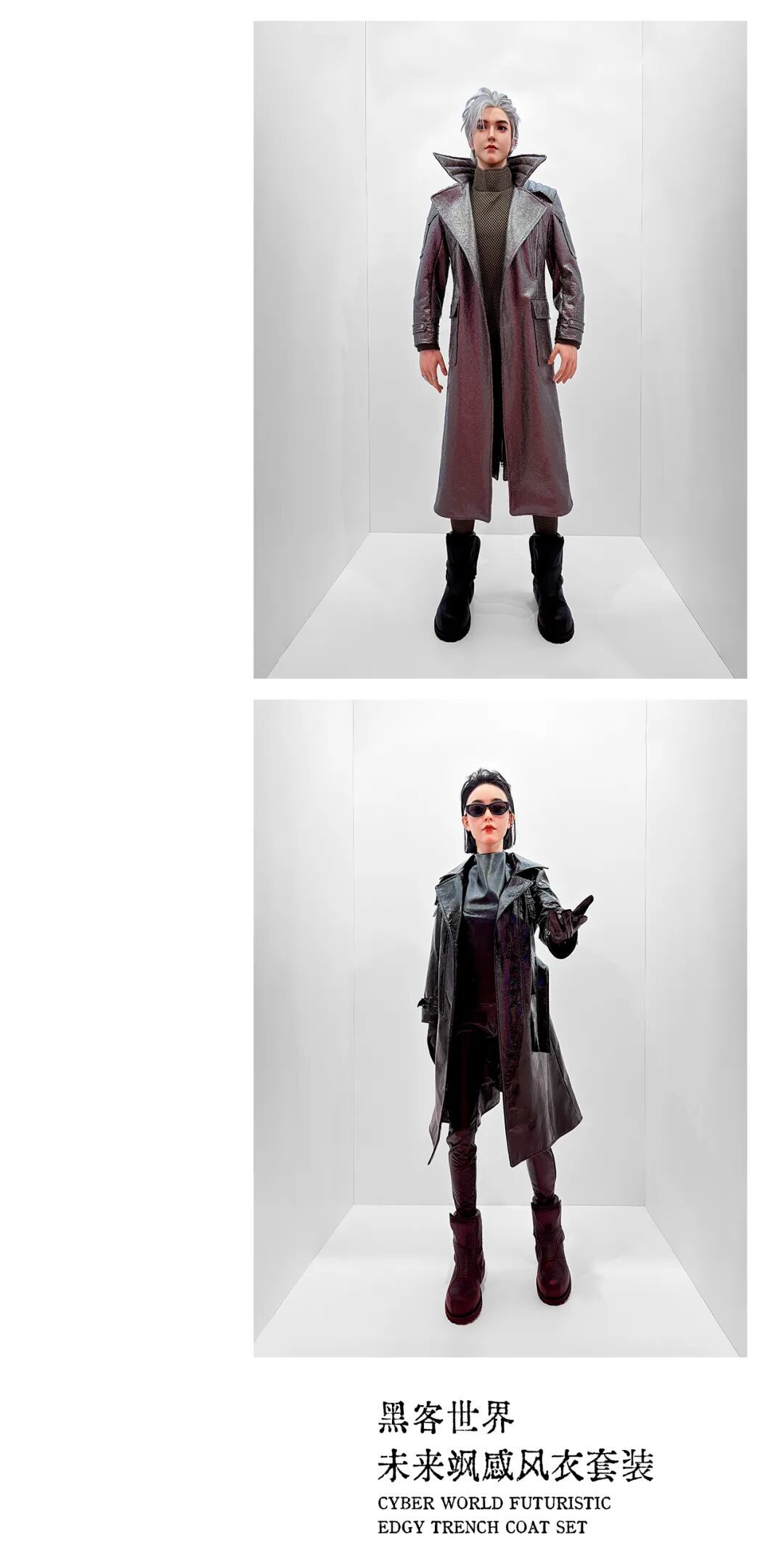
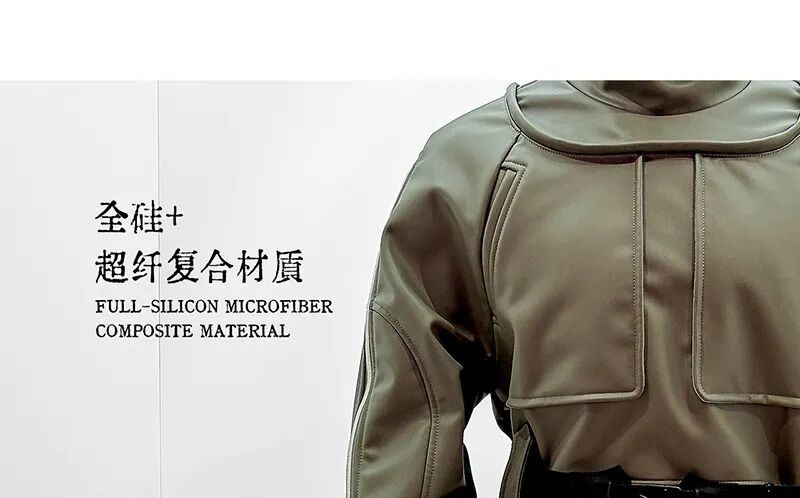
In terms of aesthetic design, the team created several pieces around specific themes: The minimalist superhero sculpting bodysuit uses flat knitting and manual quilting, with three layers of fabric stitched together by hand using diamond-patterned stitches. The Dune-inspired sci-fi ensemble employs a combined woven and warp-knitted technique, undergoing four revisions and four sample garments before finalizing the fifth iteration. The liquid planet biological textured dress is entirely crafted using flat knitting, requiring over ten specialized tests and adjustments to achieve the three-dimensional soft spiked horn texture. The hacker world futuristic trench coat set uses microfiber leather, with the body silhouette and panel proportions finalized after over a dozen data calculations. The mecha suit uses a full silicone and microfiber composite material, undergoing a total of 80 meticulous processes, focusing on abrasion resistance, shaping, and texture.
The project accumulated over ten specialized tests for pattern techniques and weaving structures, iteratively optimized multiple sample garments, and established a standardized, implementable haute couture process for humanoid robots. Several core technologies have been filed for invention patents.
The U1 ultra-bionic robot uses a special silicone skin, which can react chemically with ordinary fabrics, causing adhesion or corrosion to the body, and struggles to balance the robot's dynamic deformation, abrasion resistance, and stability with the comfort and breathability required for daily human wear. The team selected various functional fabrics, including microfiber leather, full-silicone microfiber composite fabric, warp-knitted fabric imitating classic tweed, and high-strength elastic nylon in a 10:3 golden ratio. These fabrics have undergone specialized compatibility tests, ensuring stable adaptation to the robot's silicone skin without chemical reactions, adhesion, or corrosion issues, while offering high strength, elasticity, abrasion resistance, and dimensional stability.
This haute couture system combines high-end functional fabrics from the textile industry with mechanical weaving technology, while preserving the pure handcrafted processes of traditional haute couture. The project pioneered a "high-end clothing customization + AI emotional companionship" model, leveraging the robot's emotional large model and dedicated memory database to upgrade textile products from "functional wear" to "customized emotional companionship." The team also established a cross-disciplinary R&D group and a closed-loop R&D mechanism to cultivate versatile technical talent for cross-industry innovation.
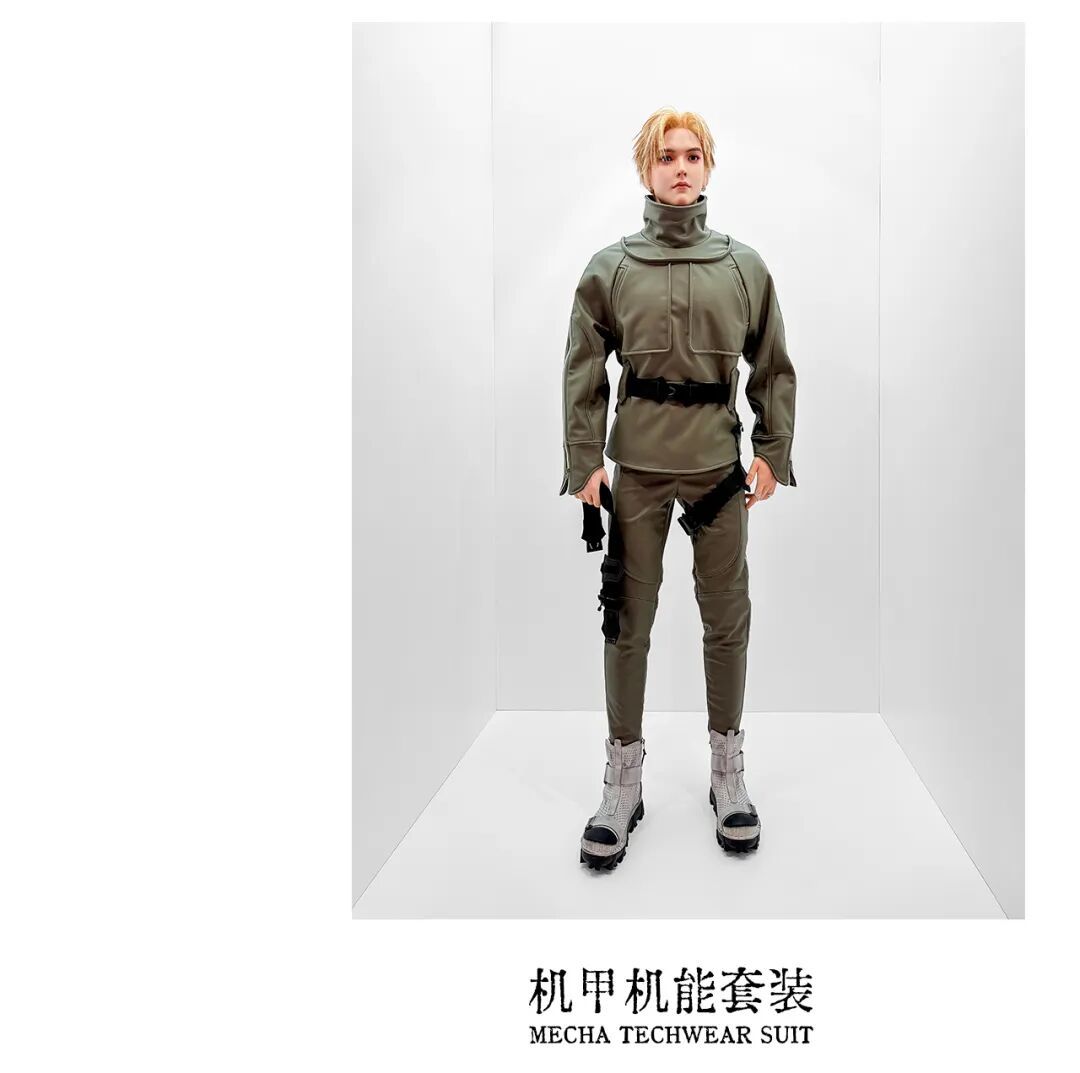
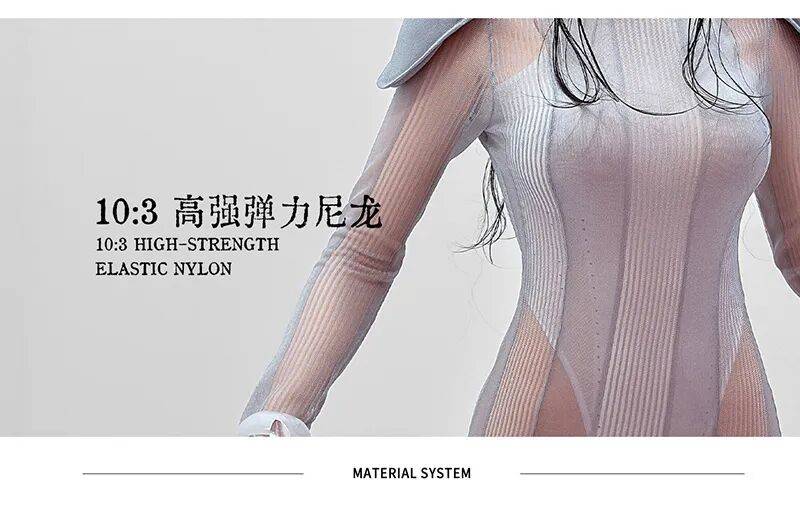
This clothing collection is also available for human consumers, allowing ordinary people to wear the same outfits as the robot, serving as a tangible, perceptible medium for human-robot interaction.
This project fills an industrial gap in the textile sector for humanoid robots, achieving a cross-industry integration of traditional textile craftsmanship with the artificial intelligence industry. By integrating high-end functional fabrics, mechanical weaving technology, and handcrafted processes, the team provides technical reserves and process references for cross-industry innovation within the sector.