Nanjing Agricultural University's Protein Immune Inducer Achievement Signed for 50 Million Yuan with Jiangsu Pesticide Research Institute
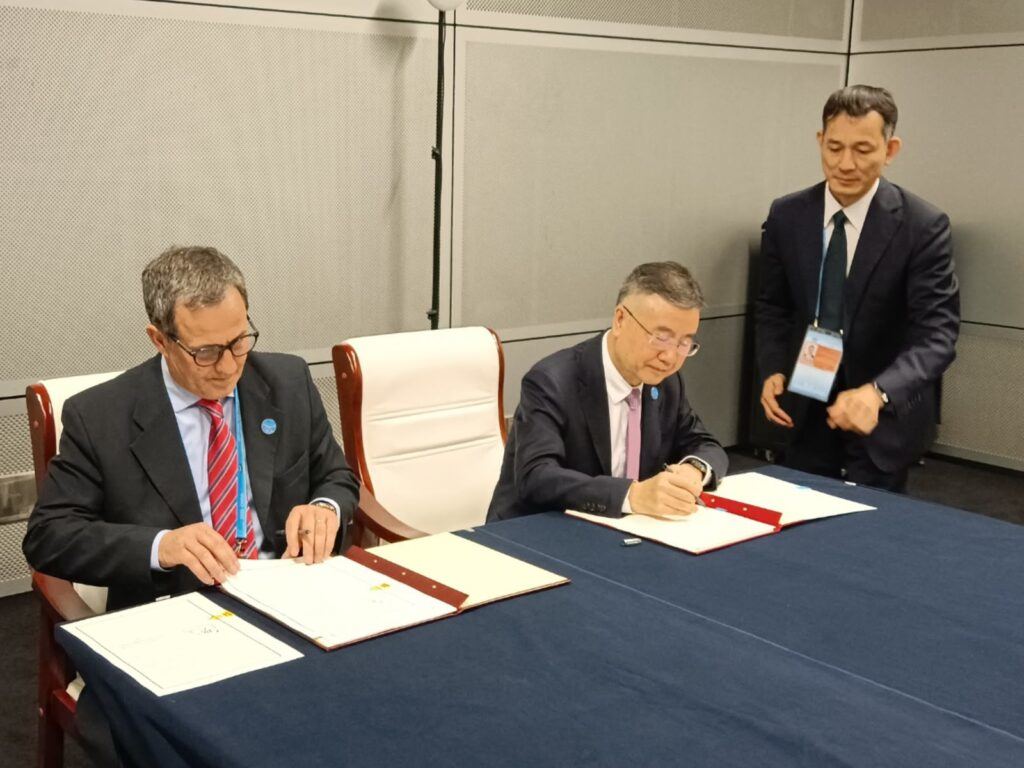
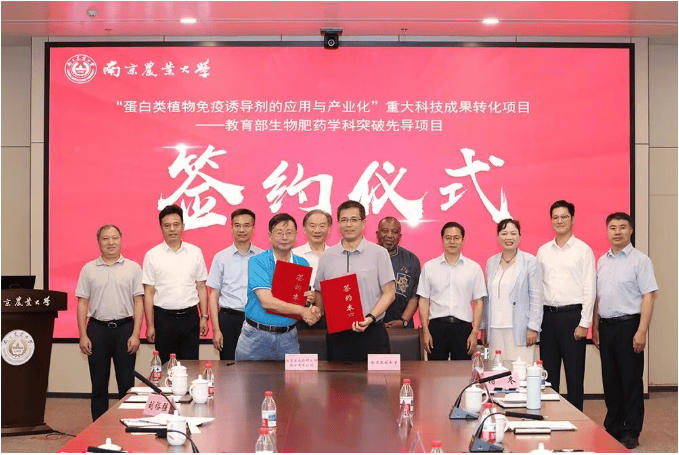
en.Wedoany.com Reported - Nanjing Agricultural University and Jiangsu Pesticide Research Institute Co., Ltd. signed a cooperation agreement on July 16 at the Binjiang Campus of Nanjing Agricultural University, reaching a strategic partnership for the project "Application and Industrialization of Protein-Based Plant Immune Inducers," with a transfer amount of 50 million yuan. This agreement marks the transition of plant immune-inducing protein research from basic research to the industrialization stage.
Crop diseases pose a long-term threat to agricultural production. In recent years, China has continuously strengthened policy support for biopesticides, clearly establishing the replacement of chemical pesticides with biopesticides as a core direction. After more than 20 years of research, the Crop Disease Research Team from the College of Plant Protection at Nanjing Agricultural University has developed a protein-based immune inducer named "Nannong Youkang." This product precisely activates the plant's own broad-spectrum immune system, significantly reducing the risk of resistance. It provides plants with an "immune coat" within weeks, while also promoting seed germination, enhancing photosynthetic efficiency, and accelerating root development, achieving the dual goals of disease prevention and yield increase.
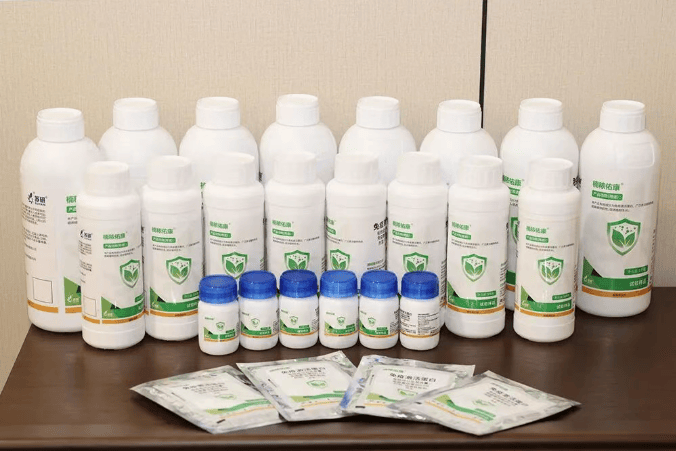
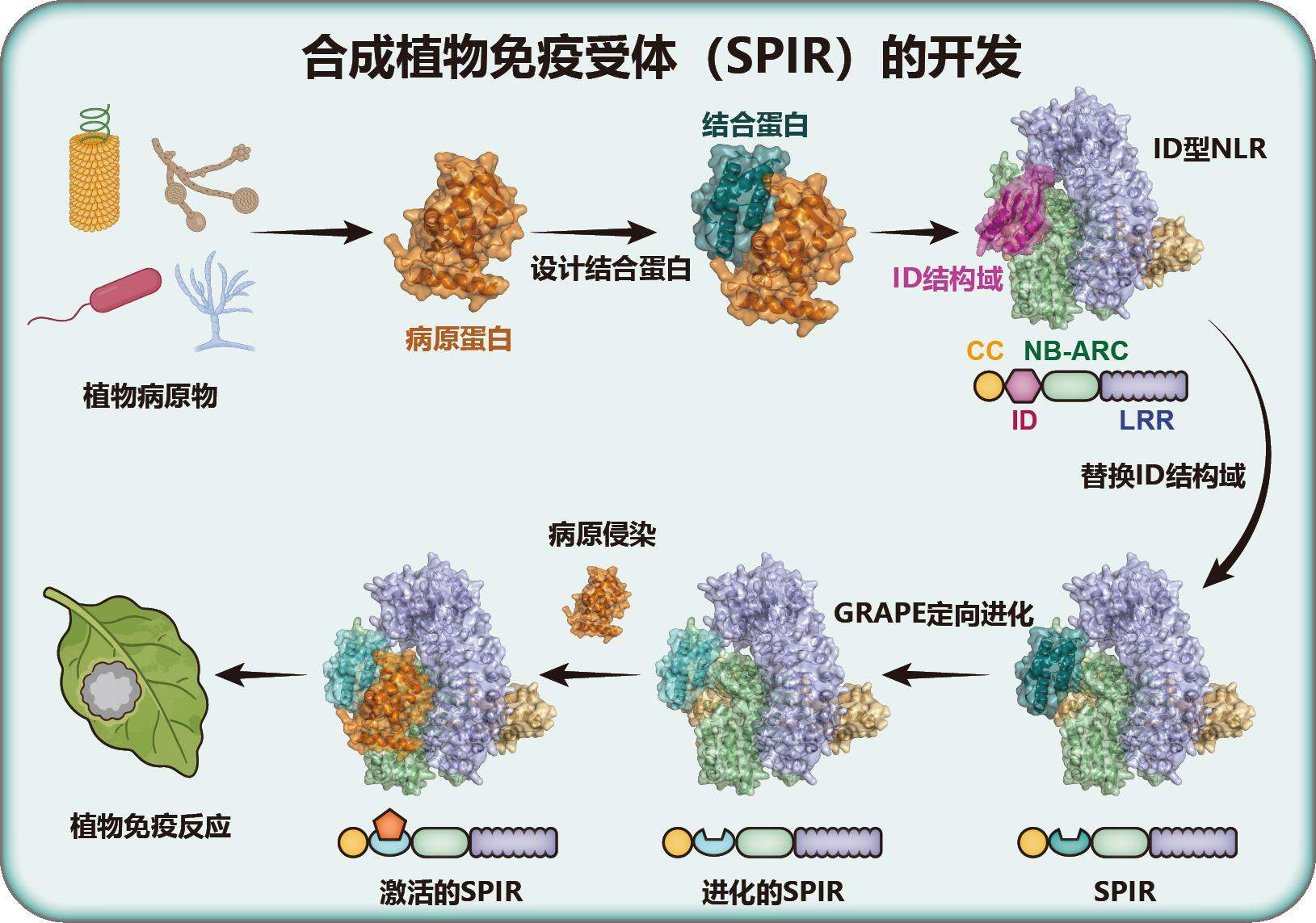
Addressing bottlenecks in immune-inducing biopesticides, such as scarcity of active resources, unclear mechanisms of action, poor field stability, and high production costs, the team achieved five innovative breakthroughs: identifying multiple proteins that broadly activate plant immunity, discovering immune receptors, uncovering new immune activation mechanisms, revealing that N-glycan modification is the basis for XEG stability and recognition, guiding immune protein iteration through AI structural optimization, and achieving endotoxin-free eukaryotic secretory expression with ton-scale production cost conditions. Related results have been published in journals such as Science and Nature, and received the 2025 Special Prize of the Ministry of Education's Outstanding Scientific Research Achievement Award (Natural Sciences and Engineering Technology). "Nannong Youkang" has been approved by the National Trademark Office and officially named by the Institute for the Control of Agrochemicals.
Wang Yuanchao, Vice President of Nanjing Agricultural University and head of the Crop Disease Research Team, stated that plants possess an immune system. Spraying immune-inducing proteins can activate their own immune functions, enhance disease resistance, and is more environmentally friendly. The team also solved the problem of stable preservation of protein-based plant immune inducers, using synthetic biology to screen expression systems, significantly reducing drug production costs, extending field validity, and decreasing the use of chemical pesticides.
Cao Yang, Chairman of Jiangsu Pesticide Research Institute Co., Ltd., stated that there is an urgent market demand for green agricultural inputs, and the industrialization of protein-based plant immune inducers will provide solutions for disease control. Both parties will jointly explore collaborative innovation models for industry-academia-research integration, accelerating product registration, promotion, and application.
Field validation shows that "Nannong Youkang," deeply integrated with previously developed seed coatings, constructs a green prevention and control system covering the entire crop growth cycle, characterized by "protecting seedlings early and preventing senescence later." In areas such as Xuzhou, Jiangsu, and Suzhou, Anhui, soybean leaves sprayed with this product were dark green with thick stems, and the incidence of diseases such as root rot and viral diseases decreased by 68.7%, with a unit yield increase of 17.6%. High-yield demonstration fields achieved a yield exceeding 300 kg per mu. In rice fields in Nanjing, Jiangsu, compared with conventional control, chemical usage was reduced by 20%, the comprehensive control rate reached 84.6%, and the yield per mu increased by 5.8%.
The industrialization prospects of this technology have been affirmed by the Food and Agriculture Organization of the United Nations, Jiangsu Provincial Plant Protection Department, university technology transfer centers, and other relevant parties, who consider it aligned with the global trend of reducing chemical pesticides and developing ecological agriculture. Shen Qirong, an academician of the Chinese Academy of Engineering, stated that the pathway of activating a plant's own immunity represents an ideal direction for green prevention and control.
Related Products



714CD Series C-Band Weather Radar
Chengdu Zhongdian Jinjiang Information Industry Co., Ltd.
4HS-8 High-efficiency Peanut Inverted-laying Harvester
Hebei Yongfa Hongtian Agricultural Machinery Manufacturing Co., Ltd.
Industrial and Commercial Point-Type Gas Detector
Jinan Benan Technology Development Co., Ltd.