China's Steel Market Moderately Strengthens with Declines in Output and Inventories
en.Wedoany.com Reported - In the week ending July 17, China's steel market showed a moderate strengthening trend, with both production and inventories declining. Coupled with a rebound in market sentiment, this provided support for Chinese steel prices. However, persistent seasonal demand weakness, subdued downstream procurement, and ongoing uncertainties in overseas markets continued to limit the upside for prices.
In June 2026, China exported 10.32 million tons of steel, up 6.6% year-on-year, reflecting a recovery in monthly shipments amid tightening global trade conditions. However, this improvement failed to reverse the overall trend for the first half of the year. From January to June 2026, China's cumulative steel exports totaled 54.874 million tons, down 5.6% year-on-year. Weakening overseas demand, expanding trade barriers, and the appreciation of the renminbi continued to weigh on China's export performance.
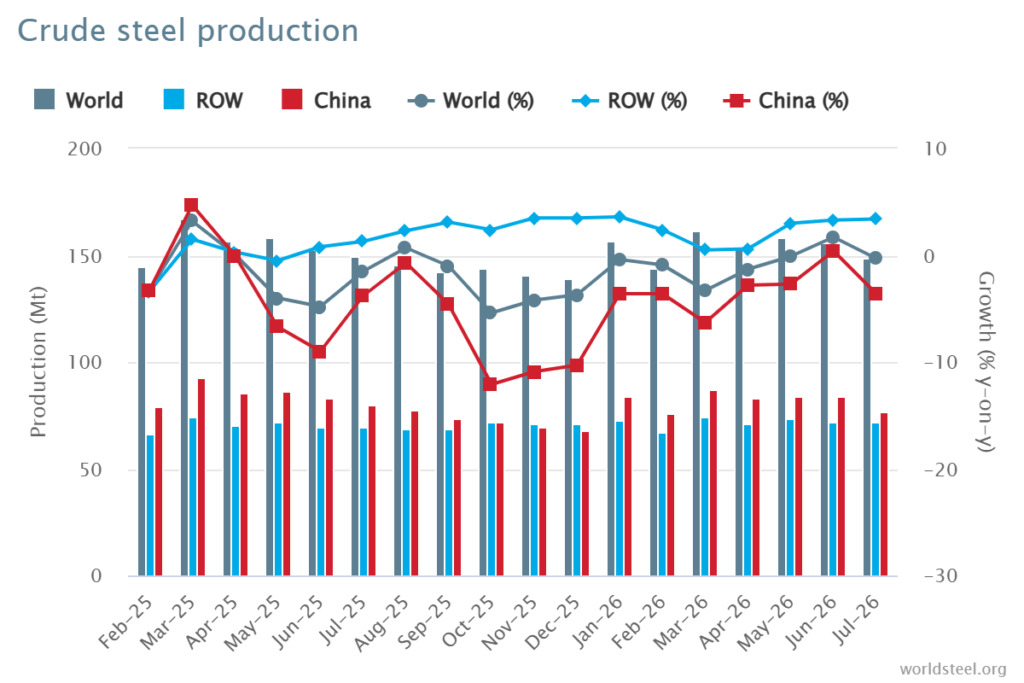
According to data from the National Bureau of Statistics, China's crude steel output in June 2026 was 83.67 million tons, up 0.4% year-on-year, marking the first year-on-year increase since April 2025. Export-oriented manufacturing activities supported the output growth, but domestic consumption remained sluggish, despite a 1% year-on-year increase in retail sales for the month.
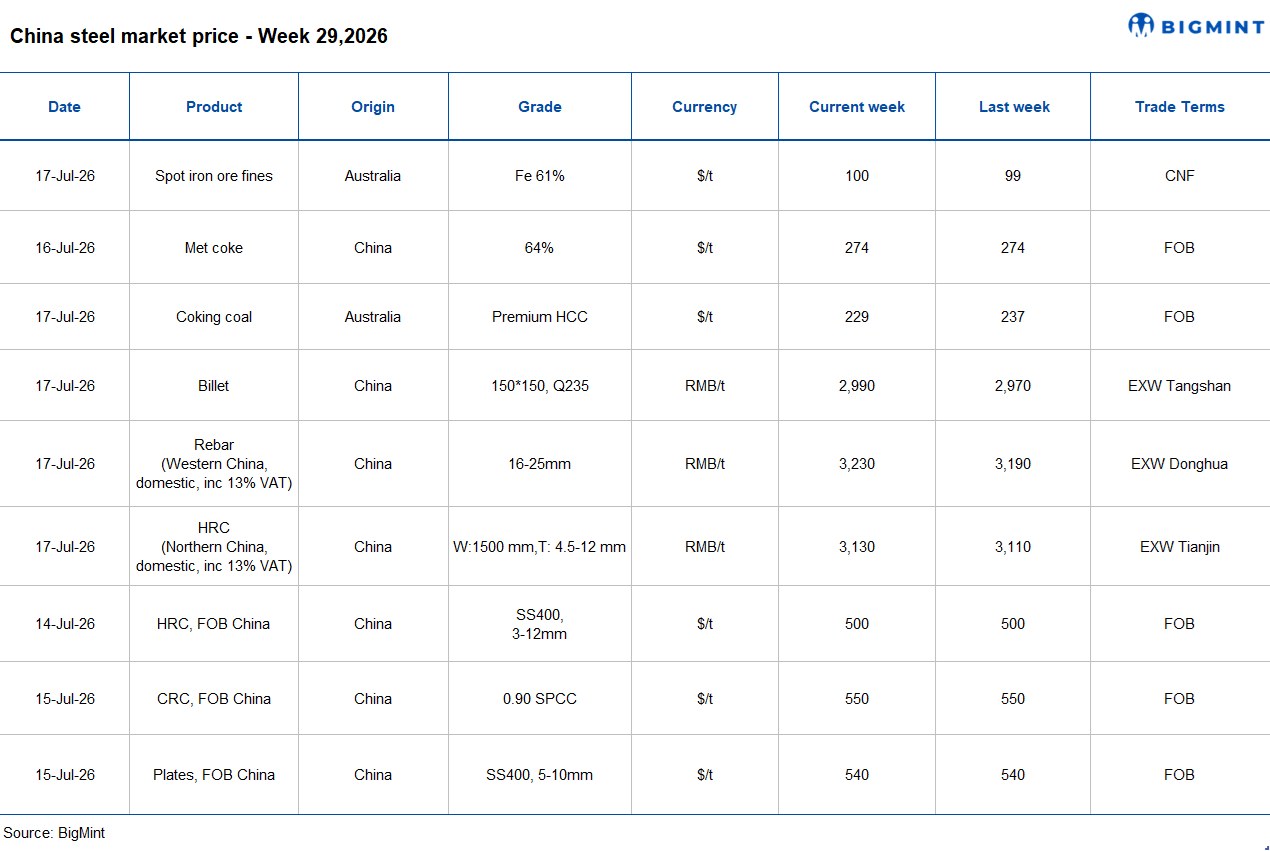
On the raw materials front, spot iron ore prices edged up week-on-week. On July 17, the benchmark price for Fe 61% iron ore fines rose by $1/ton week-on-week to $100/dry metric ton CFR China. Although trading activity was subdued, concerns over freight costs and supply disruptions kept market sentiment firm, pushing seaborne iron ore prices slightly higher. Negotiations between major miners and workers failed to reach an agreement, with strike action looming, prompting steel mills to adopt a wait-and-see approach. Meanwhile, weaker-than-expected Chinese macroeconomic indicators reinforced expectations for further policy stimulus, providing additional support for prices. The spot premium for Fe 65% grade pellets rose by $0.1/dmt on July 15 to $23.6/dmt CFR China. On July 17, the spot lump premium increased by $0.026/dmt week-on-week to $0.2305/dmt CFR China.
The global metallurgical coke market was stable, but prices for Australian Premium Hard Coking Coal (PHCC) declined. During the assessment week, China's metallurgical coke market was largely stable, supported by good operating rates at coking plants and sustained producer margins. However, as steel mill profitability weakened and maintenance shutdowns increased, underlying demand softened, with market participants expecting a decline in hot metal output in the coming weeks. The tenth round of coke price hikes remained under negotiation, with steel mills resisting increases to control costs and anticipating a market correction. Nevertheless, tight coking coal supply and stable freight costs provided fundamental support for global coke prices. In the seaborne coking coal market, PHCC prices fell sharply by $8/ton week-on-week to $229/ton FOB Australia, dragged down by falling steel prices, subdued mill buying interest, and lower bid levels. BigMint's PHCC index declined by $4/ton week-on-week to $250/ton CNF Paradip (India), as Indian buyers adopted cautious procurement strategies, anticipating further price corrections due to weakening downstream steel market fundamentals.
Billet prices edged up week-on-week, supported by tightening supply. In the week ending July 17, improved market sentiment, lower mill output, and declining social inventories drove Chinese billet prices higher, despite weak seasonal steel demand. BigMint assessed Chinese billet prices at RMB 2,990/ton ($441/ton), up RMB 20/ton ($3/ton) week-on-week from RMB 2,970/ton ($438/ton) on July 10. Raw material costs provided overall support, with iron ore prices hovering around $100/ton, but softer coke prices limited further gains. In the export market, Chinese billet offers were heard around $458/ton FOB, slightly lower than $460/ton FOB a week earlier, as mills continued to seek overseas orders amid subdued buying interest and intense regional competition.
On a weekly basis for steel prices, rebar prices rose week-on-week. As of July 18, Chinese rebar prices increased by RMB 40/ton ($6/ton) week-on-week to around RMB 3,230/ton ($477/ton). The October 2026 rebar futures contract on the Shanghai Futures Exchange rose by RMB 31/ton ($5/ton) week-on-week to RMB 3,109/ton ($459/ton). Prices were supported by improved market sentiment following positive macroeconomic developments and strong performance in the futures market, while lower rebar production also eased supply pressure. However, weak construction demand and seasonal rainfall continued to limit procurement activities. Shagang Group kept its long steel sales prices unchanged for mid-July 2026, with rebar (16-25mm) at RMB 3,400/ton ($502/ton), wire rod (8-10mm) at RMB 3,530/ton ($522/ton), and bar (6-10mm) at RMB 3,440/ton ($508/ton), reflecting cautious sentiment amid weak seasonal demand and subdued spot market activity.
Chinese hot-rolled coil (HRC) prices rose week-on-week. On July 17, Chinese HRC prices increased by RMB 20/ton ($3/ton) week-on-week to around RMB 3,130/ton ($462/ton), compared to RMB 3,110/ton ($459/ton) a week earlier. The October 2026 HRC futures contract on the Shanghai Futures Exchange rose by RMB 25/ton ($4/ton) week-on-week to RMB 3,314/ton ($489/ton), from RMB 3,289/ton ($485/ton) a week earlier. The price increase was supported by improved market sentiment following macroeconomic progress and stronger futures prices, with lower output and declining inventories easing supply pressure. However, weak seasonal demand and limited downstream procurement capped gains. Angang (the Shenzhen-listed subsidiary of China's second-largest steelmaker, Angang Group) issued an announcement on July 13, raising its ex-factory price for carbon steel HRC for August domestic sales by RMB 50/ton ($7/ton). In contrast, Chinese HRC export offers were stable week-on-week at around $500/ton FOB Rizhao, as persistently weak overseas demand continued to limit upside potential.
Looking ahead, against the backdrop of divergent expectations for global economic recovery, escalating geopolitical tensions in the Middle East, and China's K-shaped economic recovery, market expectations for stronger counter-cyclical and cross-cyclical policy support have increased. Meanwhile, supply growth is weakening, market trading is slowing, and cost-side resilience is providing support. The Chinese steel market is expected to maintain a volatile and divergent trend in the coming week.
Related Products
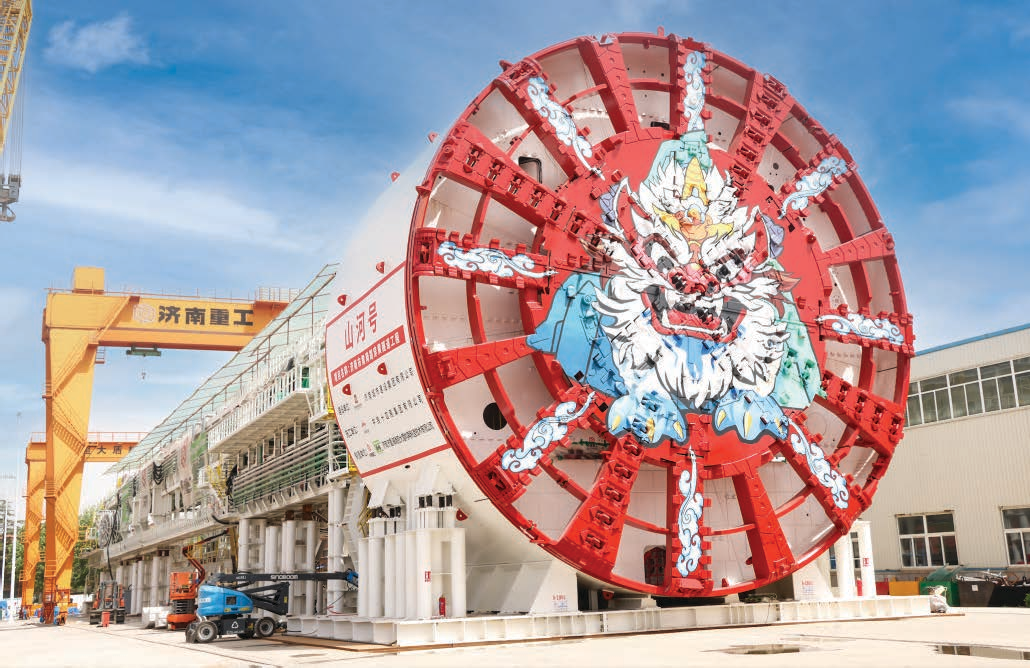


Mine Explosion-proof and Intrinsically Safe Industrial Ethernet Ring Network (10 Gigabit/Gigabit)
Chongqing Mas Sci&Tech Co., Ltd.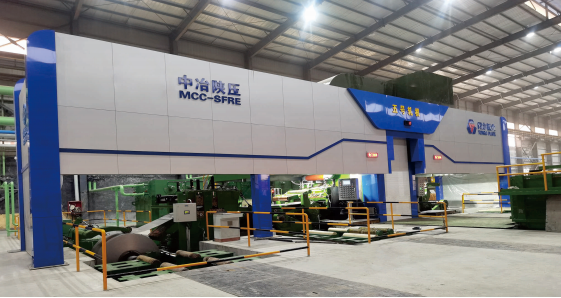
1050-1750mm Steel Strip Single-stand Reversible Cold Rolling Production Line
MCC-SFRE HEAVY INDUSTRY EQUIPMENT CO., LTD.
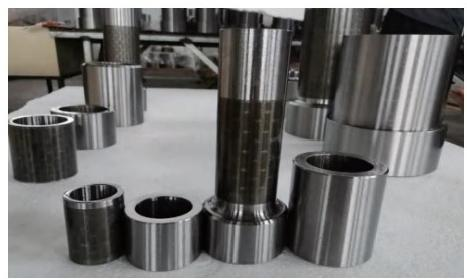
High-temperature Equal Wall Thickness High-power Screw Drilling Tool
Orient Energy & Technologies Co., Ltd.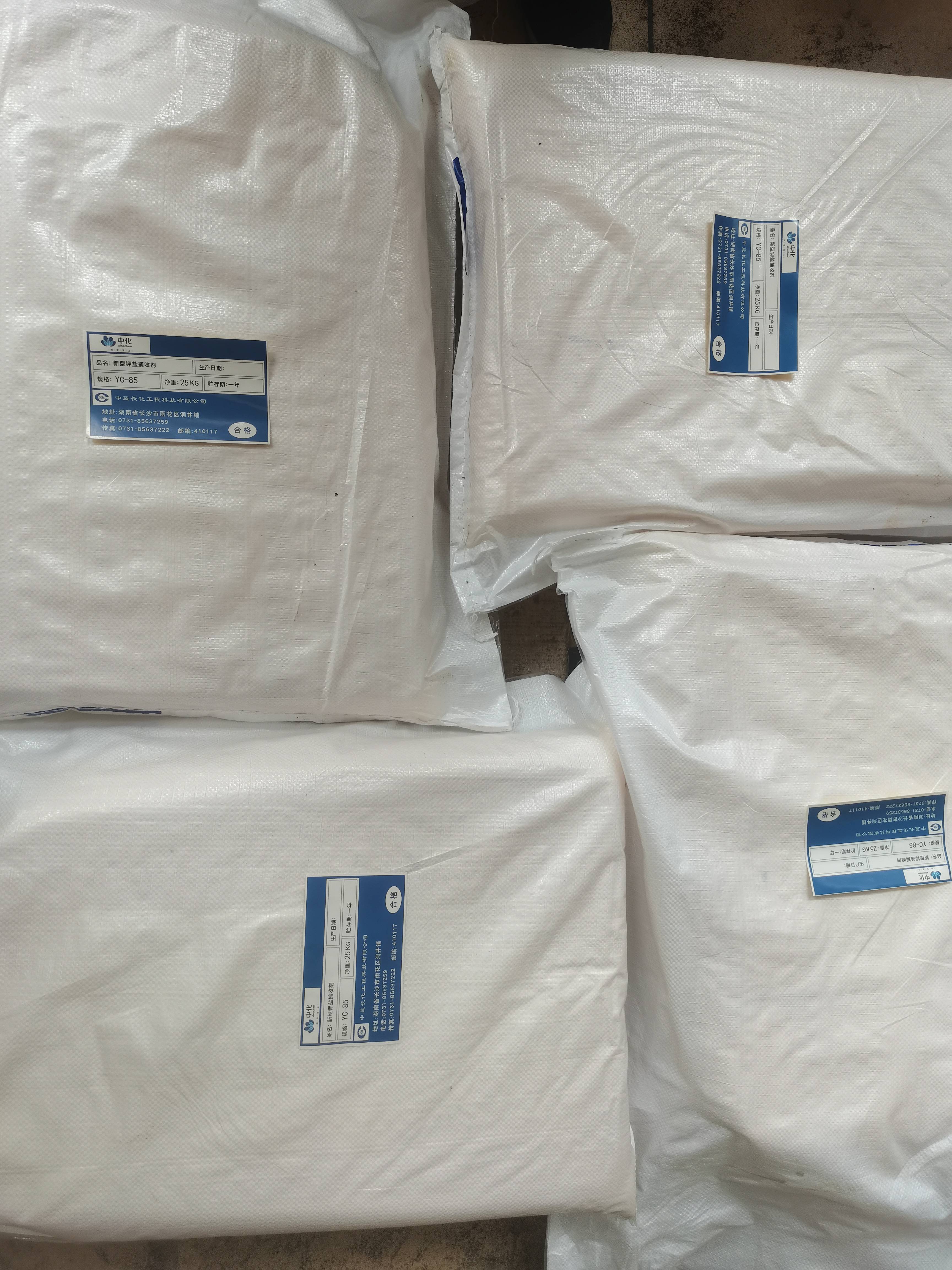
New Environmentally Friendly Green Potassium Salt Collector
Chonfar Engineering and Technology Co., Ltd.

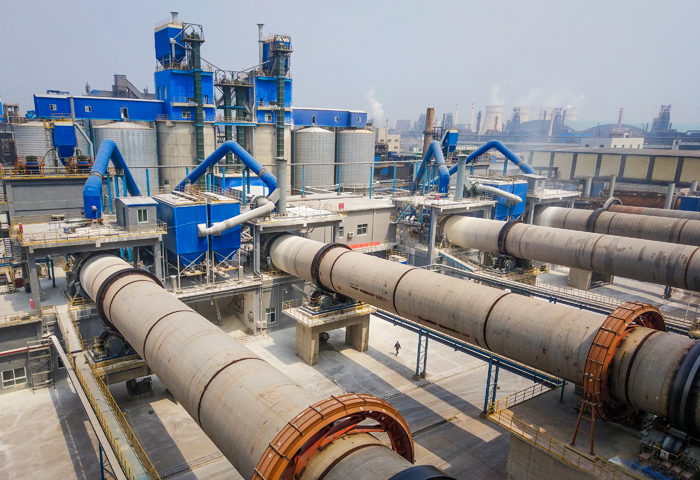
CITIC Heavy Industries Metallurgical Equipment Steel Smelting Engineering Equipment
CITIC Heavy Industries Co., Ltd.