Kunming University of Science and Technology in China Achieves Industrial Breakthrough in Buried Interface Regulation of Inverted Perovskite Solar Cells
en.Wedoany.com Reported - Dimension News Network, July 19 – Kunming University of Science and Technology (KUST) announced that a research team led by Professor Chen Jiangzhao and Professor Yu Yue from the School of Materials Science and Engineering, in collaboration with multiple universities and enterprises, has achieved a significant breakthrough in the regulation of the buried interface of inverted perovskite solar cells, successfully completing industrial validation. The findings were published in the international journal Nature Communications.
Inverted perovskite solar cells, which utilize self-assembled monolayers as the hole transport layer, offer advantages such as low-temperature fabrication and low cost, making them a key development direction for the photovoltaic industry. However, challenges including the tendency of self-assembled molecules to aggregate, uneven film formation, numerous defects at the bottom of the perovskite film, weak adhesion, and interfacial residual stress have limited their large-scale production.
To address these bottlenecks, the research team proposed a soft supramolecular host-guest synergistic regulation strategy, introducing weakly Lewis basic molecules to modify the buried interface. Leveraging its unique bowl-shaped cavity structure, this molecule simultaneously achieves four key optimizations: uniformly spreading the self-assembled film to eliminate leakage pathways; coordinating with functional groups to fill interfacial defects and reduce energy loss; buffering internal stress caused by thermal expansion and contraction through a flexible backbone; and bridging the hole transport layer and the perovskite light-absorbing layer via bidirectional chemical bonds to inhibit ion migration.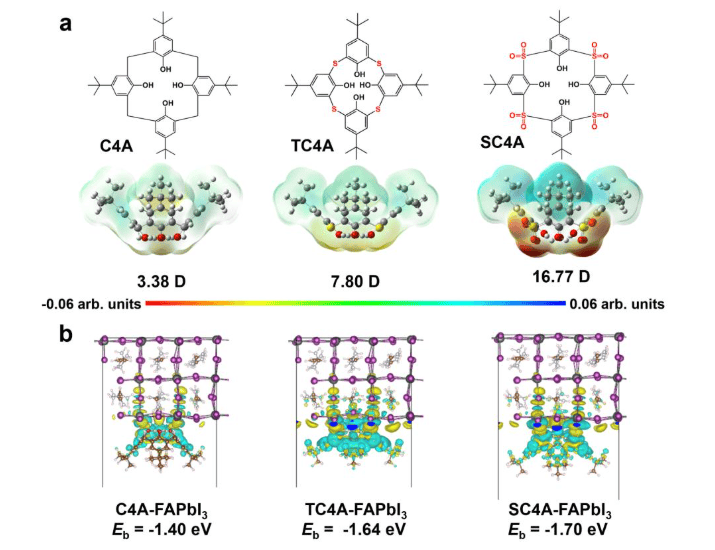
Certified by a third-party authority, the photoelectric conversion efficiency of small-area single cells reached 27.12%; the efficiency of large-area photovoltaic modules measuring 655.2 square centimeters was stabilized at 22.25%, significantly narrowing the performance gap between laboratory devices and mass-produced modules. Durability tests showed that after 2,125 hours of continuous standard sunlight exposure, the devices retained 97.4% of their initial efficiency; after 2,000 hours of aging under harsh conditions of 85°C and 85% humidity, performance remained at 90.7% of the original level, effectively addressing the stability shortcomings of perovskite cells.
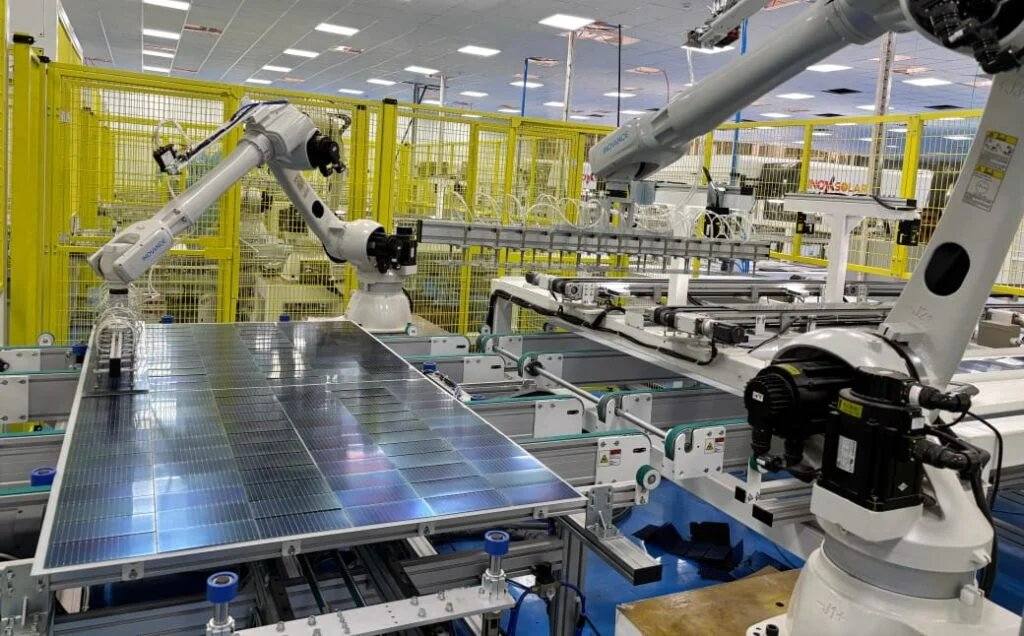
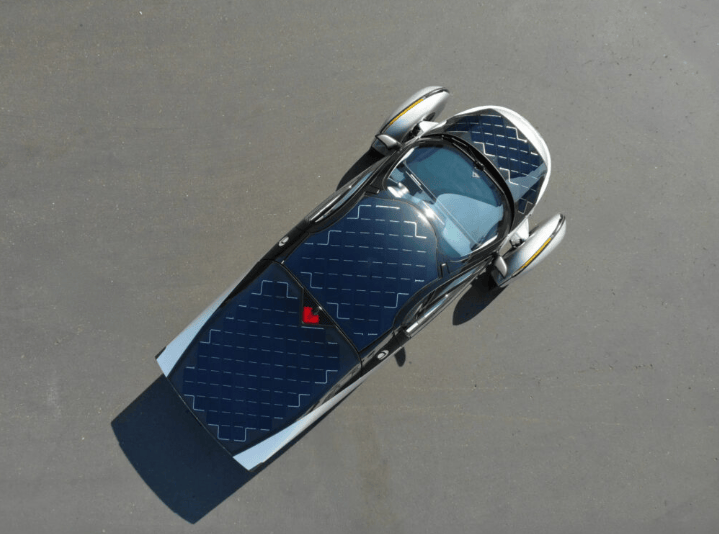
This achievement highlights the advantages of industry-academia-research collaboration. The research team, in partnership with photovoltaic enterprises, completed the fabrication of large-area modules. The entire modification process is compatible with existing coating production equipment, requiring no major line modifications and ensuring controllable implementation costs. This technology can be widely applied in areas such as building-integrated photovoltaic semi-transparent curtain walls, flexible portable charging devices, automotive photovoltaic panels for new energy vehicles, and perovskite/silicon tandem solar cells.
Related Products


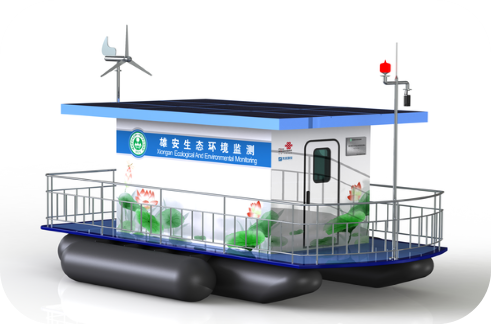
Floating Boat Water Quality Automatic Monitoring System
Hebei Sailhero Environmental Protection High-tech Co., Ltd.

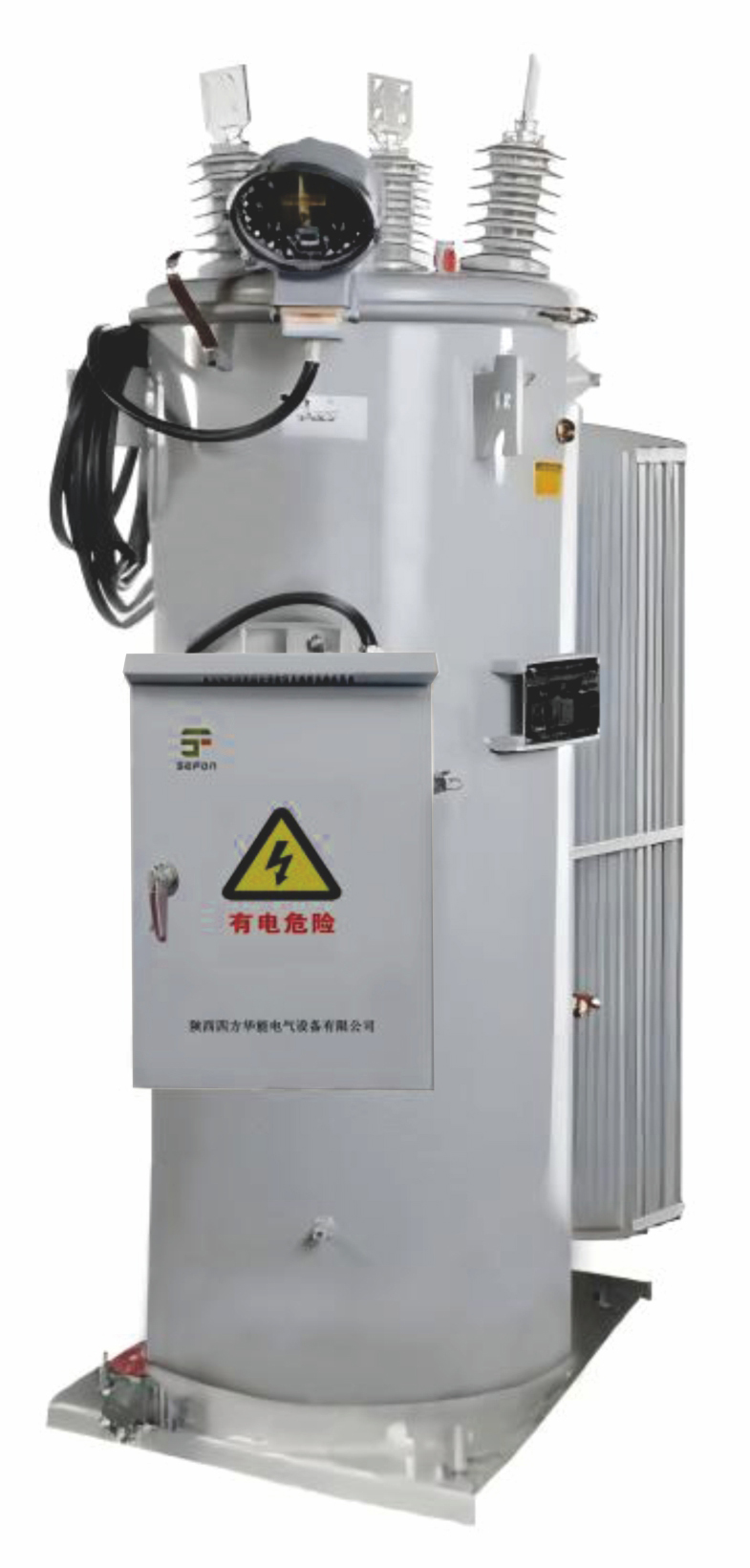
Single-Phase Automatic Voltage Regulator(AVR)
Shaanxi Sefon Electrical Equipment Co.,Ltd.
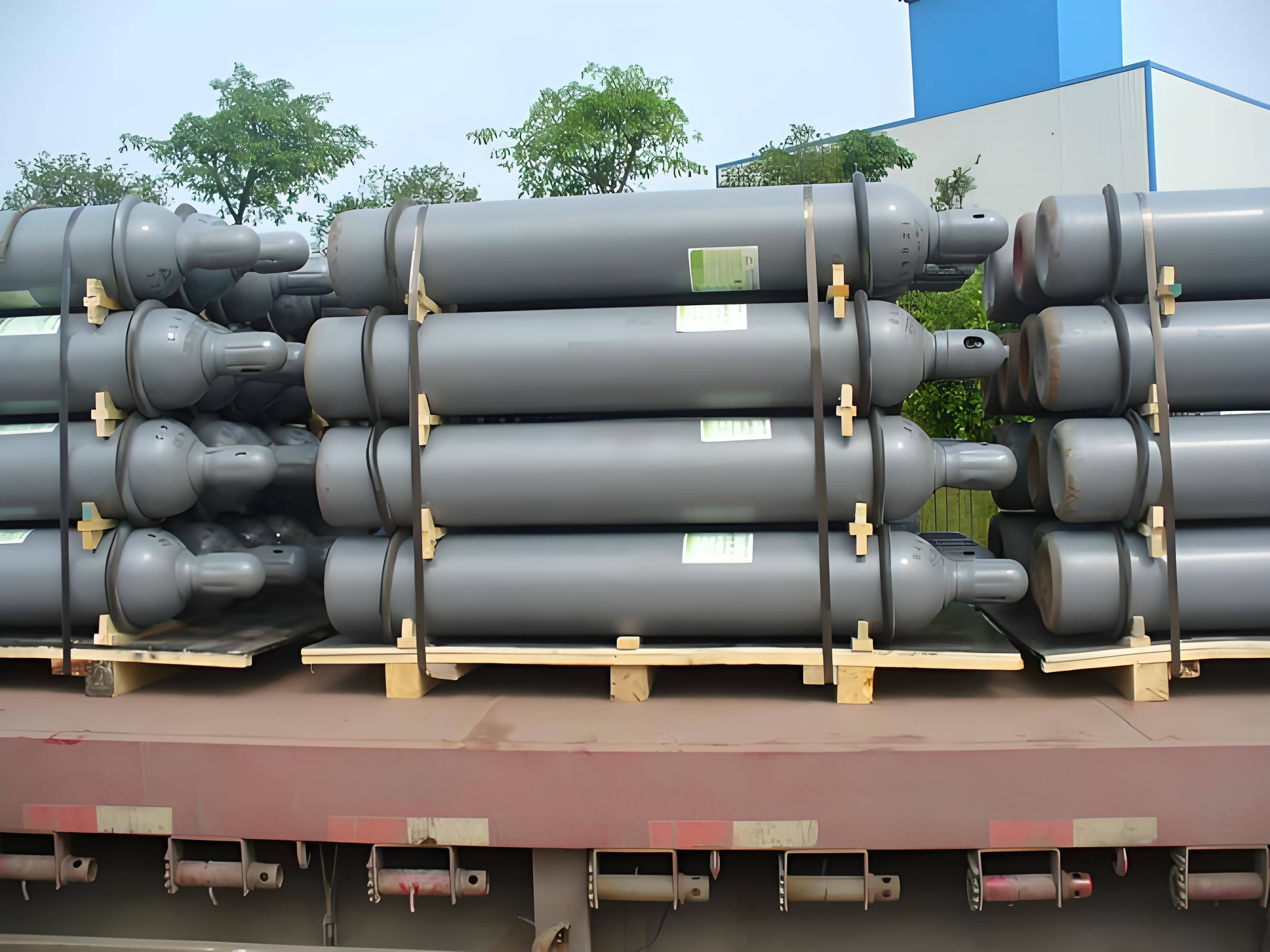
Global Sulfur Hexafluoride Gas Supply and Cylinder Export
Foshan Yuexin Industrial Gas Co., Ltd.