UK Ofcom Determines Spectrum Allocation for Upper 6 GHz Band: 160 MHz for Wi-Fi, 540 MHz for Mobile
en.Wedoany.com Reported - The UK Office of Communications (Ofcom) has officially finalized the spectrum allocation plan for the upper 6 GHz band, dividing this frequency range between Wi-Fi applications and mobile services. The decision took effect on Monday (20th), establishing a spectrum sharing model where the lower 160 MHz (6.425–6.585 GHz) is designated as a Wi-Fi priority band, while the upper 540 MHz (6.585–7.125 GHz) serves as a mobile network priority band.
Ofcom stated that it will implement a prioritized spectrum sharing framework, comprising the Wi-Fi priority portion in the lower band and the mobile service priority portion in the upper 540 MHz of spectrum. The regulator's decision applies to England, Scotland, Wales, and Northern Ireland, markets that collectively have nearly 70 million residents.
The priority portion allocated to Wi-Fi will adopt the same license-exempt regime as the lower 6 GHz band, authorizing low-power indoor use and very low-power use. Outdoor and higher-power operations are only permitted when devices are under the control of an Automated Frequency Coordination (AFC) system. Additionally, the regulator will allow Wi-Fi devices to operate on the priority band allocated to mobile services, provided AFC is used. Ofcom stated that this move will enable Wi-Fi technology to fully utilize the 6 GHz band while ensuring compatibility with mobile network deployment.
This decision follows a public consultation in the UK. At that time, Ofcom indicated its intention to authorize the upper 6 GHz band for both Wi-Fi and mobile services through spectrum sharing. The regulator believes that a phased approach aims to maximize the potential benefits of the band for all users, allowing for the initial expansion of Wi-Fi while reserving capacity for the future introduction of mobile networks.
Related Products



Conveyor Belt Intelligent Monitoring System
LUO YANG WIRE ROPE INSPECTION TECHNOLOGY CO., LTD.

GYTA Type Non-Self-Supporting Aerial/Duct Optical Cable
TONGDING INTERCONNECTION INFORMATION CO., LTD.


Flat Portable Satellite Terminal 0.35m Aperture Manual Portable Terminal
China Starwin Science & Technology Co., Ltd.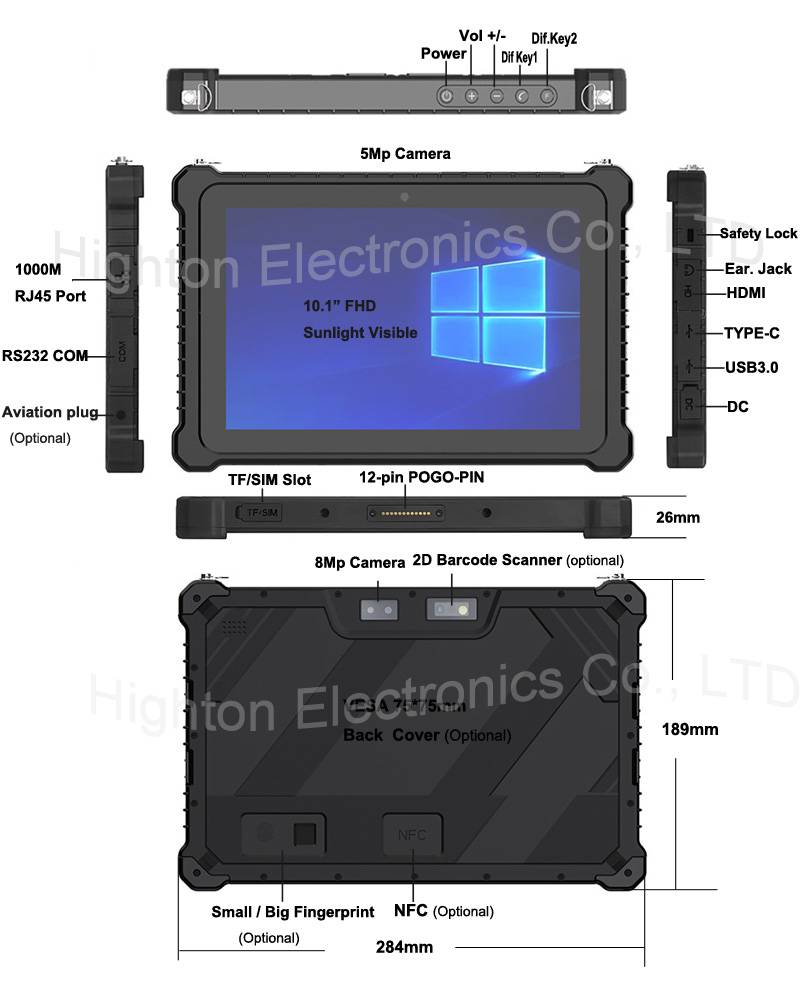
Hot Selling 10 Inch Intel N5100 I5 I7 FHD 8 +128GB 16+256GB Win10 Pro Win11 Pro 4G 5G Rugged Tablet PC Pad with NFC Barcode
Highton Electronics Co., Ltd.
MUX Series Communication Interface Device for Security and Stability Control System
Nanjing NR Electric Co., Ltd.

20 Inch 1600*900 Full HD 60Hz TFT LED Monitor with VGA and DP Interfaces for Desktop Computers-Business Use
Guangzhou Zanying Optoelectronics Technology Co., Ltd.