China Telecom's 5G Wireless Network Planning Large Model Pilot Application Improves Efficiency by 50%
en.Wedoany.com Reported - China Telecom has recently completed the pilot application of its 5G wireless network planning large model in live networks, achieving a 50% improvement in planning efficiency and a solution accuracy rate of over 75%, enabling automatic output of planning and design solutions and precise prediction of construction outcomes.
Traditional wireless network planning relies on manual site surveys, manual data extraction and analysis, and expert station-by-station comparison, resulting in low work efficiency, long cycles, and difficulty in achieving global optimization. In recent years, the industry has widely adopted big data analysis and ray tracing model simulation methods. Building on this, China Telecom has responded to the Ministry of Industry and Information Technology's "AI + Information and Communication" innovation and development requirements, further streamlining the entire process from network insight, site planning, and twin prediction to solution generation. It has built a digital employee capability integrating network planning full-scenario perception, analysis, decision-making, and execution, achieving deep multimodal data fusion, intelligent orchestration of atomic capabilities, and precise simulation of dynamic business changes. This innovation is mainly reflected in three aspects.
First, it has accumulated a multi-feature, high-quality network planning dataset. China Telecom integrates multi-source heterogeneous data such as performance, configuration, geography, population, and service experience. Leveraging technologies such as knowledge graphs, rule engines, NLP information extraction, and LLM prompt engineering, it systematically transforms planning expert experience into structured data assets, supplemented by intelligent data parsing tools to ensure data quality, laying the data foundation for intelligent network planning.
Second, it has pioneered a "dual-twin large model collaborative planning" technical architecture. The channel twin model achieves high-precision reconstruction of network space and forward-looking site planning, while the traffic twin model accurately predicts traffic fluctuations in complex scenarios. The dual models collaborate for optimization, automatically outputting the optimal solution that balances network coverage, capacity, value, and structure, marking the first time network planning has shifted from "experience-dependent" to "model-driven."
Third, it has completed live network practical verification with partners. China Telecom, in collaboration with ZTE, conducted live network validation in complex scenarios such as residential areas and underground parking lots in Shanghai's Pudong New Area. In residential areas, the model integrates multidimensional data such as population density, building distribution, and grid MR, achieving a site supplementation accuracy rate of over 80%. In underground parking lots, the model innovatively introduces correlation identification between movement speed and signal attenuation characteristics, achieving a coverage problem identification accuracy rate of over 75%.
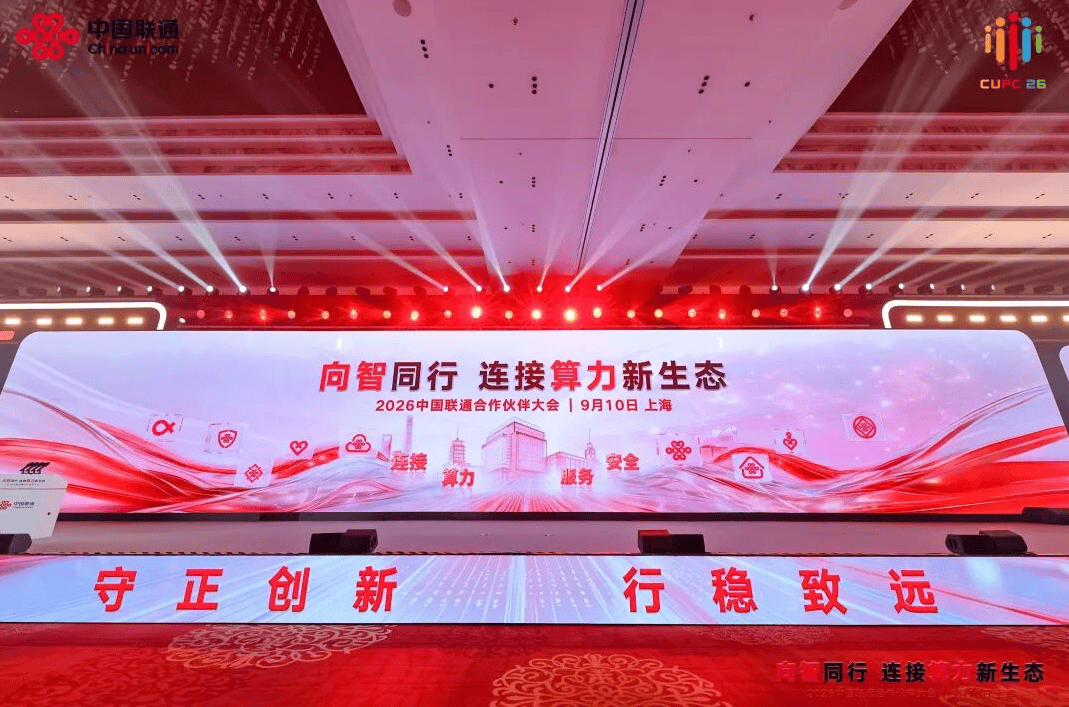
At this month's 2026 China Internet Conference, China Telecom Vice President Luan Xiaowei stated that China Telecom will actively embrace and fully integrate, continuously improving the integrated system of computing power, platforms, data, large models, and intelligent agents, driving the transformation of enterprise operations from traditional traffic operations to Token operations.
Related Products



Multi-function Marine Monitoring Low-altitude Detection Radar Sea-air Boundary Ocean Dynamic Environment Measurement
Chengdu Dixin Technology Co., Ltd.
GYTA Type Non-Self-Supporting Aerial/Duct Optical Cable
TONGDING INTERCONNECTION INFORMATION CO., LTD.
Flat Portable Satellite Terminal 0.35m Aperture Manual Portable Terminal
China Starwin Science & Technology Co., Ltd.
One-Stop Steward Service for the Entire Logistics System Integration Chain
Zhongding Intelligent (Wuxi) Technology Co., Ltd.