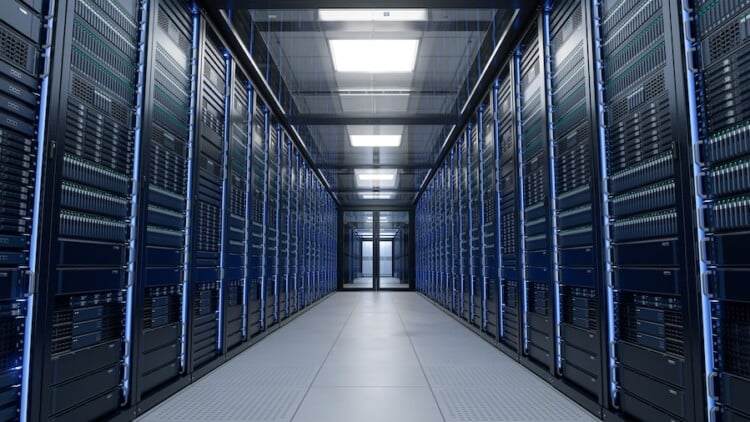
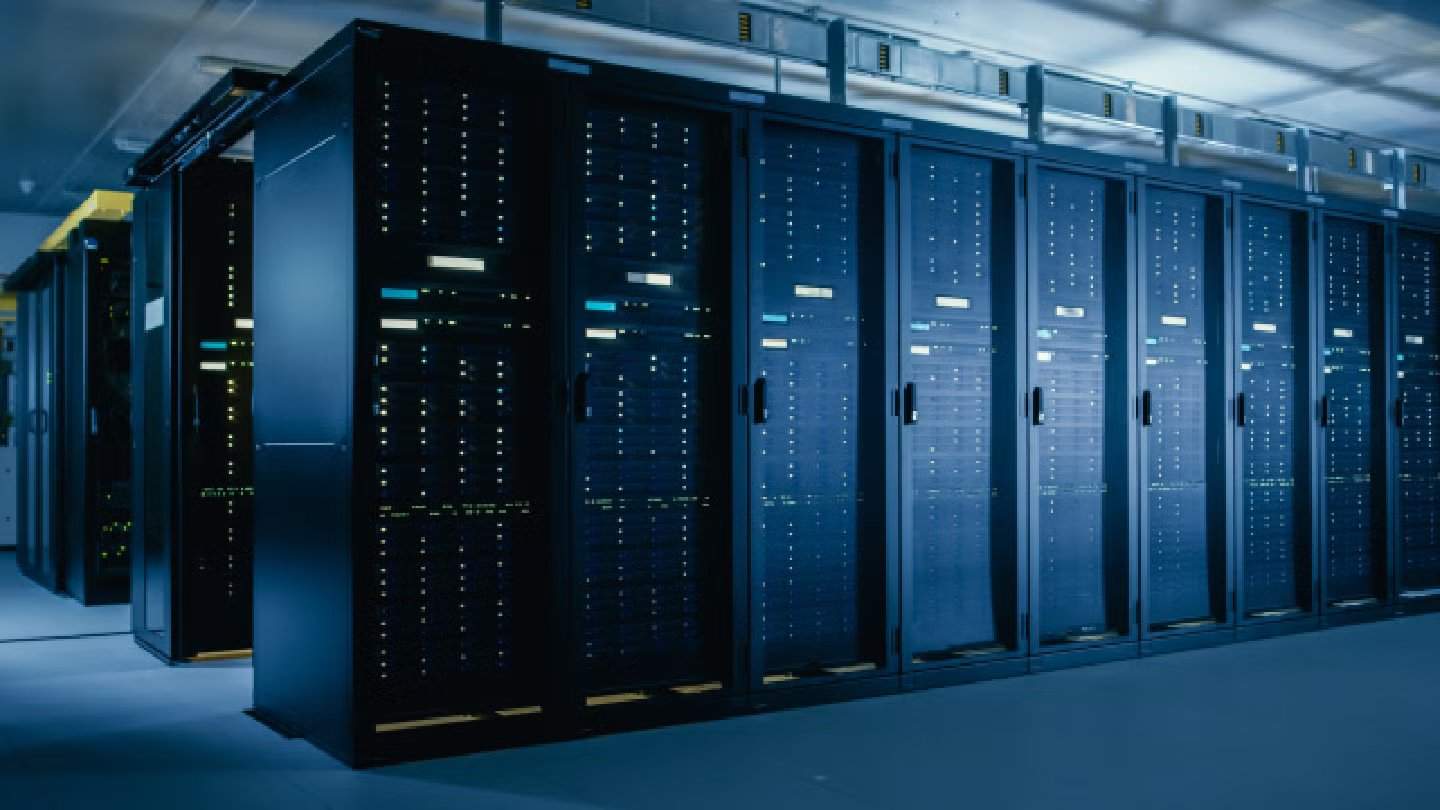
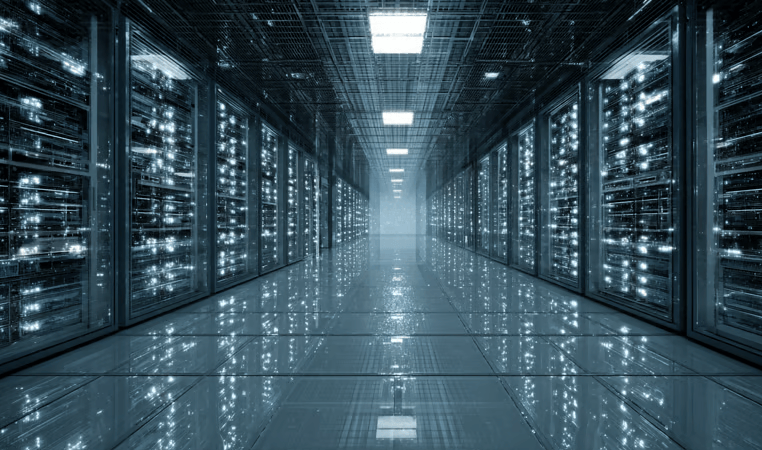
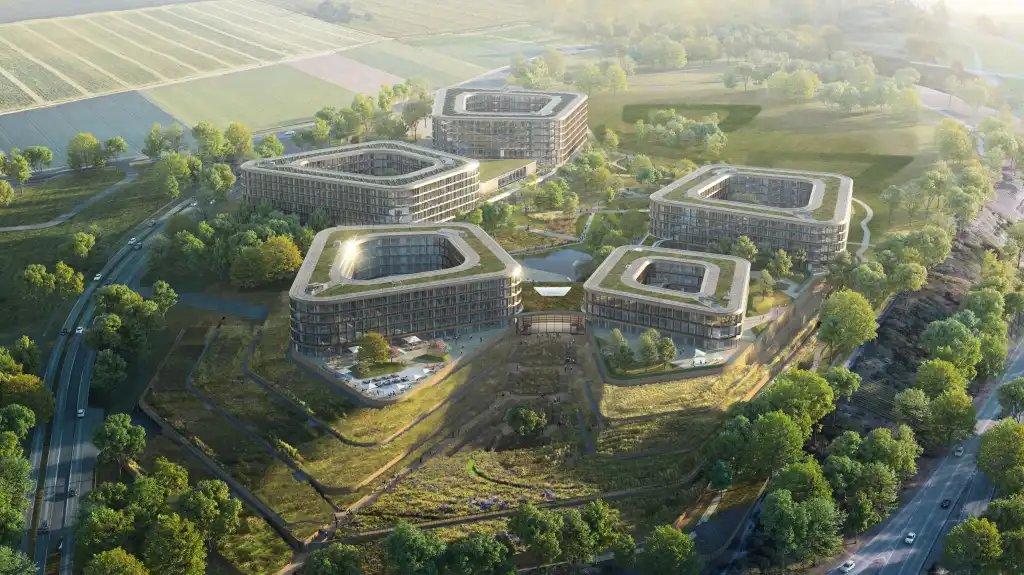
Microsoft and OpenAI Build the World's Largest Data Center in the United States
en.Wedoany.com Reported - The landscape of the world's largest data centers is being redefined by a handful of tech giants. According to Shield Operations research, these massive complexes have become the core infrastructure of modern computing, supporting cloud services and AI models. Campus sizes have exceeded 1 million square feet (approximately 92,000 square meters, equivalent to 13 FIFA standard football fields), with energy consumption surpassing 1 gigawatt—an unprecedented level in technological history—and housing all current large-scale AI model GPU clusters.

Shield Operations believes that the most reliable metric for measuring data center scale is IT available power capacity, rather than physical area. Space can be misleading: a 2 million square foot warehouse with low-density racks may have less computing power than a more compact facility with higher energy density. The company's ranking is based entirely on installed power capacity to strictly compare the actual scale of each campus.
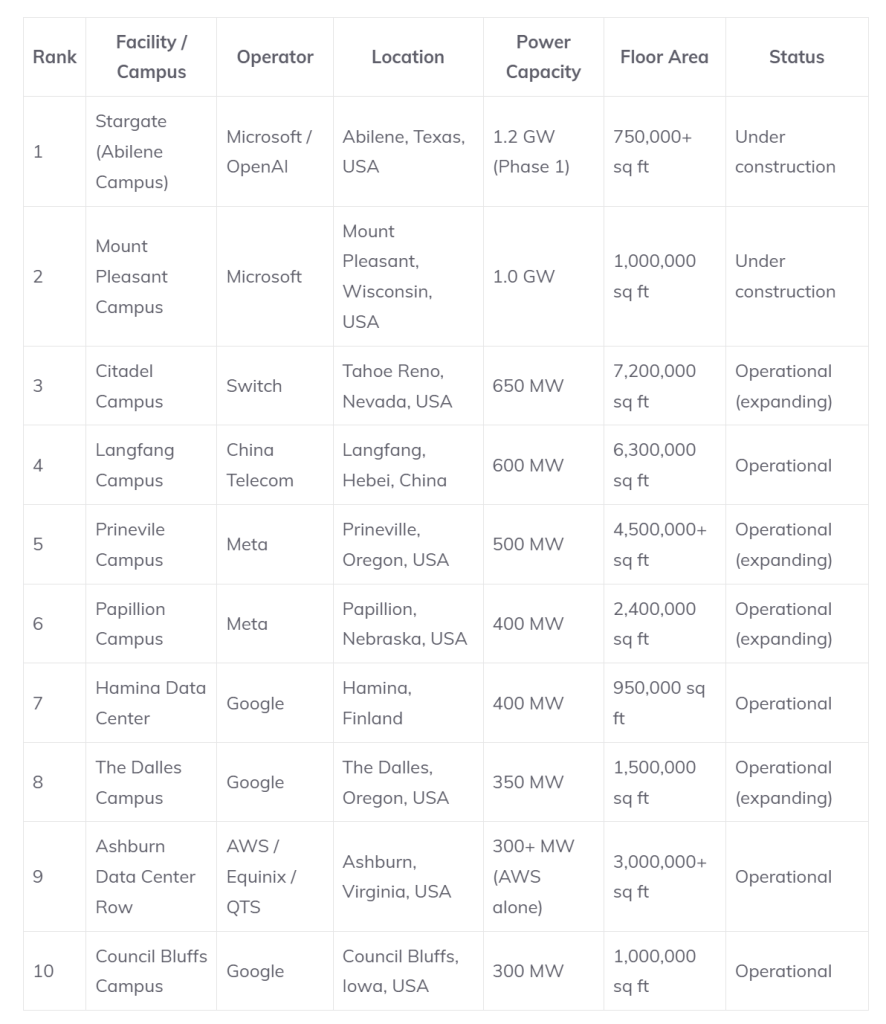
The report's data comes from public information, capacity reports, and infrastructure audits. The world's largest data center—still under construction—is the Stargate campus in Abilene, Texas, jointly built by Microsoft and OpenAI, with a first-phase power capacity of 1.2 gigawatts. Closely following is Microsoft's Mount Pleasant campus, with a capacity of 1 gigawatt. Among operational facilities, Switch's Citadel campus in Nevada has a capacity of 650 megawatts and an available area exceeding 7.2 million square feet, making it the largest operational data center by physical area. The list also includes facilities from operators such as China Telecom, Meta, Google, AWS, Equinix, and QTS, all with capacities exceeding 300 megawatts.
Shield Operations attributes this growth to the computational demands of AI model training. The energy density of new racks is 15 times that of traditional data centers, jumping from 6-8 kilowatts per rack to approximately 120 kilowatts when equipped with NVIDIA DGX B200 systems. A single AI training cluster can consume 100 megawatts, housing hundreds of high-density racks, each equipped with multiple latest-generation GPUs. This pressure has driven operators to invest heavily: Microsoft, Amazon, Google, and Meta have invested over $300 billion in 2025 and 2026, primarily for building data centers and procuring AI hardware.
The research also highlights the energy challenges accompanying this expansion. A 1-gigawatt campus consumes as much electricity as a city of 750,000 residents, straining regional power grids. The report notes that operators like Dominion Energy in Virginia saw an 85% increase in data center connection requests between 2023 and 2025, indicating that existing infrastructure is being outpaced by demand. To bypass limitations, companies are turning to alternative energy sources: Microsoft signed a 20-year agreement to restart Unit 1 of the Three Mile Island nuclear reactor, dedicated to powering data centers; Amazon acquired a nuclear energy campus in Pennsylvania for $650 million; and Google committed to purchasing power from Kairos Power's small modular reactors, with delivery expected by 2030.
Looking ahead, the research predicts that by the end of 2027, the number of hyperscale data centers will exceed 2,000, up from approximately 1,300 in 2025. The trend points toward ever-larger capacities: xAI plans to build a 150-megawatt campus scalable to 1 gigawatt; Oracle announced plans for a 2-gigawatt facility, which, if completed, would become the largest data center ever. Shield Operations concludes that global digital infrastructure is undergoing a structural transformation, driven by artificial intelligence and unprecedented computational demands. These data centers, supported by massive investments and new energy strategies, are redefining the scale of modern computing.
Related Products



GYTA Type Non-Self-Supporting Aerial/Duct Optical Cable
TONGDING INTERCONNECTION INFORMATION CO., LTD.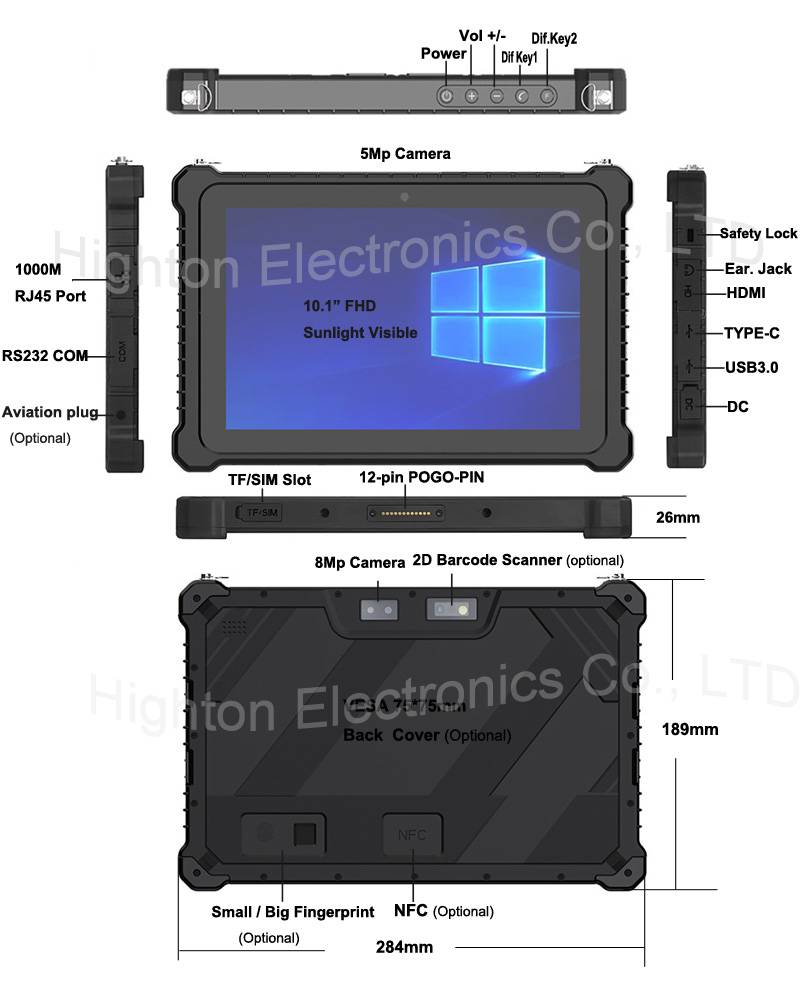
Hot Selling 10 Inch Intel N5100 I5 I7 FHD 8 +128GB 16+256GB Win10 Pro Win11 Pro 4G 5G Rugged Tablet PC Pad with NFC Barcode
Highton Electronics Co., Ltd.

Industrial and Commercial Point-Type Gas Detector
Jinan Benan Technology Development Co., Ltd.
G.652.D Wavelength-extended Non-dispersion Shifted Single-mode Optical Fiber
HONGAN GROUP CO., LTD.
20 Inch 1600*900 Full HD 60Hz TFT LED Monitor with VGA and DP Interfaces for Desktop Computers-Business Use
Guangzhou Zanying Optoelectronics Technology Co., Ltd.
TWP16 P-Band Tropospheric Wind Profile Radar
China Huayun Meteorological Technology Group Co., Ltd.