Mirendil Signs Over $100 Million Agreement with Google to Develop Self-Improving AI
en.Wedoany.com Reported - AI startup Mirendil has reached a computing agreement valued at over $100 million with Google, gaining access to Google's TPUs, Nvidia GPUs, and managed training clusters to develop self-improving AI systems. The deal reflects two current trends in the AI industry: cloud giants attracting startups with massive infrastructure investments, and AI companies locking in computing resources as they expand.
Mirendil co-founder and CEO Behnam Neyshabur revealed that the agreement exceeds $100 million, roughly half the size of the company's seed funding round completed at the end of June. Mirendil closed its seed round at the end of June with a $1 billion valuation. The startup aims to build AI systems capable of iteratively improving themselves—recursive self-improving AI—with the ultimate goal of enabling AI to handle the work of an entire frontier AI laboratory.
Recursive self-improving AI refers to systems that can continuously optimize their own capabilities through iteration. This research direction was previously advanced primarily by large labs such as Anthropic, and Mirendil's co-founders come from Anthropic. Recently, startups including Recursive Superintelligence and Ricursive Intelligence have also entered the field, focusing on achieving this goal.
Mirendil believes that self-improving AI will automate much of the scientific and AI research process, helping scientists make progress in disciplines such as medicine, biology, and materials science. Its vision is to have AI mimic how human scientists learn new fields, accumulate knowledge and expertise, and gradually improve performance—for example, persistently working on complex topics like Alzheimer's disease while continuously enhancing its own knowledge base and research performance.
Training self-improving AI requires enormous computing power. Mirendil co-founder Harsh Mehta stated that model training increasingly depends on matching the right workloads to the right hardware. The company has developed models that adapt to different chips and workload types, and with the variety of chip options Google provides, tasks can be assigned to the most suitable accelerators, reducing costs for both the company and its customers.
This flexibility is a core selling point of Google's AI infrastructure strategy. Amin Vahdat, Google's Senior Vice President and Chief Technologist for AI and Infrastructure, said in a statement that AI progress is no longer solely about chip-level performance—the key lies in orchestrating the entire intelligent system and pushing past the physical limits of scaling. For Google, this deal secures a strategic partner for building cutting-edge recursive self-improving AI, technology that could later be marketed to enterprise customers; for Mirendil, its software and systems-layer capabilities help customers make fuller use of Google's hardware, giving the cloud giant an additional edge in the computing market.
Related Products

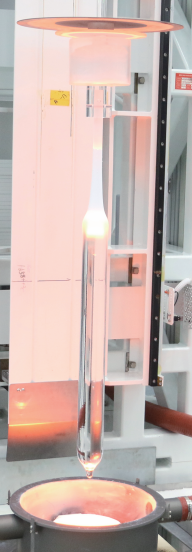
G.652.D Wavelength-extended Non-dispersion Shifted Single-mode Optical Fiber
HONGAN GROUP CO., LTD.
MUX Series Communication Interface Device for Security and Stability Control System
Nanjing NR Electric Co., Ltd.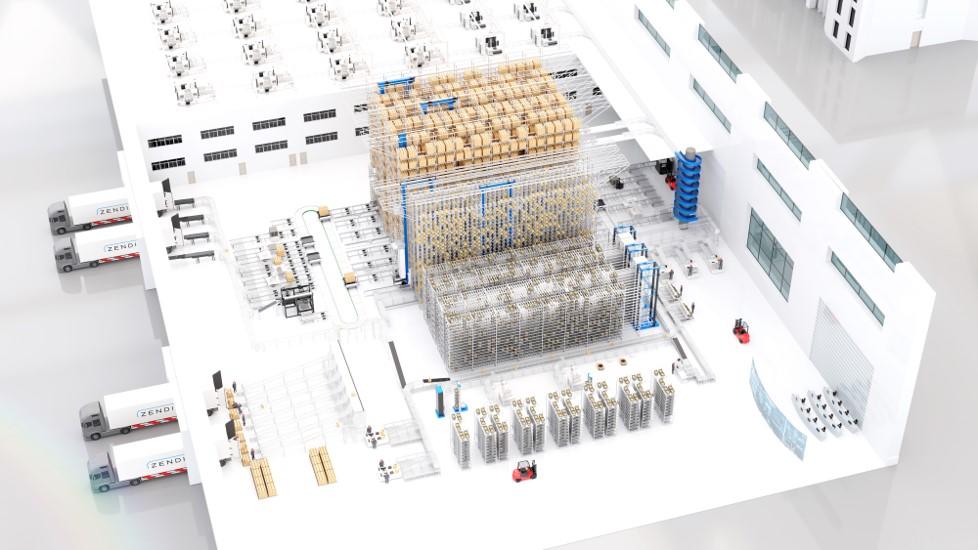
One-Stop Steward Service for the Entire Logistics System Integration Chain
Zhongding Intelligent (Wuxi) Technology Co., Ltd.
20 Inch 1600*900 Full HD 60Hz TFT LED Monitor with VGA and DP Interfaces for Desktop Computers-Business Use
Guangzhou Zanying Optoelectronics Technology Co., Ltd.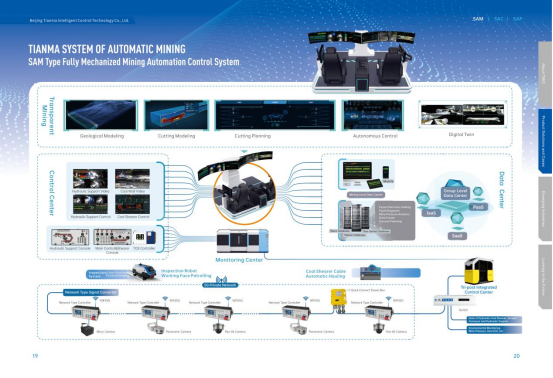
Comprehensive Mining Automation Control System
Beijing Tianma Intelligent Control Technology Co., Ltd.
Flat Portable Satellite Terminal 0.35m Aperture Manual Portable Terminal
China Starwin Science & Technology Co., Ltd.

Hot Selling 10 Inch Intel N5100 I5 I7 FHD 8 +128GB 16+256GB Win10 Pro Win11 Pro 4G 5G Rugged Tablet PC Pad with NFC Barcode
Highton Electronics Co., Ltd.

Mine Explosion-proof and Intrinsically Safe Industrial Ethernet Ring Network (10 Gigabit/Gigabit)
Chongqing Mas Sci&Tech Co., Ltd.