OpenAI Launches GPT-6 Sol and Luna with API Prices Cut by 50%
en.Wedoany.com Reported - On September 22, OpenAI released GPT-6 Sol and GPT-6 Luna, expanding the GPT-6 series from the previous GPT-6 Astra to three main capability tiers. The two new models are now available on ChatGPT Work and Codex for Plus, Pro, Business, Enterprise, and Edu users, and are simultaneously available to developers via API under the model names gpt-6-sol and gpt-6-luna. OpenAI has also made desktop GPT-6 Luna available to Free and Go users.
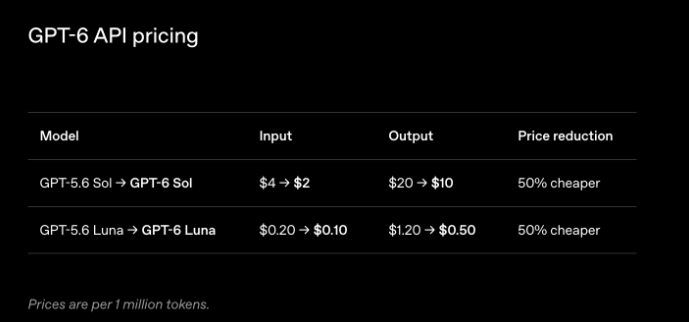
This update also adjusted the API pricing for both models. For GPT-6 Sol, the input price per million tokens dropped from $4 during the GPT-5.6 Sol promotional period to $2, and the output price dropped from $20 to $10; for GPT-6 Luna, the input price dropped from $0.20 to $0.10, and the output price dropped from $1.20 to $0.50. OpenAI attributed this adjustment to improvements in inference infrastructure and caching efficiency, and released the API pricing for GPT-6 Sol and Luna on the basis of an overall 50% reduction compared with the promotional prices of the corresponding GPT-5.6 models.
In terms of product capabilities, GPT-6 Sol mainly covers complex professional work, software development, agentic tasks, and computer operation, while GPT-6 Luna is positioned for large-scale workloads that are more sensitive to invocation speed and cost, and GPT-6 Astra continues to sit at the highest capability tier in the series. In the AutomationBench 1.0.6 test published by OpenAI, GPT-6 Sol achieved a task score of 33.2% at xhigh reasoning effort, with a cost of $0.27 per task; GPT-6 Luna improved by 5.4 percentage points over the previous generation at high reasoning effort, while cost per task dropped by 58%. In the DeepSWE 1.1 software engineering test, GPT-6 Sol scored 68.8% at the highest reasoning effort, and GPT-6 Luna scored 66.6%.
OpenAI also adjusted the prompt caching mechanism for GPT-6. Reading cached input tokens for GPT-6 provides a 90% price discount, and developers can adjust reasoning effort and enable or disable tools without breaking previous context caches, and can control the prompt prefixes that need to be reused through explicit cache breakpoints. Citing data from GitHub, OpenAI said that over the past few months, related caching improvements reduced the share of prompt tokens that GitHub Copilot needed to reprocess across billions of requests by more than 50%.
In terms of rollout pace, GPT-6 Sol and GPT-6 Luna entered ChatGPT Work and Codex starting September 22 and are simultaneously available via API. OpenAI said the two models would be rolled out to eligible ChatGPT accounts in stages that day; at launch, they had not yet directly entered the regular model selection range in the Chat interface. OpenAI previously launched the GPT-5.6 series in July and released GPT-6 Astra first in September. With the addition of Sol and Luna this time, the GPT-6 series now forms a product portfolio oriented toward different task intensities, operating speeds, and invocation costs.
Related Products


TWP16 P-Band Tropospheric Wind Profile Radar
China Huayun Meteorological Technology Group Co., Ltd.

Multi-function Marine Monitoring Low-altitude Detection Radar Sea-air Boundary Ocean Dynamic Environment Measurement
Chengdu Dixin Technology Co., Ltd.

Mine Explosion-proof and Intrinsically Safe Industrial Ethernet Ring Network (10 Gigabit/Gigabit)
Chongqing Mas Sci&Tech Co., Ltd.
One-Stop Steward Service for the Entire Logistics System Integration Chain
Zhongding Intelligent (Wuxi) Technology Co., Ltd.

MUX Series Communication Interface Device for Security and Stability Control System
Nanjing NR Electric Co., Ltd.
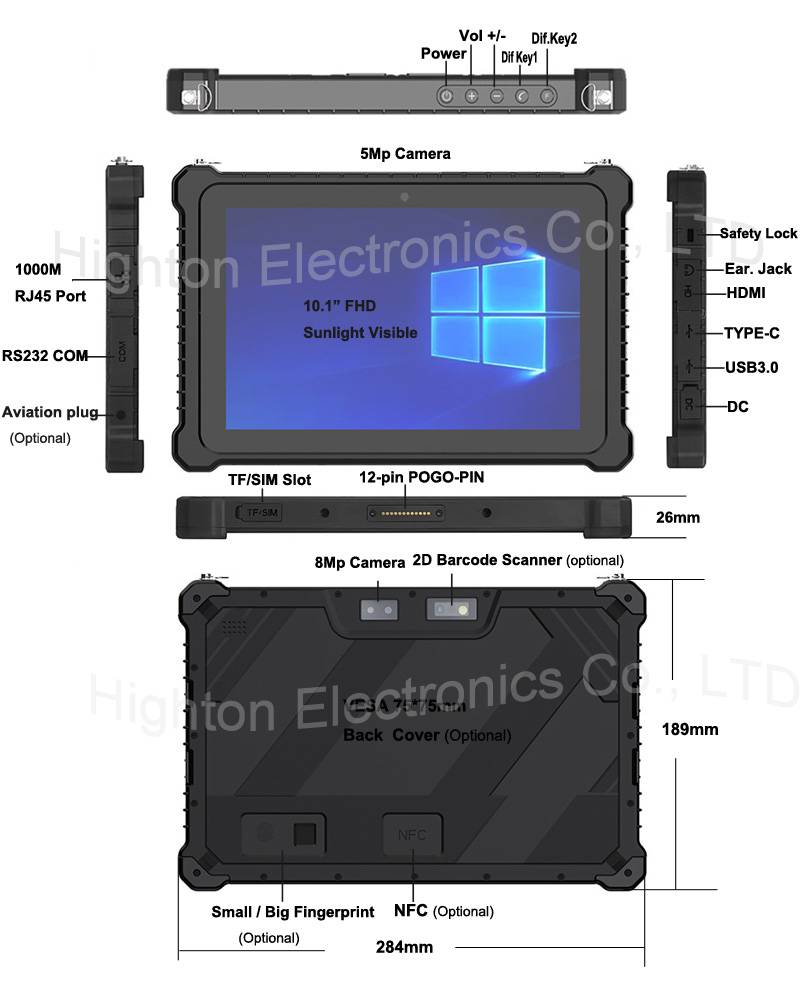
Hot Selling 10 Inch Intel N5100 I5 I7 FHD 8 +128GB 16+256GB Win10 Pro Win11 Pro 4G 5G Rugged Tablet PC Pad with NFC Barcode
Highton Electronics Co., Ltd.

GYTA Type Non-Self-Supporting Aerial/Duct Optical Cable
TONGDING INTERCONNECTION INFORMATION CO., LTD.