German FBH Institute Develops 110–170 GHz Corrugated Horn Antenna
en.Wedoany.com Reported - The Ferdinand Braun Institut (FBH) in Berlin, Germany, has completed the design, fabrication, and experimental evaluation of a D-band (110–170 GHz) stacked corrugated horn antenna. The antenna has a nominal center frequency of 150 GHz, with a measured gain of 18.5 dBi and a reflection coefficient below -20 dB, maintaining a stable radiation pattern across the 140–160 GHz frequency range.
As wireless communication systems evolve toward sub-terahertz (sub-THz) and 6G frequency bands, antenna design must strike a balance among gain, bandwidth, efficiency, and manufacturability. Corrugated horn antennas are well suited for such high-frequency links due to their low transmission loss, highly symmetric radiation patterns, low cross-polarization levels, and high aperture and radiation efficiencies. These characteristics help improve signal fidelity, suppress unwanted polarization components, and reduce transmission loss; from a green information and communication technology (ICT) perspective, lower transmit power is required to achieve a specified link margin, thereby reducing overall system power consumption.
The design goal of this multilayer antenna is to achieve a gain greater than 20 dBi over an operating bandwidth exceeding 10 GHz.
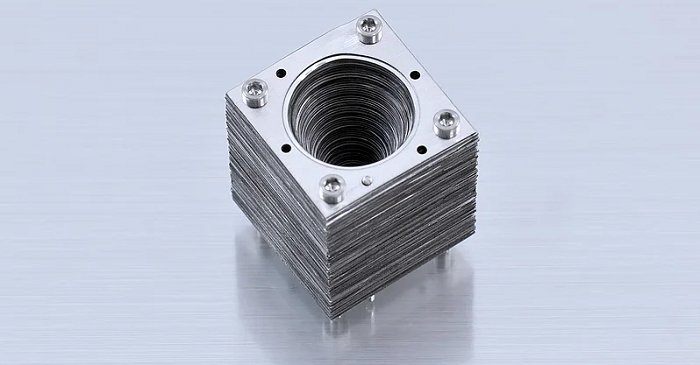
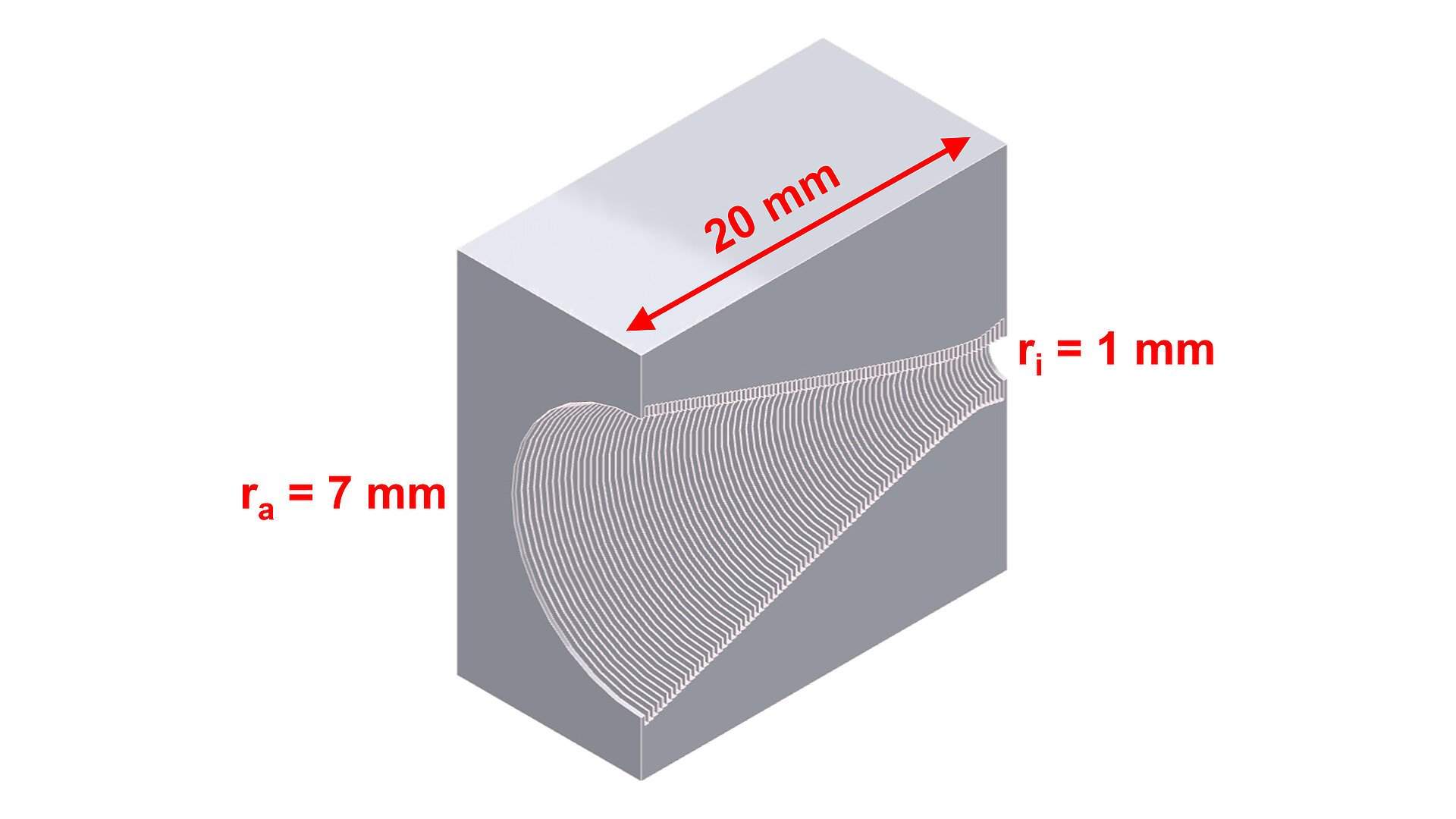
The antenna components are stacked from laser-cut aluminum alloy sheets with thicknesses of 50 µm and 200 µm, aligned using dowel pins and secured with screws. The tapered transition section is machined from an aluminum block using wire electrical discharge machining (wire-EDM), providing the geometric and electromagnetic transition from the rectangular WR-6 waveguide to the circular aperture of the horn. The horn structure expands from a 1 mm circular aperture to a 7 mm radiating aperture over a length of 20 mm.
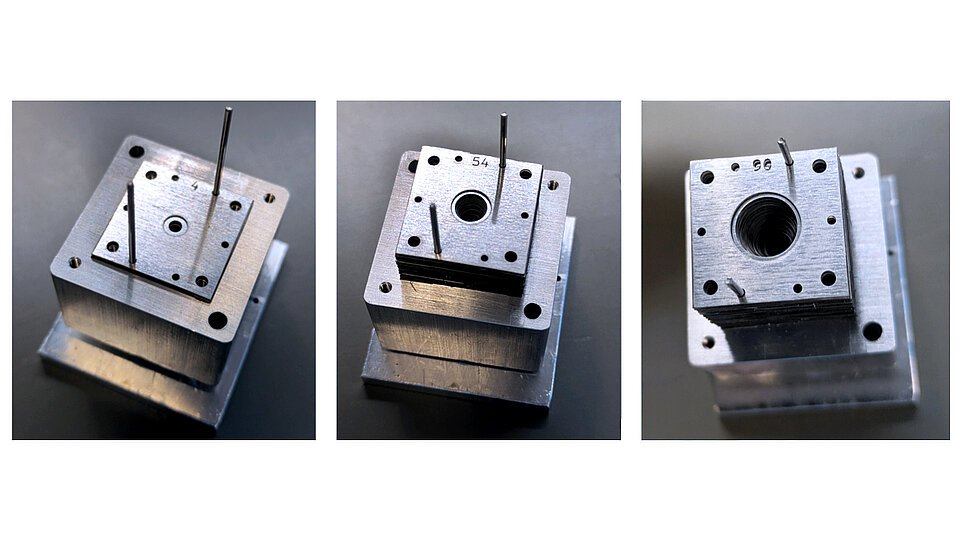
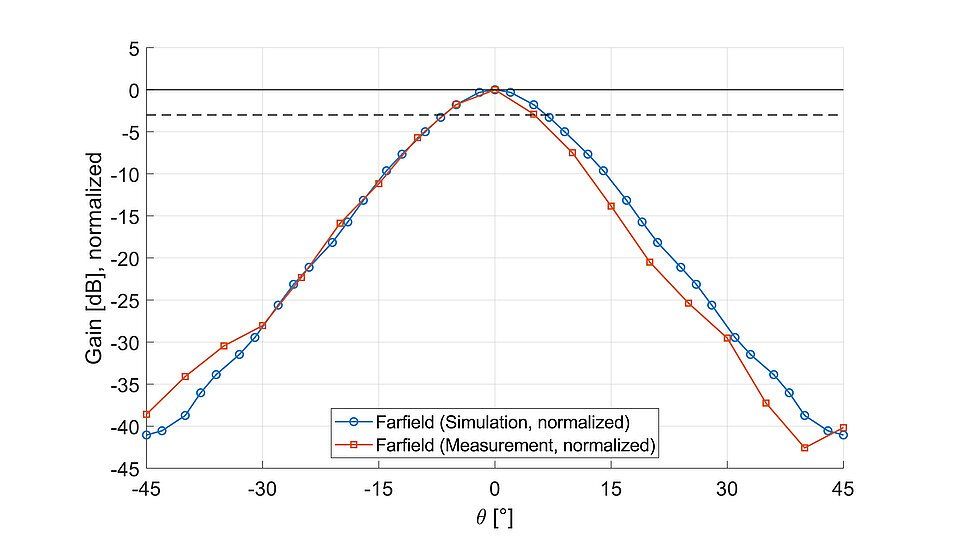
The measured results are in close agreement with simulation data, indicating that the design offers good predictability, which can reduce the need for iterative redesign, thereby shortening development cycles, lowering material consumption, and reducing the associated environmental footprint. A reflection coefficient below -20 dB indicates negligible power loss due to impedance mismatch, allowing a greater proportion of the transmitted energy to be effectively radiated rather than dissipated as heat, directly enhancing the energy efficiency of high-frequency communication systems.
Across the 140–160 GHz band, the antenna radiation pattern remains stable, which is beneficial for maintaining consistent link performance. The measured gain of 18.5 dBi is slightly below the 20 dBi design target but still provides sufficient directivity for highly focused point-to-point links, helping to improve spectral utilization efficiency and mitigate co-channel interference—both of which are key requirements for energy-efficient and sustainable wireless communication networks.
This work was partially funded by the German BMFTR under the framework of "Forschungsfabrik Mikroelektronik Deutschland (FMD)" (reference number 16FMD02) and the "GreenICT@FMD" project (reference number 16ME0505).
Related Products



Automatic Aiming Laser Remote Obstacle Removal Robot
Pinggao Group Weihai High-Voltage Apparatus Co., Ltd.

GYTA Type Non-Self-Supporting Aerial/Duct Optical Cable
TONGDING INTERCONNECTION INFORMATION CO., LTD.

TWP16 P-Band Tropospheric Wind Profile Radar
China Huayun Meteorological Technology Group Co., Ltd.
Hot Selling 10 Inch Intel N5100 I5 I7 FHD 8 +128GB 16+256GB Win10 Pro Win11 Pro 4G 5G Rugged Tablet PC Pad with NFC Barcode
Highton Electronics Co., Ltd.