German HZDR and Leipzig University Team Achieve First-Ever Separation of Protium, Deuterium, and Tritium
en.Wedoany.com Reported - Recently, a team comprising the Helmholtz-Zentrum Dresden-Rossendorf, Leipzig University, the Max Planck Institute, and other institutions in Germany published experimental results on hydrogen isotope separation. The researchers introduced an equimolar mixture of protium, deuterium, and tritium gas into a silver-ion-exchanged Y-type zeolite at approximately 83 kelvin, enriching tritium through selective adsorption, thereby offering a new material solution for fuel recovery in fusion reactor exhaust.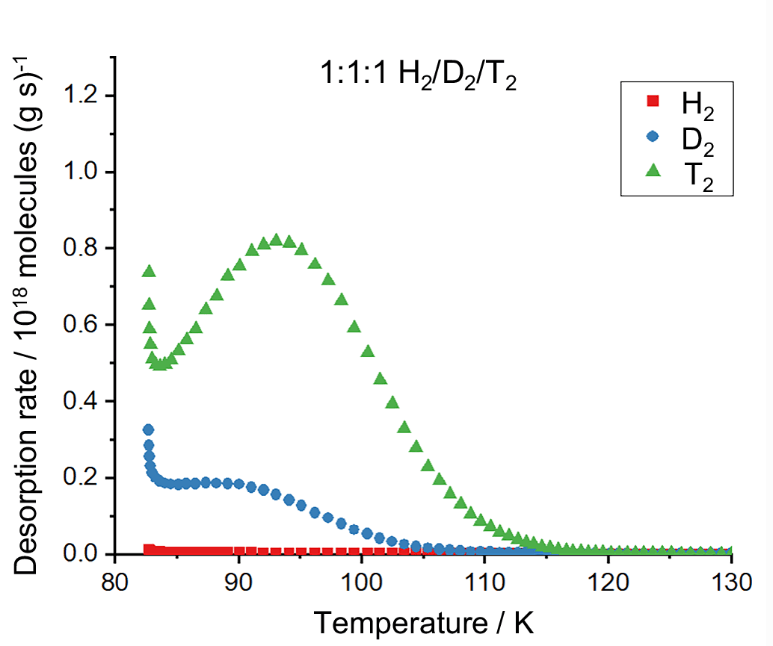
The experiment used a 1.7-milligram zeolite sample, with a total gas pressure of 1 kilopascal and an adsorption time of 10 minutes. The initial gas had an isotope ratio of 1:1:1 for the three species, and after adsorption, the molar ratio of protium, deuterium, and tritium reached 1:41:175. Binary mixture experiments measured a selectivity of 244 for tritium over protium, while the selectivities of deuterium over protium and tritium over deuterium were 29 and 4.2, respectively.
The separation process exploits differences in adsorption energy between silver ion sites and hydrogen isotopes of varying mass. Heavier tritium binds more strongly to silver ions and can be separated from protium and deuterium during temperature-programmed desorption. The working temperature range can be covered by liquid nitrogen cooling, and compared with cryogenic distillation, which requires lower temperatures, this approach has the potential to reduce the refrigeration load in the fusion fuel cycle.
After exposing the sample to tritium for 4 hours, the researchers observed no change in desorption performance, but the current results still stem from milligram-scale, low-pressure batch experiments. Continuous-flow separation capability, cycle life, material packing scale, and safety design for tritium-containing systems remain to be validated. Therefore, this achievement currently constitutes laboratory-scale validation of tritium separation materials and does not yet constitute fusion fuel cycle equipment.
Related Products

80kW Megawatt Supercharging Module TH80F10030C9
Shijiazhuang Tonhe Electronics Technologies Co., Ltd.


G.652.D Wavelength-extended Non-dispersion Shifted Single-mode Optical Fiber
HONGAN GROUP CO., LTD.
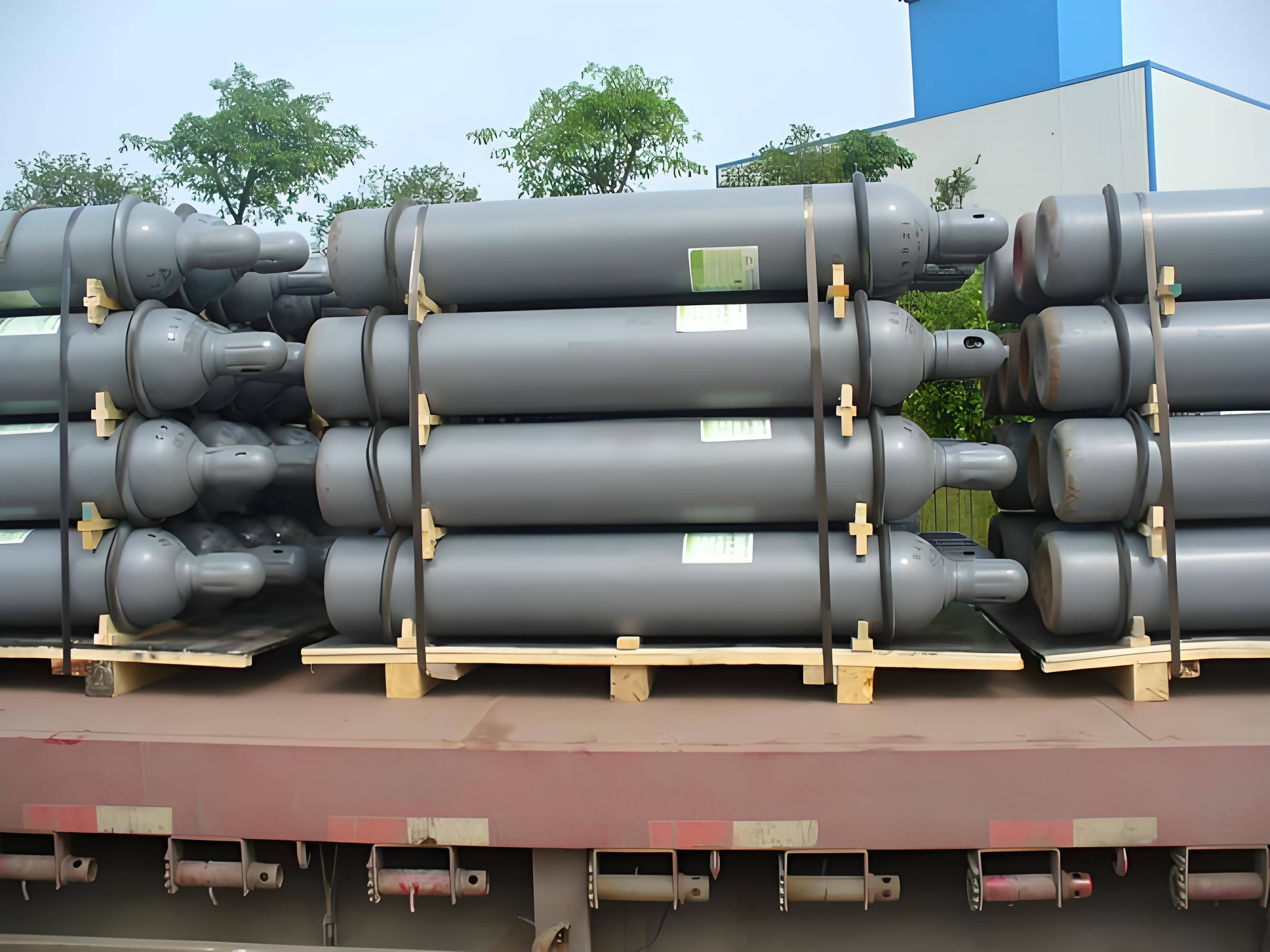
Global Sulfur Hexafluoride Gas Supply and Cylinder Export
Foshan Yuexin Industrial Gas Co., Ltd.