China's National Energy Administration Issues 849 Energy Industry Standard Plans: Green Fuels, New-Type Power Systems, and Intelligent Nuclear Power Enter a Period of Rule Reshaping
en.Wedoany.com Reported - In September, the Comprehensive Department of the National Energy Administration issued the 2026 plan for the development and revision of industry standards in the energy sector, along with the translation plan for foreign-language versions. Among them, 849 new energy industry standards are to be formulated, an increase of 48 from 801 in 2025, representing a growth rate of approximately 6%. From 665 in 2023, 774 in 2024, and 801 in 2025, to 849 in 2026, the number of newly approved energy industry standards has remained at a high level for consecutive years. The scope of standards coverage has expanded significantly from traditional power, coal, oil and gas equipment, and engineering construction to new industrial segments such as green fuels, new-type energy storage, power markets, digitalization, artificial intelligence, carbon footprints, and advanced nuclear energy. The project numbers for the 2026 formulation plan run consecutively from 20260001 to 20260849, and the standards in the plan are generally scheduled for completion in 2028.
The "2026 Energy Industry Standard Plan Project Approval Guide" issued by the National Energy Administration in March this year has already made clear that the annual standards work will revolve around the new energy system, energy security, green and low-carbon transition, as well as new technologies, new industries, and new business forms, and has proposed supporting the mutual promotion and transformation of international standards and energy sector standards. After public consultation in July, this batch of projects entered the formal approval stage. The 2025 energy sector industry standard development plan comprised 801 projects and the revision plan comprised 402 projects; in 2026, the number of newly added development projects alone reached 849, reflecting that technological iteration in the energy industry is continuously being translated into products, engineering, operations, and market rules.
I. Green Fuels Begin Moving from "Project Investment" to "Product Certification"
The very first of the 849 standards is "Green Aviation Fuel," and this ordering itself corresponds to the dense layout of the green fuels segment in this year's energy standards system. This standard will cover different technological routes including hydroprocessed esters and fatty acids, gasification Fischer-Tropsch, alcohol-to-jet fuel, and power-to-liquid, establishing evaluation methods and technical requirements for green aviation fuel; the immediately following "Bio-naphtha" extends technical requirements to test methods, inspection rules, packaging and transportation, safety, and import-export inspection, with the product usable as feedstock for ethylene cracking and catalytic reforming.
The rules for green methanol and green synthetic ammonia further enter the third-party certification stage. The "Technical Specification for Sustainable Certification of Green Methanol" plans to stipulate general requirements, evaluation requirements, implementation requirements, and certification marks, and directly targets third-party verification bodies; green synthetic ammonia adopts a similar framework, likewise incorporating production enterprises, certification bodies, and certification marks into unified rules.
This group of standards differs markedly from traditional fuel quality standards. In the past, industry standards mostly addressed "whether a product can be used" and "whether indicators are qualified," whereas green fuel standards are adding feedstock routes, sustainability attributes, evaluation methods, third-party certification, and labeling systems. For products such as green methanol, green ammonia, and sustainable aviation fuel that are preparing to enter ocean shipping, aviation, and international energy trade, the competitive variables facing production enterprises are extending from mere plant scale to product identity, certification systems, and full life-cycle data.
This will directly change the preliminary construction content of a batch of projects. In the future, when building green methanol, green synthetic ammonia, and aviation fuel facilities, the data interfaces required for feedstock source records, energy consumption metering, production process data, carbon emission accounting, quality testing, and third-party certification will likely need to be configured in parallel during the plant design and digital system construction stages. Standard-setting organizations are therefore beginning to extend from traditional refining and petrochemical research institutions to biomass energy organizations, production enterprises, and third-party evaluation systems.
II. Carbon Management Is Entering the Specific Product Level
Another main thread in the 2026 standards plan is the continued downward extension of carbon footprints from macro-level accounting to specific industrial products.
For example, the plan already includes "Greenhouse Gases — Quantification Methods and Requirements for Product Carbon Footprint — Polymer Modified Asphalt" and "Greenhouse Gases — Quantification Methods and Requirements for Product Carbon Footprint — Stabilized Rubber Asphalt," with standard content covering life cycle inventory analysis, interpretation of results, and carbon footprint report preparation.
As such standards enter traditional engineering materials like asphalt, the low-carbon rules of the energy industry begin to extend from the power generation side and fuel side further to material procurement and engineering construction. Some materials procured in the future for roads, power engineering, and energy infrastructure will gradually add life-cycle carbon data alongside traditional indicators such as strength, durability, and viscosity.
For material enterprises, such changes are directly linked to production data collection, feedstock traceability, energy metering, and product carbon footprint reporting capabilities; for engineering enterprises, this will further extend to supplier selection and procurement technical documents. Carbon management in the energy industry is advancing from enterprise annual emission data to "per-ton fuel, per-item material, per-unit equipment, and per-engineering-product," and supply chain data will become important infrastructure for standard implementation.
III. New-Type Power Systems Begin to Fill in "Operating Rules," with Numerous System-Level Standards Emerging Beyond Grid Equipment
Traditional grid standards have long focused on equipment, lines, substations, and safety technical conditions, whereas the newly added standards in 2026 noticeably increase content on coordinated operation of different energy resources, power markets, and data exchange.
Taking the distribution side as an example, the planned standard for photovoltaic-storage-charging resource coordination already covers distribution networks below 35 kV, specifying that photovoltaic, energy storage, and electric vehicle charging and battery swap facilities jointly participate in power regulation, voltage support, demand response, renewable energy consumption, and emergency backup, and proposing an interaction architecture between photovoltaic-storage-charging resources and distribution networks along with technical requirements at each level.
Power market rules are also becoming further technicalized. The "Standard Specification for Dimension and Unit Precision in Power Markets" covers full-process data including market bidding, transaction clearing, result publication, metering and settlement, and information disclosure, with standard content extending to dimensions, units, data precision, interface specifications, data quality, and verification rules; standards such as calculation methods for bidding and clearing price ranges in power markets were also approved during the same period.
Such standards directly affect trading systems, dispatch systems, metering systems, virtual power plants, energy storage, electric vehicle aggregation, and renewable energy stations. As spot trading, ancillary services, and multiple types of distributed resources enter a unified market, how the same electricity quantity, power, price, or regulation capability is metered, declared, settled, and exchanged is forming new foundational rules.
Therefore, the equipment market for new-type power system construction remains enormous, but future incremental investment will not all be concentrated in traditional hardware such as transformers, switches, and lines. Metering equipment, energy management systems, dispatch and control platforms, market trading software, power forecasting, data interfaces, edge control, aggregation controllers, and cybersecurity equipment will all be directly affected by this round of standards system expansion.
IV. "AI + Energy" Begins Moving from Demonstration Applications to the Standardization Stage
The 2026 standards plan contains a large number of digitalization, intelligentization, and data governance projects, covering multiple traditional energy industries including coal, refining and petrochemicals, power grids, and nuclear power.
In the refining and petrochemical field, the "Technical Specification for Robotic Intelligent Inspection of Petrochemical Plants" has been approved, planning to unify environmental adaptability, inspection performance, data analysis, remote monitoring, predictive maintenance, and testing methods; the "Guidelines for Real-Time Optimization Technology of Refining and Chemical Plants" directly covers units such as atmospheric and vacuum distillation, catalytic cracking, catalytic reforming, ethylene cracking, aromatics complexes, coal gasification, and online oil blending.
In the coal field, digital scenario standards are beginning to take shape. The "Implementation Guide for Digital Scenario Construction in Coal Enterprises" covers production links such as coal preparation plants, and standards have begun to organize digital construction according to scenario definitions and data elements; the intelligent quantitative loading system for coal intermodal containers has also entered the design, construction, and acceptance standards system.
This standards structure will change the state of energy digitalization projects having previously relied heavily on individual owner technical specifications. Which objects robots need to inspect, what data they collect, what performance requirements intelligent systems need to meet, how algorithms connect with production systems, and according to what indicators systems are ultimately accepted are all beginning to enter unified industry standards.
Energy digitalization is gradually moving from "building platforms" to a complete engineering system of "scenario—data—algorithm—control—security—acceptance," which will raise the technical threshold for software companies, automation companies, robotics companies, and industrial AI companies entering the energy market, while also reducing the long-standing interface fragmentation problems between different projects.
V. Nuclear Power Becomes One of the Most Densely Arranged Segments in This Standards Plan for Digitalization and Advanced Reactor Types
The latter section of the 849 standards contains a concentrated appearance of numerous nuclear power projects, and the content has already far exceeded traditional nuclear power equipment manufacturing.
The "Design Technical Guidelines for Intelligent Nuclear Power Plants" covers the design, construction, operation, and decommissioning of new nuclear power plants, and involves reactor types such as pressurized water reactors, high-temperature gas-cooled reactors, and heavy water reactors, while also being applicable to intelligent upgrading of existing nuclear power plants; the "Grading Guidelines for Intelligent Nuclear Power Plants" further establishes an intelligentization evaluation and grading system.
Subsequently, there are also standards on nuclear power data security, network infrastructure, artificial intelligence applications, and digital twins. The "Guidelines for Artificial Intelligence Applications in the Nuclear Power Field" targets the development, deployment, and application of artificial intelligence systems; related standard content covers the AI model life cycle, data management, and risk management. The nuclear power plant network infrastructure standard runs through the planning, construction, operation and maintenance, and decommissioning stages, proposing unified technical requirements for network architecture, security protection, and system management.
A larger cluster of standards appears for high-temperature gas-cooled reactors. The last dozen or so items in the document consecutively cover fuel elements, nuclear design, thermal hydraulics, radiation protection, control rods, core support structures, heating plant site selection, nuclear island layout, ventilation and air conditioning, radioactive effluent monitoring, commissioning, coolant system operation, and primary loop chemical supervision. The "Technical Specification for Heating Plant Site Selection of High-Temperature Gas-Cooled Reactor Nuclear Power Plants" alone explicitly applies to the site selection of nuclear heating plants and proposes that other projects such as high-temperature gas-cooled reactor power generation and hydrogen production may refer to and implement it.
This set of standards already covers multiple key interfaces from the design end to the operation end. When high-temperature gas-cooled reactors enter non-traditional nuclear power applications such as industrial heating and hydrogen production in the future, site conditions, nuclear island design, thermal systems, control systems, commissioning, and operation will all require corresponding rules. Standards are being set up in advance, and it can be seen that the advanced nuclear energy industry is preparing a unified engineering language for subsequent large-scale project replication.
VI. The Next Round of Competition in the Energy Industry Will Increasingly Occur at "Standard Interfaces"
From the structure of the 849 newly added standards, three simultaneously advancing changes have emerged in China's energy industry.
The first is the expansion of energy varieties. Beyond coal, electricity, oil, and gas, new products such as green methanol, green synthetic ammonia, green aviation fuel, and new-type energy storage are entering the formal standards system. The second is the increase in energy system complexity. Increasing bidirectional connections are forming among photovoltaics, energy storage, electric vehicles, power grids, and market trading, requiring new control, metering, data, and settlement rules. The third is the deepening of industrial digitalization into core production links. Artificial intelligence, digital twins, robots, real-time optimization, and data security are beginning to enter high-safety-level scenarios such as refining and petrochemicals, coal mines, power grids, and nuclear power.
This continues to expand the scope of standards' impact on the industrial chain. Equipment enterprises no longer face only product parameter standards, but also communication interfaces, control functions, testing methods, and acceptance requirements; engineering enterprises need to incorporate carbon footprints, digitalization, data security, and intelligent operation and maintenance into design at an early stage; energy production enterprises need to establish data systems capable of supporting certification, metering, market trading, and full life-cycle management.
For new suppliers preparing to enter the energy industry, future market access capability will be more reflected in four aspects: whether products can meet standard parameters, whether systems can connect to the data interfaces of owners and power grids, whether engineering can pass unified testing and acceptance, and whether production and supply chains can provide complete and traceable data. Once the standards system is gradually completed, technical solutions, bidding documents, procurement specifications, and acceptance clauses will all be reorganized around these rules.
From 665 in 2023 to 849 in 2026, the newly added energy industry standard development plans increased by 184 over three years. This round of standards construction covers not only mature energy equipment, but also brings a large number of new technologies currently being industrialized into product, engineering, data, market, and safety rules in advance. Around 2028, when this batch of standards is successively completed, fields such as green fuel certification, new-type power system coordinated control, energy AI, advanced nuclear power, and product carbon footprints will form a more complete engineering and industrial rules system.
Related Products


CAP1400 main feedwater flow nozzle flowmeter.
Jiangsu Hongda Instrument Technology Co., LTD.
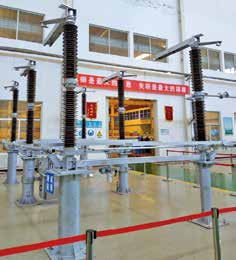
GW4-40.5/72.5/126/145/170/252/363/420 Series Double-column Horizontal Rotary High-voltage AC Disconnect Switch
SHANDONG TAIKAI DISCONNECTORS CO., LTD.
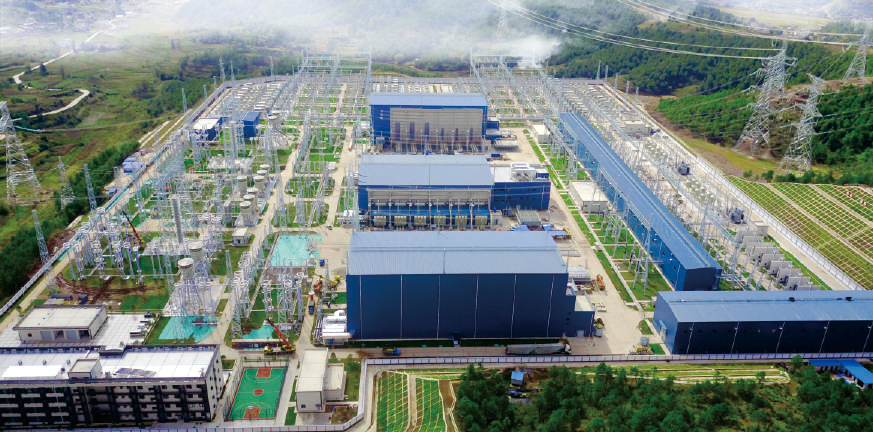
High-voltage Direct Current (HVDC) Transmission System Research and Integrated Design
XI'AN XD POWER SYSTEMS CO., LTD.

Forest and Grassland Heat Source Infrared Monitor
China Huayun Meteorological Technology Group Co., Ltd.