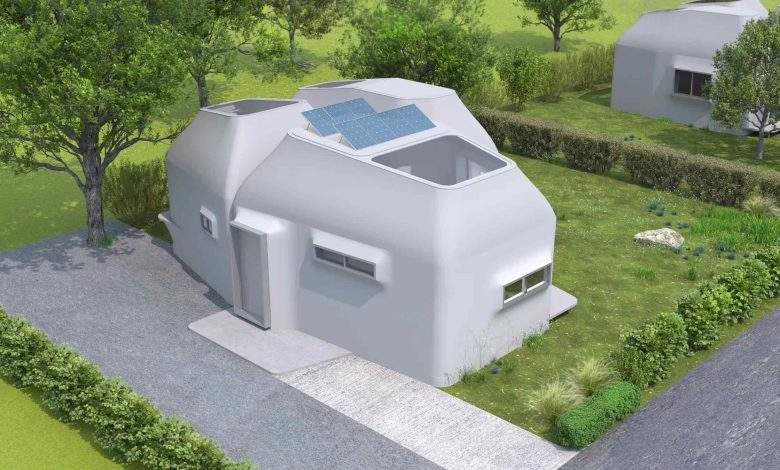
en.Wedoany.com Reported - Architect Xinyun Li has proposed a housing scheme for the Para Dash community in Modonpur, a rural area of Bangladesh, with construction costs—including materials and labor—below $2,500. This is not a ready-built home sold at that price, but rather an unbuilt design concept serving as an exercise in affordable, climate-responsive housing.
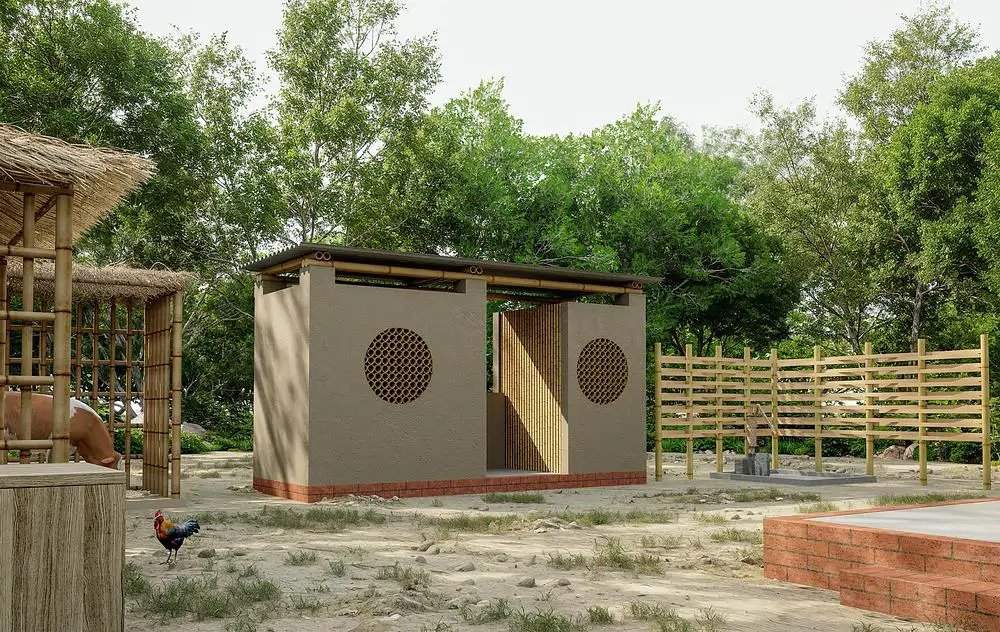
The Para Dash community has been engaged in bamboo weaving for generations. The local climate is hot, with intense monsoon rainfall and a risk of flooding. Rather than relying on complex technical systems, the scheme draws on traditional local building practices, using clay, straw, bamboo, locally fired bricks, handmade ceramics, and recycled corrugated sheets as its material palette. Bricks and metal sheets are sourced from nearby factories; walls are built with hand-processed and finished clay; straw is bundled using traditional methods; and bamboo is assembled with local joinery techniques.
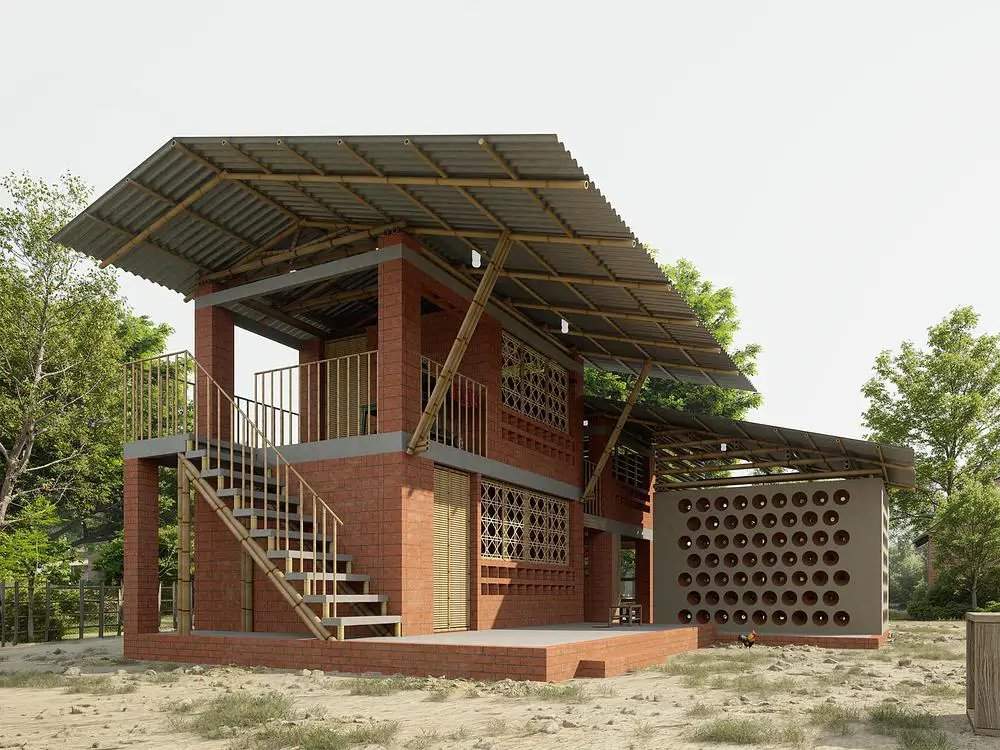
This material selection reduces reliance on imported materials and specialized products, and also facilitates future repairs and adaptations using local resources and knowledge—particularly important in rural areas where industrialized building systems may be costly or difficult to maintain. Xinyun Li spent two weeks conducting field research in the village, studying available materials, traditional clay construction techniques, and straw-bundling methods, and completed the design in response to the local climate and vernacular architecture. She connects this to the social responsibility of architects: "As architects, we should not only make better use of locally available materials, but also respond to the most pressing needs of these communities."
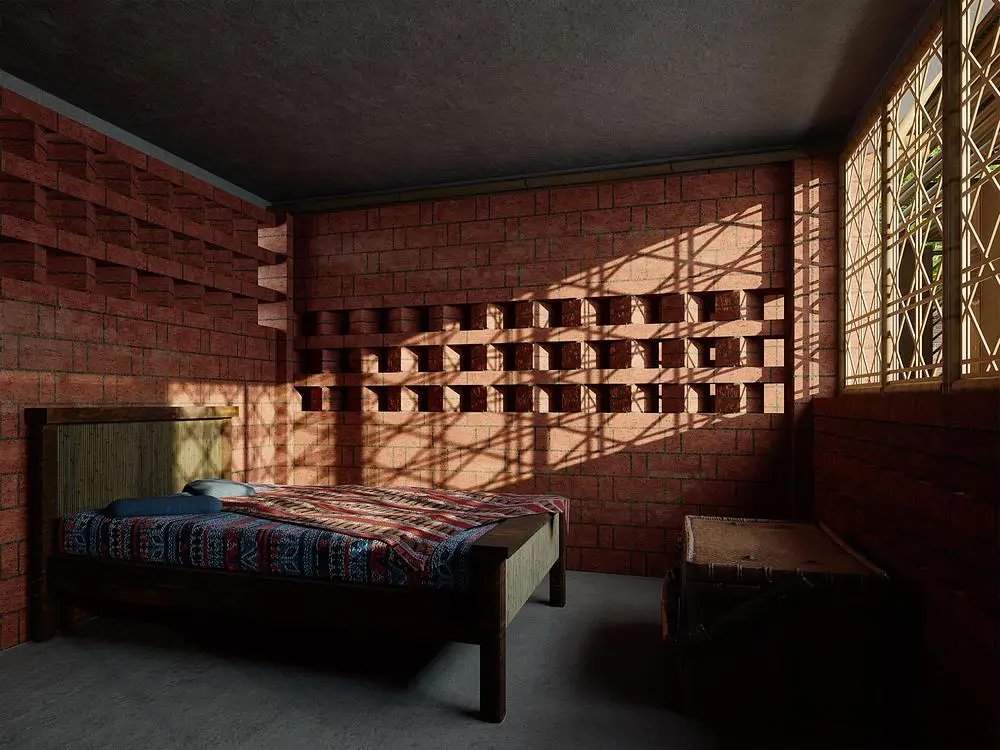
Cooling is achieved through air organization: the room layout guides prevailing winds to create cross-ventilation, with openings at different heights allowing cool air to enter from below and hot air to escape from above; the steep roof pitch rapidly sheds water during heavy rainfall while creating taller interior spaces, allowing hot air to accumulate above the occupied zone, and a ventilated cavity beneath the roof also reduces heat buildup above the rooms.
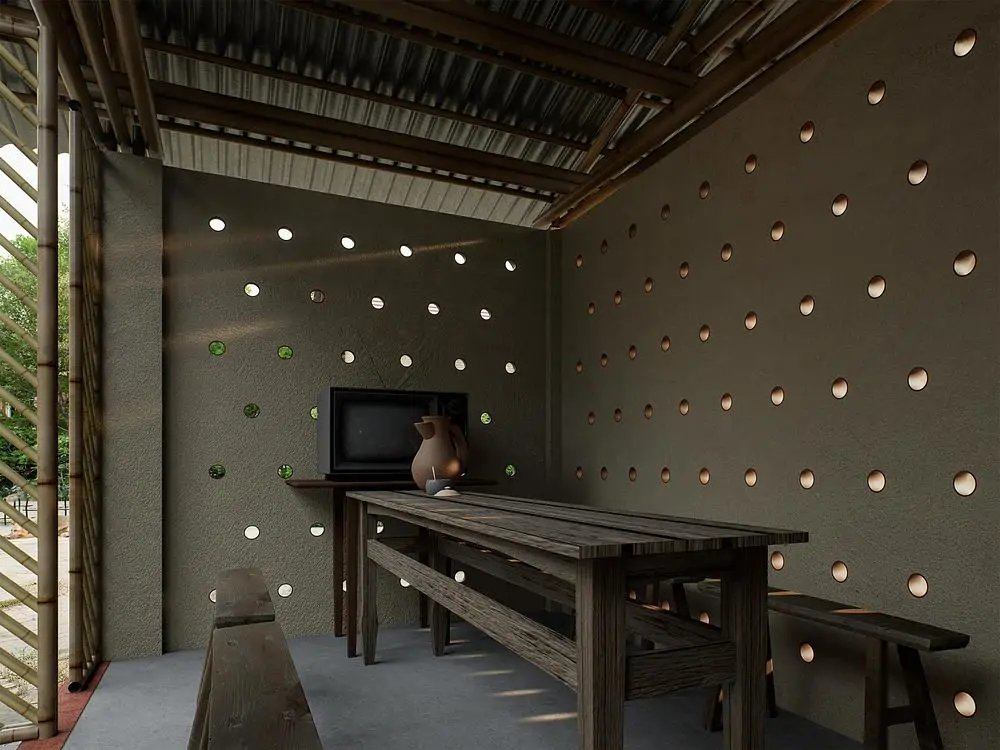
In the small tea-room facade, several vessel-like ceramic elements are inserted directly into the thick clay walls, becoming openings through which air passes. Inspired by local pottery and made specifically by the nearby community, their tapered forms modify the airflow entering the tea room to improve comfort. This seemingly decorative handmade element thus becomes part of the building's climate-regulation mechanism.
Bangladesh has a long rainy season, and some rural areas experience seasonal flooding. The scheme raises the main living areas above ground level, keeping them above potential floodwater; the elevated veranda simultaneously serves as a transitional space, a shading zone, and a waterproofing measure, forming a covered external corridor. The steep roof allows heavy rainfall to drain away quickly.
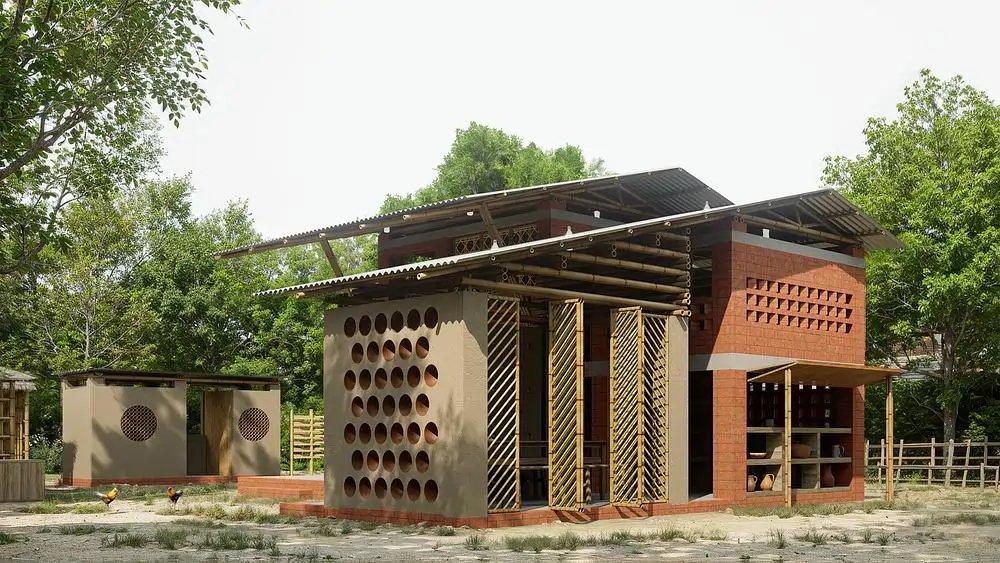
Productive activities are also integrated into the layout: an upper-level terrace adjacent to the bedrooms of younger family members provides reserved space for bamboo-weaving work; a small shop and tea room face the road side, linking commercial activity with the residence, while the street gradually transitions into the private living quarters. Rather than concentrating functions within a single enclosed volume, the house organizes them through rooms, courtyards, verandas, workspaces, and covered external areas, responding to the coexistence of work, social life, and family life on the same plot.
Related Products


Acoustic Mineral Fiber Ceiling Tile 595x595x12mm
Shanxi Pano Trading Co., Ltd
Pure Polyurethane Wall Panel BD-AEF-PIR-01
Baodu International Engineering Technology Co., Ltd.
300mm Segment Type Countdown Traffic Light (Core Type)
Yangzhou FAMA Intelligent Equipment Co., Ltd.
Ceiling light | led Ceiling Light | LED Indoor light | LED Ceiling lighting
Queendom Group Technology Co., Ltd.
West China Xiamen Hospital of Sichuan University
Wuhan Huakang Century Clean Technology Co., Ltd.
145kV Porcelain Column Type Sulfur Hexafluoride Circuit Breaker
TBEA ZONFA Shanghai High Voltage Switchgear Co., Ltd.
Metal sound barriers that can reduce the transmission of road noise
Hebei Jinbiao Construction Materials Tech Corp., Ltd.