China's National Development and Reform Commission and National Energy Administration Release the "15th Five-Year Plan for Oil and Natural Gas Development"
en.Wedoany.com Reported - On August 17, the National Development and Reform Commission and the National Energy Administration issued the "15th Five-Year Plan for Oil and Natural Gas Development," clarifying that by 2030, a modern oil and gas industry system will be gradually established, with improvements to pipeline networks, reserves, processing and utilization, and technological innovation systems, while also promoting the green and low-carbon transformation of the oil and gas industry.
The Plan proposes that by 2030, domestic oil and gas supply will reach 440 million tonnes of oil equivalent, with 20,000 kilometers of new long-distance oil and gas pipelines, bringing the total length of the national long-distance oil and gas pipeline network to 220,000 kilometers. Natural gas reserve capacity will continue to grow, accounting for more than 13% of national consumption. LNG receiving terminals will have an unloading capacity of 200 million tonnes per year, and the capacity for importing natural gas via onshore pipelines will reach 114 billion cubic meters per year. The annual injection of carbon dioxide through carbon capture and storage/carbon capture, utilization and storage (CCS/CCUS) will reach 10 million tonnes.
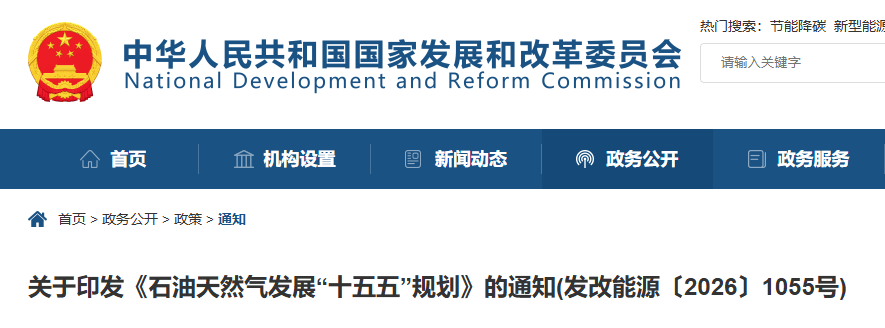
The full text of the Plan is as follows:
15th Five-Year Plan for Oil and Natural Gas Development
Oil and natural gas are important basic energy sources and industrial raw materials, bearing on energy security and the national economy and people's livelihoods. The "15th Five-Year Plan" period is a critical period for laying a solid foundation and making comprehensive efforts to basically realize socialist modernization, and is an important stage for the transformation and upgrading of the oil and gas industry. To clarify the development direction and key tasks of China's oil and gas industry over the next five years, this Plan is formulated in accordance with the "Outline of the 15th Five-Year Plan for National Economic and Social Development of the People's Republic of China" and the "15th Five-Year Plan for Building a New Energy System."
I. Overall Requirements
Adhere to the guidance of Xi Jinping Thought on Socialism with Chinese Characteristics for a New Era, thoroughly implement the spirit of the 20th National Congress of the Communist Party of China and the plenary sessions of the 20th Central Committee, earnestly implement the deployments of the Fourth Plenary Session, fully, accurately, and comprehensively implement the new development philosophy, deeply practice the new energy security strategy of "Four Revolutions and One Cooperation," actively and steadily promote and achieve carbon peaking, and promote the peaking of oil consumption, making greater contributions to safeguarding national energy security, building a strong energy nation, and a new energy system.
Anchoring on the two major tasks of ensuring energy security and green and low-carbon development, by 2030, a modern oil and gas industry system will be gradually established, characterized by "continuously enhanced self-sufficiency capability, efficient interconnection of pipeline network transmission and distribution, sufficient and flexible reserve regulation, green and low-carbon production methods, safe, stable, and efficient operation, high-end and high-quality processing and utilization, independent breakthroughs in technological capabilities, and flexible and diversified international cooperation." Achieve "five continuous improvements"—continuous improvement in energy security assurance capability, with continued increases in domestic oil and gas production and the comprehensive establishment of a major-country reserve system, making the "national one network" more interconnected and efficient; continuous improvement in the level of international cooperation, with a more complete flexible and diversified import system, continuously expanded cooperation areas, and continuously enhanced risk response capabilities; continuous improvement in the effectiveness of green and low-carbon transformation, with a significant reduction in the carbon emission intensity of the industry, deep integration of oil and gas with multi-energy development, and a marked improvement in the level of cleanliness; continuous improvement in scientific and technological innovation strength, with continuous breakthroughs in key core technologies, a significant increase in the localization rate of equipment, and comprehensive advancement of digitalization and intelligence; continuous improvement in the vitality of the oil and gas market, with deepened market-oriented reforms, a more complete management system, and better protection of people's livelihoods.
By 2030, domestic oil and gas supply will reach 440 million tonnes of oil equivalent, with 20,000 kilometers of new long-distance oil and gas pipelines, bringing the total length of the national long-distance oil and gas pipeline network to 220,000 kilometers. Natural gas reserve capacity will continue to grow, accounting for more than 13% of national consumption. LNG receiving terminals will have an unloading capacity of 200 million tonnes per year, and the capacity for importing natural gas via onshore pipelines will reach 114 billion cubic meters per year. The annual injection of carbon dioxide through CCS/CCUS will reach 10 million tonnes.
II. Intensify Oil and Gas Exploration and Development and Efforts to Increase Reserves and Production, Consolidating the "Ballast Stone" of Independent Supply
(1) Strengthen exploration to consolidate the resource base
Strengthen fine exploration of resource potential in mature eastern regions, concentrated exploration in central and western regions and offshore areas, and risk exploration in new zones and new fields. Maintain a high-growth trend in reserve increases, ensuring that the oil reserve replacement ratio remains above 1, and strive for a higher natural gas reserve replacement ratio.
Continue to intensify conventional resource exploration in key petroliferous basins such as the Ordos, Bohai Bay, Sichuan, Tarim, Songliao, and Junggar basins, and exploration of deep and ultra-deep marine carbonate rocks in the Tarim and Sichuan Basins. Promote large-scale reserve increases of shale oil in the Songliao, Bohai Bay, Ordos, Junggar, and Sichuan Basins, and shale gas in the Sichuan Basin. Promote continuous reserve increases of deep coalbed methane in the Ordos Basin and accelerate breakthroughs in the Junggar Basin. Focus on exploration of buried hills, stratigraphic-lithologic traps, deep-water and deep layers, and marginal sags in the three major offshore areas of the Bohai Sea, East China Sea, and South China Sea.
(2) Strive for stable growth in crude oil production and continuous increase in natural gas production
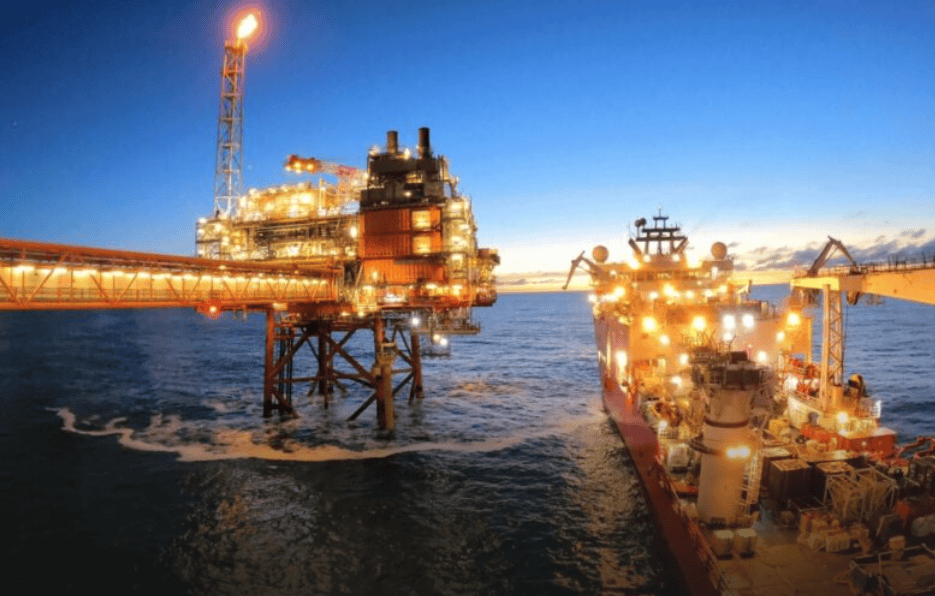
Maintain development investment intensity to support new production capacity. Accelerate the large-scale and efficient development of deep and ultra-deep oil and gas. Promote breakthroughs in unconventional oil and gas, accelerate reserve utilization and development and production capacity construction, and achieve large-scale and efficient development of shale oil, shale gas, and deep coalbed methane. Implement an offshore oil and gas enhancement project to promote offshore oil and gas production to reach a scale of 100 million tonnes of oil equivalent. Implement a "ballast stone" project for mature oil and gas fields to promote long-term stable production of mature oilfields such as Daqing and Shengli. Ensure efficient production capacity construction in new areas and promote accelerated production increases in new oilfields such as Bayan and Jilantai.
(3) Focus on building strategic oil and gas support bases
Establish strategic oil and gas support bases in the Ordos, Bohai Bay, Sichuan-Chongqing, Tarim, Songliao, Junggar, and Qaidam Basins to support the completion of domestic oil and gas production targets.
Box 1 Strategic Oil and Gas Support Bases
1. Ordos Basin Strategic Oil and Gas Support Base. Promote the construction of crude oil production capacity projects such as Huaqing, Jiyuan, Qingcheng, and Wu-Ding shale oil, and natural gas production capacity projects such as Sulige, Jingbian, Yulin, Shenmu, Daniudi, Dongsheng, Gaoxian, Yan'an, Yanbei, Zhongshanjian, Meng-Shaanxi, and Daning-Jixian.
2. Bohai Bay Basin Strategic Oil and Gas Support Base. Promote the construction of production capacity projects such as Liaohe Haiwaihe/Jing'anbao, Huabei Baoding, Xiliu-Gaoyang, Shulu, Suning/Dawangzhuang, Dagang Zaoyuan/Wangguantun, Nangang, Xinhua, Cangdong, Qikou, Minfeng, Lijin, Guanxi, Leijia, Niuzhuang, Boxing, Kenli 9-1, Penglai 19-3, Kendong Tanshai, etc., accelerate the construction of the second phase of the Bozhong 19-6 gas field production capacity project, and strengthen the connection between processing terminals and offshore oil and gas field facilities.
3. Sichuan-Chongqing Strategic Oil and Gas Support Base. For conventional gas, promote the construction of production capacity projects in gas fields such as Anyue, Penglai, Northeast Sichuan, and West Sichuan; for tight gas, carry out production capacity projects in Shaximiao, East Sichuan, South Sichuan, West Sichuan, and North Sichuan; for shale gas, accelerate the construction of production capacity projects in Luzhou, West Chongqing, Yongchuan, Dingshan, and Zhaotong, as well as evaluation and production capacity construction of new strata such as the Qiongzhusi and Wujiaping Formations; for crude oil development, focus on production capacity projects in Northeast Sichuan and the Fuxing area.
4. Tarim Basin Strategic Oil and Gas Support Base. For crude oil, promote the construction of production capacity projects such as Fuman, Halahatang, Shunbei, and Tahe; for natural gas, promote the construction of production capacity projects such as Bozi-Dabei, South Tianshan, and Kubaiqu.
5. Songliao Basin Strategic Oil and Gas Support Base. For crude oil, carry out production capacity projects in Changyuan, the periphery of Changyuan, Southern Songliao, and Gulong shale oil; for natural gas, promote the construction of production capacity projects such as Xushen.
6. Junggar Basin Strategic Oil and Gas Support Base. For crude oil, promote the construction of production capacity projects such as Mahu, Zhongjia, Jimsar shale oil, and Chunfeng heavy oil in the western margin; for natural gas, promote the construction of production capacity projects such as Kelameili, and accelerate the evaluation of natural gas in new areas such as the southern margin and Shawan Sag.
7. Qaidam Basin Strategic Oil and Gas Support Base. For crude oil, implement the construction of production capacity projects such as Gasi-Yuejin, Yingdong, Gasi, and Kunbei; for natural gas, promote the construction of the Sebei gas field production capacity project.
8. Northern South China Sea Strategic Oil and Gas Support Base. For crude oil, carry out production capacity projects for complex oilfields such as the Weizhou oilfield; for natural gas, promote the construction of production capacity projects such as Dongfang, Ledong, and Baodao.
III. Improve Infrastructure Construction, Enhancing Pipeline Network Safety Resilience and Operational Efficiency
(4) Support the high-quality development of oil, gas, and green fuels
Based on China's oil and gas supply-demand pattern, coordinate both international and domestic resources, align inter-provincial and intra-provincial planning, combine new trunk lines with integration into provincial networks, and integrate oil and gas with hydrogen, ammonia, and methanol storage and transportation systems, to build a "national one network" that is "moderately advanced, economically efficient, regionally balanced, interconnected, green and low-carbon, safe and stable," providing solid infrastructure support for the high-quality development of oil, gas, and green fuels.
(5) Consolidate strategic oil and gas corridors
Complete the Heihe-Daqing-Changling, Hulin-Changchun-Shijiazhuang, and the second line of Sichuan Gas East Transmission, etc., to build a "cross-shaped" backbone corridor in central China. Timely initiate the construction of the fourth line of West-East Gas Transmission (Wuqia-Turpan section) and the fifth line of West-East Gas Transmission. Plan and initiate a new southbound Sichuan gas transmission corridor, and study and demonstrate the Qinzhou-Chongqing crude oil pipeline.
(6) Comprehensively complete the "national one network" for oil and gas
Promote the construction of the Qiong-Yue natural gas pipeline to end the history of Hainan's isolated network operation. Accelerate the construction of the Lianyungang-Yizheng crude oil pipeline, natural gas pipelines such as Wen 23-Anqing, and outbound pipelines from LNG receiving terminals such as Beihai. Support the uploading of natural gas, coal-to-gas, and coalbed methane to the national trunk pipeline network, and construct the Zhundong coal-to-gas uploading pipeline and the Yuncheng-Sanmenxia pipeline. Support the relocation and renovation of old pipelines, and explore the sealing and reuse of old pipelines under the premise of ensuring safety. Accelerate the optimization of sequential transportation of multiple refined oil products, accelerate the exploration of label-free transportation of the same oil medium in areas with conditions, and improve the load rate of refined oil pipelines and the volume of resources entering the network. Enhance the level of interconnection of coastal crude oil unloading pipelines.
(7) Orderly promote the construction of provincial pipeline networks and direct-supply pipelines
Strengthen coordination between inter-provincial and intra-provincial planning, and strengthen the connection and implementation of provincial and lower-level planning with national pipeline network construction planning. Comprehensively consider factors such as regional economic development, resource endowment, and market supply and demand, scientifically layout provincial pipeline networks, expand the coverage of pipeline gas supply, and enhance the gas supply assurance capability of key cities. Strengthen the coordinated layout of gas-fired power generation, large industrial projects with national trunk lines and provincial pipeline network planning, and under the premise of prioritizing the use of existing facilities such as city gas, support direct supply and direct sales to large users such as key industrial parks, large enterprises, and gas-fired power plants, compressing gas supply tiers and reducing gas costs.
(8) Coordinate the layout of pipeline transportation for new business formats
Promote the construction of the Ulanqab-Beijing-Tianjin-Hebei hydrogen transmission pipeline, while improving technical standards and specifications for pure hydrogen pipeline transportation. Explore the use of refined oil pipelines with low load rates such as Fujin, Jinzheng, Lanzhengchang, and Wulan lines for methanol transportation. Support pipeline transportation enterprises, industrial power generation, and other downstream users in conducting pilot trials of natural gas-hydrogen blending transportation and combustion utilization within relevant standards and under the premise of ensuring safety.
IV. Strengthen the Construction of the Oil and Gas Reserve System
(9) Complete the construction of the petroleum reserve system
Build a major-country petroleum reserve system that organically combines and complements government reserves, corporate social responsibility reserves, and corporate production and operation inventories, with significantly enhanced risk resistance and security assurance capabilities. Continuously strengthen the construction of government petroleum reserves, improve the corporate social responsibility reserve system, and maintain corporate production and operation inventories at a reasonable level. Encourage social capital to strengthen investment and operation in commercial reserve facilities and further increase reserve scale. Improve the petroleum reserve institutional mechanisms. Strengthen monitoring of petroleum supply and demand.
(10) Improve the natural gas reserve and peak-shaving system
Accelerate investment and construction of underground gas storage facilities along national import strategic corridors and trunk pipeline routes, at strategic oil and gas support bases, and at consumption load centers. Support operating gas storage facilities in increasing storage scale and peak supply assurance capability when conditions permit, through measures such as optimizing injection-production pressure intervals and densifying injection-production wells. Accelerate the demonstration and implementation of offshore underground gas storage. Explore new business formats such as underground hydrogen storage and carbon dioxide storage.
Improve the coastal LNG reserve system. LNG receiving terminals should focus on expansion, and prudently demonstrate and optimize the layout of new projects based on the region or key provinces. Actively promote the construction of approved and under-construction projects. Improve policies and measures, fully leverage the role of completed and operational gas storage facilities, and strengthen the construction of emergency gas storage and peak-shaving facility systems.
Box 2 Key Natural Gas Reserve Projects
New construction and capacity expansion of underground gas storage: Banshen 37, Liaohe gas storage cluster (Shuangtaizi, etc.), Shengping, Leilongwan, Wanshunchang, Changning, Yu 37, Qianmiqiao, Nanpu East, Nanhu and Qiudong, Zhongyuan Wen 23, Wen 24, Wen 68, Bai 9, Gudong, Baolang, Wei 2, Liuzhuang, Linxing-Shenfu (including pilot) oil and gas reservoir-type gas storage facilities, and Jintan, Yexian, Zhangxing, Tai'an, Heze, Huangchang, Pingdingshan, Chuzhou, Huai'an salt cavern gas storage facilities.
LNG receiving terminals: Prioritize the promotion of under-construction and storage tank expansion projects, and construct the new West Guangdong LNG receiving terminal project.
Preliminary evaluation of underground gas storage: Zhongba, Mahe, Changchun, Changling-Songnan, Jingbian, Baogu 2, Qiao 69, Huagou, Bozhong 19-6, Ya 13-1, Yumen, Shapingchang, Zhaigouwan, Wubaiti oil and gas reservoir-type underground gas storage facilities, Fengxian, Yanghuai, Zhangshu, Wuyang, Tianqianyunying, Hengyang, Sanshui, Hechuan, Wanzhou salt cavern gas storage facilities, and Hubei Xiaoban (including salt cavern), Anhui Liji, Hebei Qiuxian aquifer gas storage facilities. Promote construction at an appropriate time when conditions permit.
(11) Strengthen coal-to-oil and coal-to-gas production capacity and technology reserves
Promote the construction of coal-to-oil and coal-to-gas strategic bases in Ordos, Inner Mongolia; Yulin, Shaanxi; Zhundong, Xinjiang; and Hami, Xinjiang.
V. Strengthen International Cooperation in Oil and Gas
(12) Continuously improve the diversified import system and enhance the level of internationalized operation
Consolidate and expand onshore strategic import corridors, strengthen the connectivity of infrastructure operations, and optimize and improve coordination mechanisms. Improve the structure and layout of overseas oil and gas assets and continuously enhance international operational capabilities. Adhere to a diversified import strategy, participate in international oil and gas trade in an all-round manner, coordinate and connect domestic and international markets and resources, and enhance resource allocation and flexible operation capabilities.
VI. Accelerate Green Transformation and the Cultivation of New Quality Productive Forces, Promoting the Integrated Development of Oil and Gas with Multi-Energy
(13) Promote the peaking of oil consumption
Systematically promote energy conservation and carbon reduction in oil production, peak consumption in the consumption sector, and quality improvement and upgrading of the industrial chain. Coordinate national energy security and stable economic and social development, support the development of green fuels, and supplement and replace traditional petroleum products. Promote energy-saving and carbon-reduction transformation across the entire oil chain, increase the electrification rate of end-use sectors, reduce methane emissions, reduce volatile organic compounds (VOCs) emissions, and reduce petroleum and other energy consumption per unit of product. Maintain a moderately surplus refining and petrochemical capacity, enhance the international competitiveness of the industry, and increase the industrial cushion for oil security.
(14) Promote the clean and efficient utilization of natural gas
Encourage the orderly and efficient use of natural gas in the industrial sector, with priority given to meeting the needs of enterprises that are difficult to electrify and use high-emission fuels. Support the orderly application of LNG in heavy-duty trucks and waterway transport vessels, promoting green and low-carbon transformation in the transportation sector. Layout a number of peak-shaving gas-to-power projects according to local conditions, reasonably ensure gas demand for power generation, leverage the stable supporting role of natural gas for the new power system, and support models of gas-power joint operation, gas-power and new energy joint operation, and gas-power and peak-shaving facility joint operation. Improve the gas-electricity dispatch coordination mechanism in the power generation sector, and encourage oil and gas and gas-to-power enterprises to sign multi-year medium and long-term contracts and flexible gas supply clauses.
(15) Coordinate the integrated development of oil and gas with new energy and associated resources across all scenarios
Relying on oil and gas mining areas and surrounding areas, reasonably and orderly promote the development and utilization of photovoltaic, wind power, and geothermal energy, increase the electrification rate, and build green, low-carbon, and zero-carbon oil and gas fields. Promote simultaneous extraction of oil, gas, and heat, combined use of wind, solar, storage, and peaking, with regional loads as the core, coupling green energy supply with flexible energy use, and integrated operation of source-grid-load-storage, promoting the extension of mature oil and gas fields into "electricity fields, heat fields, storage fields, and carbon fields." Strengthen the integrated exploration and development of oil and gas with associated resources such as helium, uranium, lithium, and sulfur in accordance with regulations.
(16) Promote new quality productive forces to empower high-quality industry development
Promote the development of the green hydrogen industry. Coordinate the layout of oil and gas infrastructure, accelerate the promotion of large-scale hydrogen production, pipeline transportation, and intensive storage systems, orderly layout hydrogen and other infrastructure in key regions, and build a new hydrogen production and sales pattern with nearby local consumption as the mainstay, supplemented by cross-regional transportation and foreign trade.
Promote the large-scale industrialization of CCUS. Leverage the advantages of the entire CCUS industry chain, coordinate the "win-win" of increasing crude oil production and carbon emission reduction. Promote the construction of CCUS regional industrial clusters, support oil and gas industry-concentrated cities such as Dongying and Yulin in taking the lead in transitioning to low-carbon cities, develop low-carbon industrial clusters, and form competitive advantages for undertaking high-carbon industries. Research and further promote the market-oriented and industrialized application of carbon neutrality technologies.
Promote the development of new underground energy storage industries. Fully utilize underground space resources such as depleted oil and gas reservoirs, salt caverns, and pipelines, and explore the construction of new business formats such as compressed air energy storage. Promote supporting operation with surrounding new energy power stations, provide capacity support and frequency regulation and peak-shaving services, and enhance the flexible regulation capability and safety and stability level of the regional energy system.
(17) Strengthen quality improvement, efficiency enhancement, and differentiated development of the petroleum refining and petrochemical industry
Adhere to the "capacity reduction and replacement" of refining capacity, optimize existing capacity, strictly control new capacity, continuously promote "oil-to-chemical," "oil-to-specialty," and "oil-to-materials," and enhance the level of intensification, refinement, and greening of the refining and petrochemical industry. Guide and support the integration, restructuring, and elimination of outdated capacity of refineries in key regions through market-based and law-based means. Strengthen process carbon reduction, and implement green electricity and clean low-carbon hydrogen substitution in combination with actual conditions. Key coastal regions should focus on building refining-petrochemical integration industrial clusters, enhance the supply capacity of high-end chemical materials, and build globally competitive production bases. Central and western regions should ensure stable supply of refined oil products based on local demand and resource conditions, and moderately develop petrochemical projects that suit regional characteristics. Small and medium-sized refineries with distinctive features and competitiveness should highlight "specialization, refinement, uniqueness, and innovation."
VII. Strengthen Scientific and Technological Innovation to Drive High-Quality Development of the Oil and Gas Industry
(18) Accelerate breakthroughs in key technological bottlenecks
In the exploration and development segment, solidly carry out the national major science and technology special project for new oil and gas exploration and development, support reserve and production increases, technological equipment upgrading and iteration, etc., and achieve a significant improvement in independent innovation capability. Focus on areas such as "two deeps, one unconventional, and one mature," overcome key technologies for safe and efficient exploration and development of deep onshore and deep-water offshore oil and gas, achieve breakthroughs in unconventional exploration and development technologies such as continental shale oil, deep shale gas, and deep coalbed methane, improve enhanced oil recovery technologies for mature oil and gas fields, and tackle comprehensive exploration and three-dimensional development technologies for oil and gas and associated resources.
Box 3 Key Technology and Equipment Development for Oil and Gas Exploration and Development
Deep oil and gas exploration and development: Achieve breakthroughs in ultra-deep composite hydrocarbon generation and accumulation mechanisms and ultra-deep high-precision geomechanical modeling technologies, innovate and form core technologies for efficient exploration and development of ultra-deep carbonate and clastic rock oil and gas reservoirs, tackle multiple major key equipment such as 15,000-meter intelligent drilling rigs, intelligent managed pressure drilling complete equipment sets, and retrofitting of ultra-deep well logging equipment resistant to ultra-high temperature and ultra-high pressure, and enter a new depth of onshore 10,000-meter oil and gas exploration and development.
Deep-water oil and gas exploration and development: Achieve breakthroughs in key technologies such as deep-water oil and gas drilling and intelligent completion and testing, safe and efficient development and production capacity construction of deep-water oil and gas fields, and tackle major key equipment such as 3,000-meter-class deep-water ocean bottom node acquisition systems, 3,000-meter-class deep-water drilling blowout preventers and multi-element composite control systems, and 1,500-meter-class all-electric subsea control system equipment.
Unconventional oil and gas exploration and development: Innovate and form key technologies for green development of continental shale oil, deep shale gas, deep coalbed methane, and medium-low maturity shale oil, and tackle major key equipment and core software such as 10,000 hp/175MPa electric-driven fracturing skids, large-diameter intelligent coiled tubing operation equipment and tools, and geology-engineering integrated fracturing design software.
Mature oil and gas field exploration and development: Achieve breakthroughs in a series of key technologies such as significantly enhanced oil recovery and green, low-carbon, and efficient development, form key enhanced oil recovery technologies such as fine water flooding, green chemical flooding, and low-carbon thermal flooding for mature oilfields with high water cut, innovate and form a large-scale carbon dioxide flooding and storage technology system, and contribute to the construction of "low-carbon and zero-carbon" production systems.
In the infrastructure segment, focus on tackling key issues in intelligent construction and inspection of oil and gas pipelines, pipeline network simulation and operation optimization; research and development of intelligent design, control, and digital twin technologies for pipelines and stations, accelerate the digital and intelligent transformation and upgrading of the industry, promote changes in scientific research paradigms; carry out technological research on high-pressure pure hydrogen pipeline materials and safe transportation, large-scale hydrogen blending/conversion to hydrogen transportation, aquifer gas storage, deep underground space hydrogen storage, multi-medium transportation such as methanol and liquid ammonia, and CCS/CCUS.
In the end-use segment, accelerate the localization of heavy-duty gas turbines, promote scientific and technological research and localization of equipment such as maintenance technologies for existing gas turbines in service, efficient low-emission gas engines for vehicles and vessels, and high-end gas wall-hung boilers; research and optimize technologies for refining-petrochemical integration and green and low-carbon refining and chemical processing.
(19) Enhance the effectiveness of digital and intelligent empowerment
Accelerate the integrated application of new-generation information technologies such as artificial intelligence and the Internet of Things, strengthen cross-disciplinary collaborative research, and build smart oil and gas fields. Support the integrated operation of the entire life cycle of oil and gas pipeline networks with intelligent control, build smart oil and gas pipeline networks with digital, intelligent, and platform-based management, and achieve automation of pipeline network equipment and facility control, digitalization of assets, and process-oriented management.
Box 4 "Artificial Intelligence +" Oil and Gas
Artificial intelligence will achieve large-scale and systematic application in the oil and gas industry, and basically build a deeply integrated and comprehensively empowered "AI +" oil and gas industry ecosystem. Form a batch of practical and highly effective intelligent solutions in areas such as intelligent exploration in key oil and gas basins, intelligent oil and gas development, intelligent oil and gas pipeline network operation, intelligent equipment development, and key fields such as shale oil and gas exploration and development. Develop key common technologies such as data governance across the entire oil and gas industry, professional data lakes, and intelligent Internet of Things.
Oil and gas exploration and development: Promote intelligent identification and evaluation of exploration geological targets, intelligent optimization of development plans, intelligent adjustment of drilling and fracturing, and real-time simulation and optimization of pipeline network operation, shorten exploration cycles, effectively improve the estimated ultimate recovery (EUR) per well over the entire life cycle, significantly increase shale oil and gas recovery rates, and contribute to the steady improvement of mature oilfield recovery rates.
Pipeline network operation: Trunk pipelines with conditions will achieve intelligent operation and predictive maintenance of key equipment.
Equipment manufacturing: The level of intelligence of key equipment will be significantly improved.
Green transformation: Optimize the complementary operation and dispatch of oil and gas with wind power and photovoltaics, continuously improve the level of local consumption of new energy, build multiple intelligent pilot projects for the integrated development of oil and gas and new energy, and artificial intelligence will help reduce the carbon emission intensity of newly built unit oil and gas production.
Refining and chemical processing: Promote the establishment of a data resource sharing mechanism, collaboratively promote the construction of high-quality industry datasets, jointly develop large models for the petrochemical industry, develop enterprise/scenario models focusing on typical scenarios, and launch a batch of replicable and promotable cases and models.
(20) Improve the level of standards and specifications management
Continuously improve the oil and gas standards system, based on oil and gas production, supply, and green transformation, and around emerging fields and cross-cutting links, accelerate the construction of technical standards and specification systems in areas such as CCS/CCUS, multi-energy complementarity in oil and gas fields, hydrogen blending in natural gas pipelines and end-use applications, green transformation and comprehensive utilization of offshore decommissioned platforms, hydrogen and energy storage in depleted oil and gas reservoirs, international certification of green fuel trade, and "AI +."
VIII. Deepen the Reform of the Oil and Gas System and Further Improve the "X+1+X" Oil and Gas Market System
(21) Deepen the reform of the oil and gas exploration and development institutional mechanisms
Improve the methods for transferring oil and gas mining rights, continuously expand the sources of oil and gas exploration blocks, increase the intensity of exploration right block transfers, accelerate the pace of release, and increase the quantity of releases. Establish and improve a geological data sharing mechanism. Improve technical standards, specifications, and management mechanisms for exploration and development and recovery rates, and strengthen verification and spot checks of filed projects. Increase reform efforts, enhance the competitiveness of the oilfield services market, promote the promotion and application of advanced technologies and equipment, and continuously reduce exploration and development costs.
(22) Improve infrastructure construction, operation, and operation dispatch mechanisms
Optimize the pipeline network investment model, consolidate the responsibility of China Oil & Gas Pipeline Network Corporation (PipeChina) for trunk pipeline network investment and construction, and support the participation of private capital in investment and construction of non-strategic pipelines and oil and gas reserve depots. Promote the connection of all pipeline network facilities that should be connected, ensure that all nationally planned gas storage facilities and LNG receiving terminals are connected, and actively support the connection of pipelines planned at the provincial energy planning level to the national trunk pipeline network. Compress pipeline transportation tiers, guide and support provincial pipeline networks to integrate into the national pipeline network through market-based means, and support direct supply from trunk pipelines to large users with conditions. Improve the operation dispatch mechanism of the "national one network" for oil and gas, enhance operational efficiency and the scientific nature of pipeline transportation routes, and explore market-based balance mechanisms for pipeline network gas volumes. Strengthen supervision of fair openness of pipeline network facilities, and promote pipeline network facility operating enterprises to open fairly to qualified enterprises and other business entities.
(23) Continuously improve the oil and gas market mechanisms
Promote the diversification of upstream gas supply entities. Promote the integration, restructuring, and standardized operation of city gas enterprises, and implement the natural gas upstream-downstream price linkage mechanism well. Regulate the behavior of gas supply enterprises, better leverage the fundamental role of natural gas contracts, and improve the market mechanism for gas storage and peak-shaving. Strengthen the assurance of gas supply for people's livelihoods. Research and improve the refined oil product consumption tax system. Improve the refined oil product pricing mechanism. Regularly review and verify inter-provincial natural gas pipeline transportation prices.
(24) Improve the governance level of the oil and gas industry, improve laws and regulations, and strengthen government supervision. Strengthen infrastructure planning, construction, connection, and use, and improve the fair openness supervision and management system. Improve the carbon emission statistical accounting system for the oil and gas industry, gradually establish a carbon footprint management system, and promote the development of green trade. Improve the oil and gas emergency rescue system and enhance emergency rescue capabilities. Strengthen anti-monopoly, anti-unfair competition, and price supervision and enforcement, optimize the business environment, and stimulate the creativity and competitiveness of various business entities. Focus on planning alignment, encroachment clearance, handling of intersection and interaction relationships, and third-party construction control, and continuously strengthen pipeline protection work.
IX. Safeguard Measures and Organization and Implementation
Provide reward and subsidy support for the exploitation and utilization of unconventional natural gas such as shale gas, tight gas, and coalbed methane in accordance with established policies, and implement support policies for cushion gas in gas storage facilities and targeted purchase and storage policies for shale oil. Continue to implement the "first levy, then refund" value-added tax policy for natural gas imports. Implement existing preferential tax policies for oil and gas and other resources. Increase industrial policy support. Timely organize the transfer of relinquished oil and gas mining rights in strategic oil and gas support bases to meet exploration needs. Strengthen the connection between oil and gas planning and territorial spatial planning, and implement spatial control requirements such as the three control lines of ecological protection red lines, permanent basic farmland, and urban development boundaries, as well as flood risk control lines and soil and water conservation. Coordinate flood control and disaster reduction, ecological environment protection, waterway navigation, military support, and offshore wind power development, and accelerate the development of oil and gas resources and infrastructure construction. Strengthen the guarantee of elements for the construction of petroleum reserve projects and their supporting facilities, and further optimize the handling of various procedures.
Establish and improve a working mechanism with the National Development and Reform Commission providing overall guidance, the National Energy Administration organizing and coordinating, relevant functional departments participating and cooperating, and provincial energy authorities and major petroleum enterprises and major infrastructure enterprises refining and implementing, forming a joint working force to promote the implementation of the Plan. During the implementation of the Plan, dynamic monitoring, mid-term evaluation, and summary evaluation of the implementation of the Plan should be conducted in a timely manner, pay close attention to the impact of changes in the situation on the implementation of the Plan, promptly identify problems and analyze causes, and propose policy measures to improve the implementation of the Plan. The monitoring and evaluation results serve as an important basis for strengthening and improving the implementation of this Plan. If the Plan needs to be adjusted during implementation after evaluation, it shall be adjusted after being reported to the planning approval authority for review and approval in accordance with procedures.