Genesis discovers gold in Australia, Latitude cashes in A$3.4 million
en.Wedoany.com Reported - Genesis Resources (ASX:GES) shares surged as much as 500% to A$0.03, a near-decade high, before closing up 220% at A$0.024, after reconnaissance rock chip sampling at the Arltunga project east of Alice Springs returned high-grade gold. A total of 53 rock chip samples were collected, with multiple samples grading above 10 g/t gold; the most significant was 28.8 g/t gold from an unnamed pit (containing an approximately 4-metre-deep trench) at the WP-10 prospect, with Star Creek returning 13.7 g/t and additional WP-10 samples grading 11.25 g/t and 10.47 g/t.
The announcement was released at 10:25 am Sydney time, after which the share price rose to A$0.03 and trading was halted. Trading resumed at 12:50 pm Sydney time following a response to an ASX price query, with Genesis advising the ASX that it complied with listing rules.
Arltunga is a historic mining field, with old pits, trenches and shafts indicating previous mining activity. The sampling has defined multiple priority gold zones within the historic field. At Star Creek, results returned up to 13.7 g/t gold around a series of trenches and a 10-metre-deep shaft; Chinaman's Workings returned up to 3.7 g/t; and historical records show the Jenkins mine averaged 34.7 g/t gold. The latest results have given Genesis a series of drill targets rather than a single high-grade sample. The company plans to drill test WP-10, Star Creek, Chinaman's Workings and the Jenkins mine during the 2027 field season. Additionally, limited sampling at the Alice Springs tenement was cut short by rain, but one rock chip sample returned 1.2% copper approximately 300 metres northeast of the most recent drill hole at Diana 2. The next step is to verify whether these high-grade surface results continue at depth.
Latitude 66 (ASX:LAT) shares rose 27.7% to A$0.12 after agreeing to sell two non-core Australian royalty interests to Vox Royalty for A$3.4 million in cash. The sale comprises the Kalman royalty in Queensland and the Sylvania royalty in Western Australia, providing non-dilutive funding for core exploration and development. Combined with the recent sale of the Piastri project, Latitude has now generated A$4.9 million in total from non-core asset transactions within a week.
The funds give the company greater capacity to fund drilling at its Finnish KSB and PSB projects and the Laverton gold project in Western Australia, while continuing to advance studies and development at KSB and Laverton. KSB is a flagship gold-cobalt asset in northern Finland with 650,000 ounces of gold and 5,840 tonnes of cobalt resources; Laverton in Western Australia is being advanced as a near-term gold development project, with the Red Dog and Tin Dog targets located within granted mining leases and close to processing infrastructure. Managing Director Grant Coyle said the transactions realised significant value from assets outside the core portfolio while avoiding shareholder dilution, and that with a strengthened balance sheet the company is now positioned to accelerate exploration and development across its core portfolio. The non-dilutive funding gives Latitude greater flexibility to advance priority projects without issuing new shares.
Recharge Metals (ASX:REC) shares rose 25% to A$0.025 on volume of nearly 5.8 million shares, though the rise was not accompanied by any new announcement. The company's latest progress has brought the Prospero deposit at Sunset Well, near Leonora, closer to drilling and a potential development pathway. Recharge has lodged a mining lease application over the 1,162-hectare Prospero area and applied to construct a 2.7-kilometre haul road connecting the project site to the sealed Leonora-Laverton road.
A heritage survey with the traditional owners of Darlot is scheduled for late August, the final major step before the company's inaugural 30,000-metre drilling program, planned to begin early in the fourth quarter. This will be the first exploration drilling at Prospero since the mid-1990s, targeting both the current deposit and the broader 15-kilometre Prospero trend. Prospero hosts a shallow inferred resource of 2.87 million tonnes at 1 g/t gold for 94,500 ounces; the deposit remains open along strike and at depth, with only three historical drill holes exceeding 100 metres depth. Historical results include 36 metres at 2.73 g/t gold from 32 metres (including 16 metres at 5.39 g/t) and 2.9 metres at 6.35 g/t from 101.9 metres (including 0.8 metres at 21.7 g/t).
Sunset Well is 8 kilometres from Leonora, with seven operating gold processing plants within 100 kilometres, giving Recharge multiple processing options should mining proceed. Chief Executive Officer Luke Timmermans said lodging the mining lease application was "the first step on the path to gold production." Recharge had A$5.6 million in cash at the last update, sufficient to fund the heritage survey and drilling activities; the next catalyst is the start of the 30,000-metre drilling program, which will test whether modern drilling can expand the Prospero resource and potentially discover additional gold along the underexplored trend.
Lode Resources (ASX:LDR) shares rose 22.2% to A$0.11 after drilling at the Montezuma project in Tasmania intersected new silver-zinc and silver-antimony mineralisation. Follow-up hole MZS43 intersected four separate mineralised veins: a new silver-antimony zone, the main Montezuma vein, and two silver-zinc-lead replacement zones measuring 2.2 metres and 15.4 metres respectively, with assay results pending. The hole follows MZS42, which previously returned 6.4 metres at 6.2% zinc, 1.5% lead, 0.1% antimony and 43 g/t silver, confirming a new replacement-style silver-zinc target located 50 to 80 metres west of the Montezuma fault.
MZS43 is the first hole drilled from the hanging wall side, at a more favourable angle, and has opened up additional ground for testing. The hole also intersected a previously unknown hanging wall vein containing antimony and silver-bearing sulphides, as well as two broader replacement zones at depth; the largest replacement zone returned a down-hole intersection of 15.4 metres starting at 411.8 metres down-hole, containing two intervals of massive sphalerite-galena mineralisation measuring 0.7 metres and 5.7 metres thick. These results are based on visual mineralisation and require laboratory assays to confirm grades.
Montezuma hosts a high-grade silver-antimony resource of 8.2 million ounces silver equivalent at 533 g/t AgEq, and is Tasmania's only antimony project. Managing Director Keith Mayes said the new zones and extensions to existing veins enhance Montezuma's growth potential; with MZS43 assays pending and further drilling underway from the new hanging wall access, the company is rapidly building its understanding of the scale and continuity of this mineralisation. Drilling of the next hole is underway to test the extent of Montezuma mineralisation and the scale of the new silver-antimony and silver-zinc systems; Fahlore exploration is also in progress.
PC Gold (ASX:PC2) shares rose 21.1% to A$1.175 after receiving strong metallurgical test results at the Spring Hill gold project in the Northern Territory. Pre-feasibility study (PFS) test work achieved overall gold extraction of 90.2% to 99.4% across all mineralisation domains, with weathered material performing particularly strongly. The weathered zone achieved 99.4% gold extraction at a coarse grind size of P80 150 microns; gravity recovery ranged from 33.1% to 48.9%. Coarser grind sizes may mean lower energy consumption and potentially higher plant throughput, and the company is now testing coarser grind sizes to verify whether high recoveries can be maintained at lower energy input. Fresh mineralisation domains achieved overall gold extraction of 90.2% to 98.7% at grind sizes of P80 106 to 150 microns.
The test work showed low lime and cyanide consumption, low levels of deleterious elements and good rheological properties, all of which will be incorporated into the PFS plant design and assumptions. Executive Chairman Ashley Pattison said the coarse liberation characteristics of the oxide material were a positive surprise; at coarser grind sizes, this has the potential to significantly reduce grinding power requirements and therefore processing costs. Spring Hill hosts a resource of 43.6 million tonnes at 1.1 g/t gold for 1.5 million ounces, with mining leases and environmental approvals for both open pit and underground development already in place. The PFS remains on track for completion in mid-November, with further density work to feed into an updated mineral resource estimate due in mid-December; the metallurgical results support the development case for Spring Hill, demonstrating that high gold recoveries can be achieved without fine grinding.
Related Products

Yunnan Phosphorus Chemical Group Co., Ltd. 2 Million t/a Phosphorus Ore Mining and Beneficiation Project
China Bluestar Lehigh Engineering Corporation
Comprehensive Mining Automation Control System
Beijing Tianma Intelligent Control Technology Co., Ltd.
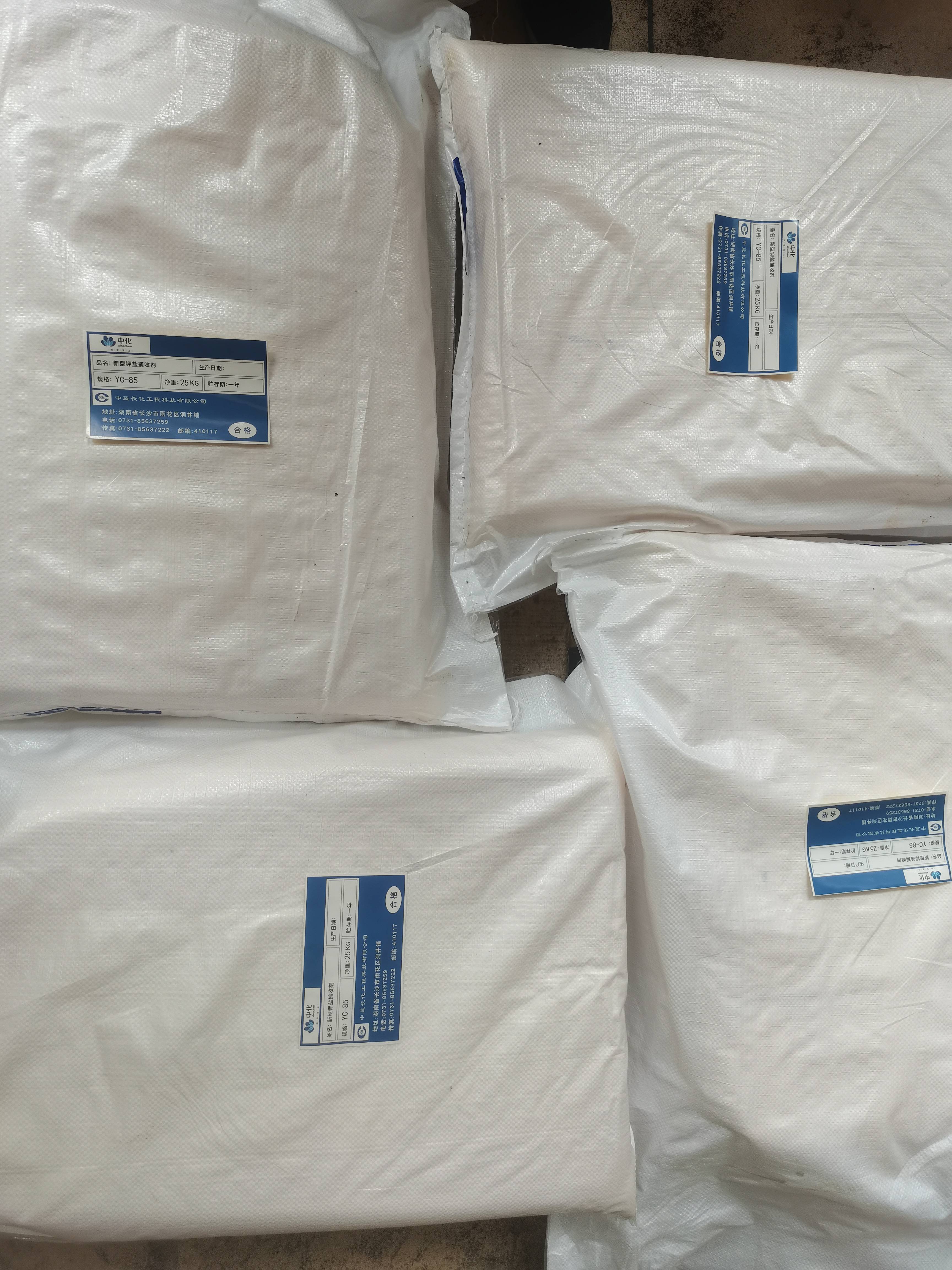
New Environmentally Friendly Green Potassium Salt Collector
Chonfar Engineering and Technology Co., Ltd.
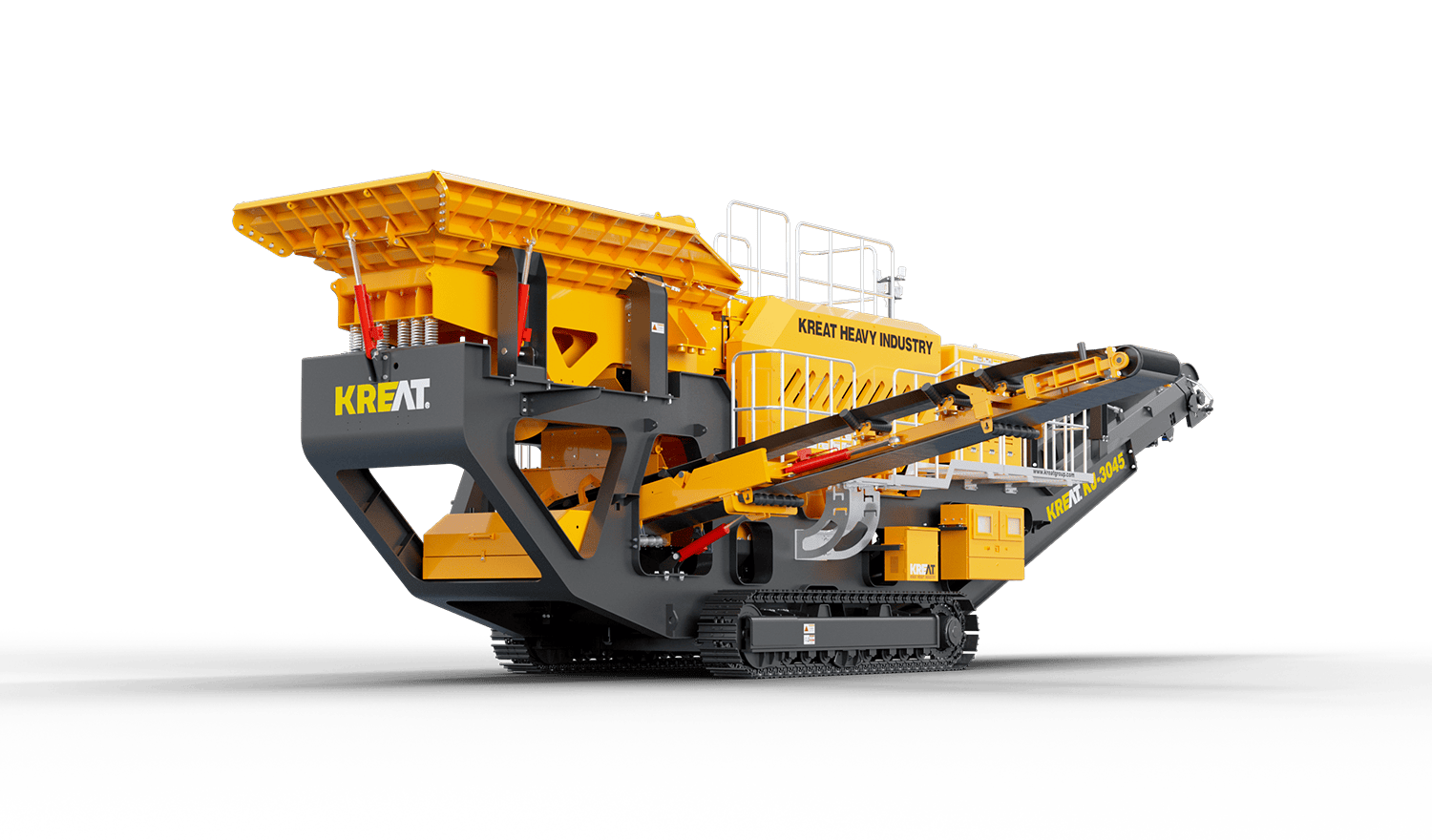
KJ-3045 Crawler Mobile Jaw Crushing Station
Yunnan Kairuite Construction Machinery Equipment Co., Ltd.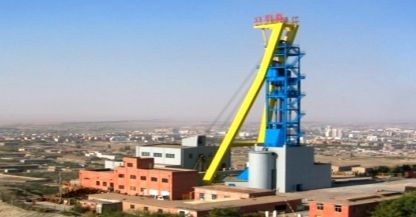
Core Technologies of the Mining Technology and Equipment Business Unit: Efficient Mining Methods and Processes
CHANGSHA INSTITUTE OF MINING RESEARCH CO., LTD.
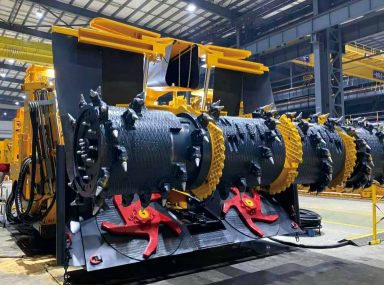
Integrated Excavation and Anchoring Machine (EJM Series)
China Railway Construction Heavy Industry Corporation Limited