Petrobras and Pemex Join Forces to Assess Pre-Salt Prospect in the Gulf of Mexico
en.Wedoany.com Reported - The two largest oil companies in Latin America—Brazil's Petroleo Brasileiro SA, or Petrobras, and Mexico's Petroleos Mexicanos, or Pemex—are joining forces to assess a pre-salt prospect in the Gulf of Mexico. Located offshore the Mexican state of Campeche, the area is composed of rocks formed during the Jurassic period, buried deeper and older than many existing oil fields, with potentially higher oil-bearing capacity; however, given the need to penetrate unstable, high-pressure salt layers several miles beneath the seabed, both technical and financial risks are substantial.
Pemex drilled unsuccessfully at this location in 2018. Unlike the younger oil-bearing formations on the U.S. side of the Gulf of Mexico, the two companies are targeting ancient rock layers formed approximately 160 million years ago, which contain source rocks—the strata in which organic matter is converted into petroleum. In recent weeks, teams from both sides have begun evaluating seismic and other geological data to determine whether Petrobras can replicate its pre-salt exploration experience off Brazil's coast in the Gulf of Mexico.
"Petrobras is entering uncharted territory," said geologist Pedro Zalan, who participated in multiple exploration projects during his 34-year career at Petrobras. The geological conditions on the Mexican side of the Gulf of Mexico "make it particularly favorable for oil accumulation."
Petrobras has extensive experience developing pre-salt resources off Brazil's coast. A series of major discoveries beginning in 2006 reshaped Brazil's offshore oil industry and drove a significant surge in crude production. Operators in other regions, such as Angola, Gabon, and the Republic of the Congo, have attempted to replicate this success in similar formations, mostly without success.
"Pemex alone lacks the technology and capital to conduct this type of exploration," said Mark Rowan, a Colorado-based geologist and consultant specializing in deep discoveries in the Gulf of Mexico. "But high risk doesn't mean there's no oil or gas there."
In 2018, Pemex drilled more than 7,800 meters (25,600 feet) below the seabed, penetrating the Campeche salt layer, and the well was ultimately declared non-commercial. However, data collected during drilling could provide clues for Petrobras and Pemex in evaluating this prospect. "Clearly, Pemex's findings didn't scare them off," Rowan said. "That suggests there's no absolute 'exploration killer,' and there may even be something giving them a genuine reason to keep testing."
Even if a discovery is made, the development phase will be equally challenging. Under deep, high-temperature, high-pressure conditions, salt behaves more like a liquid than a solid, requiring specialized drilling equipment and techniques, and deepwater exploration wells can cost hundreds of millions of dollars. Petrobras' head of exploration and production, Sylvia Anjos, also stated at an August 7 media briefing that, in addition to the pre-salt area, the two companies plan to explore beneath sedimentary rocks formed by deepwater mud and sand flows, as well as beneath younger, shallower salt layers.
Major operators such as Chevron Corp. and Shell Plc have been producing from sub-salt oil and gas fields in the Gulf of Mexico for decades, but the older pre-salt resources targeted by Petrobras and Pemex differ in geological and drilling complexity. A major discovery could provide a significant boost to Pemex, as the state-owned producer faces declining output and seeks to rebuild its resource base; for Petrobras, it represents an opportunity to apply its pre-salt expertise—knowledge that helped transform Brazil into a major offshore oil producer—beyond its home country. The Tupi field, discovered by Petrobras in 2006, has produced approximately 4 billion barrels of crude oil since coming onstream in 2010.
"A lot depends on what the data from Pemex's 2018 pre-salt well actually shows, and Pemex has kept the results strictly confidential," said Jon Blickwede, a geologist and owner of Houston-based Teyra GeoConsulting. "If Pemex found any oil or gas shows beneath the salt—whether natural gas or oil—that would be highly significant."
Related Products



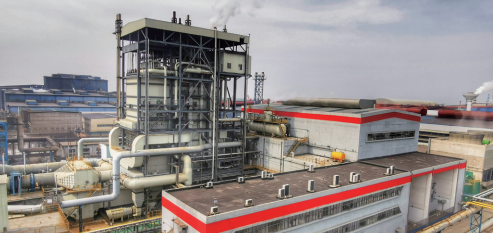
Jiujiang Pinggang 125MW Subcritical Gas Power Generation Project
Capital Engineering & Research Incorporation Limited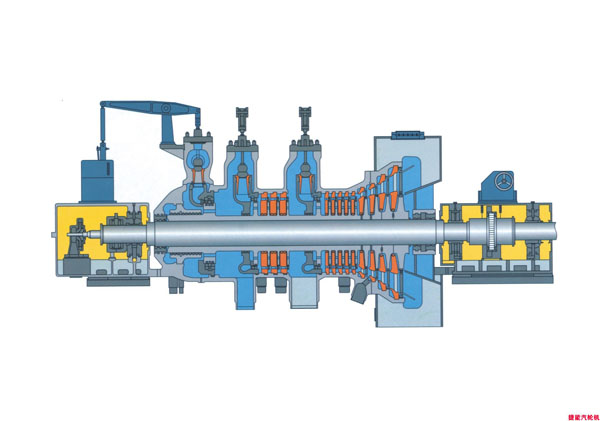
Hydrogen production and hydrogenation charging refueling gas integrated energy station
Shenzhen Kohodo Hydrogen Energy Co., Ltd.

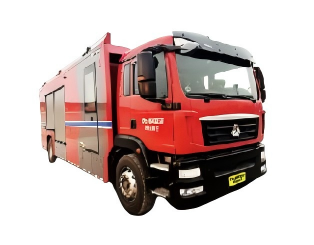
Modular Multifunctional Water Supply and Drainage Vehicle (18T)
Changsha Dewater Machinery Technology Co., Ltd.