US Shield AI Deploys Hivemind Autonomous Software in Orbit for the First Time
en.Wedoany.com Reported - US defense technology company Shield AI has, for the first time, deployed its Hivemind autonomous software to operate on an orbiting satellite, bringing technology originally designed for autonomous aircraft into space applications. Shield AI, Sedaro, and NOVI Space jointly announced on August 24 that this series of experiments was conducted on a NOVI satellite in low Earth orbit, pairing artificial intelligence with onboard simulation software that can validate commands before they are executed.
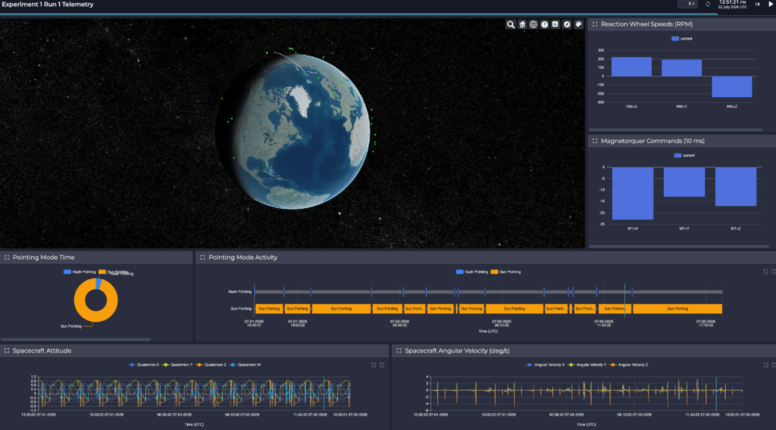
During the 24-hour test, the satellite executed 189 commands, all generated by Hivemind and approved by Sedaro's autonomous software. The experiment went beyond using AI solely for onboard data processing, focusing instead on testing whether the software could make decisions across multiple mission requirements.
San Diego-based Shield AI is known for its autonomous software, and its Hivemind software enables aircraft to perceive their environment, make decisions, and execute missions with limited or no real-time human control. Shield AI and Sedaro announced a partnership in December 2025 to apply the technology to orbital missions.
The experiment used a single NOVI spacecraft as the primary platform, simulating a constellation of six satellites, with the remaining five being virtual satellites that do not physically exist in orbit—an important distinction from achieving autonomous control over a real six-satellite formation. In the test architecture, Hivemind worked in conjunction with Sedaro's "Autonomy Framework for the Edge" (SAFE) to balance imaging tasks against factors such as spacecraft health, battery charge, and pointing requirements.
Granting greater authority to onboard software raises the question of how to verify the safety of autonomous commands before they are executed. Sedaro's software relies on detailed models of the spacecraft and its environment, which can run directly on the satellite. Each time Hivemind proposes an action, the Sedaro system simulates potential outcomes before the command is executed, forming a layer of validation between the AI software and the spacecraft. Robbie Robertson, co-founder and CEO of Sedaro, stated that the hardest part of autonomous space operations is trust, and this software allows operators to validate autonomous decisions before execution.
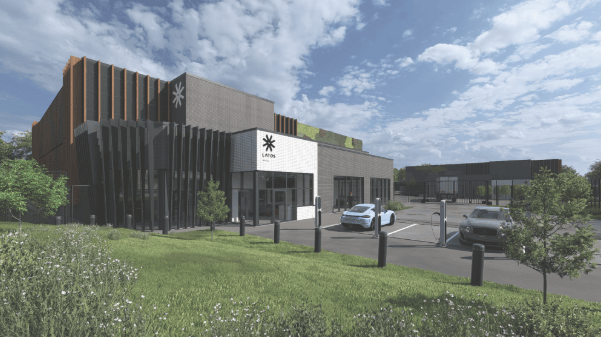
The three companies did not claim that the satellite operated entirely without human oversight; the announcement indicates that the experiment was conducted under the verification and validation of NOVI operators, with human involvement throughout the test. NOVI, also based in Arlington, develops small satellites and onboard computing systems capable of running AI and machine learning applications in orbit. The spacecraft used for this experiment was not originally designed around Hivemind; the autonomous software was integrated after the satellite reached orbit. NOVI's LIME spacecraft was launched in January 2025 on SpaceX's Transporter-12 rideshare mission and has since been used for multiple experiments involving communications, onboard algorithms, and AI and machine learning applications.
Earlier in 2025, Sedaro demonstrated that its spacecraft models could run on NOVI satellites, and the latest experiment added Hivemind as the software generating mission commands. Sedaro stated that autonomous software can be retrofitted onto existing satellites without requiring the spacecraft to be designed around it from the outset, and this demonstration showcases how trusted autonomy can be layered onto existing and future constellations. This work builds on a $1.76 million award from SpaceWERX under the Phase II Small Business Innovation Research (SBIR) program granted to Sedaro for satellite autonomy research, with participation from the Air Force Research Laboratory (AFRL) and Space Systems Command. Sean Phillips, technical advisor at AFRL's Space Control Division, said this experiment represents a step toward integrating autonomy into future satellite operations.
Related Products


MUX Series Communication Interface Device for Security and Stability Control System
Nanjing NR Electric Co., Ltd.


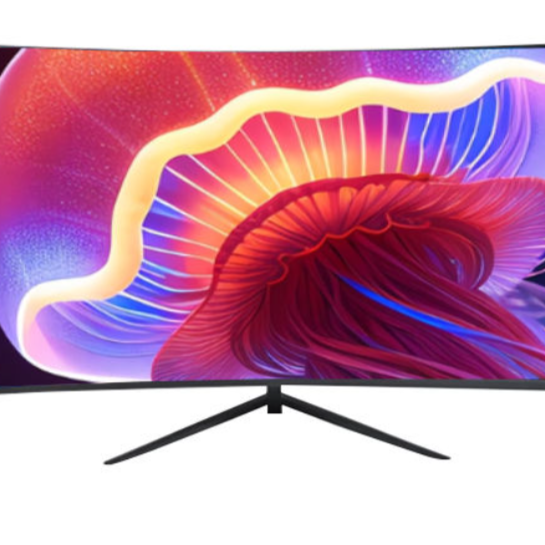
20 Inch 1600*900 Full HD 60Hz TFT LED Monitor with VGA and DP Interfaces for Desktop Computers-Business Use
Guangzhou Zanying Optoelectronics Technology Co., Ltd.



Industrial and Commercial Point-Type Gas Detector
Jinan Benan Technology Development Co., Ltd.