ATHA Energy Completes C$63 Million Financing in 2026 Q1 to Explore Canadian Uranium Projects
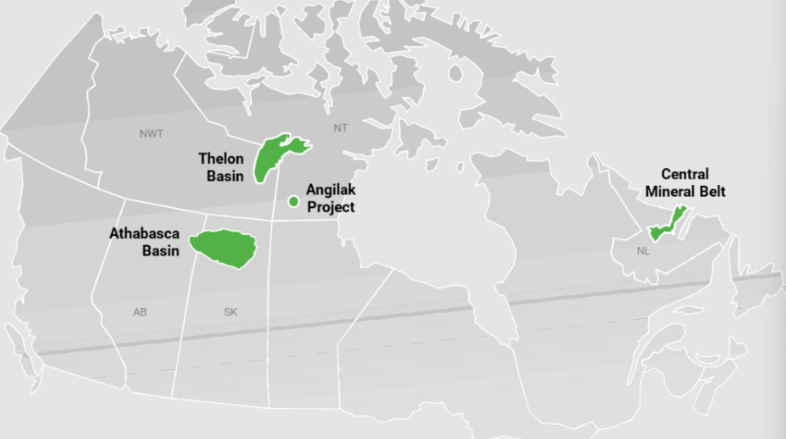
en.Wedoany.com Reported - All of ATHA Energy Corp.'s (TSXV: SASK | FRA: X5U | OTCQX: SASKF) uranium assets are located in Canada, under the jurisdiction of a single federal regulator, the Canadian Nuclear Safety Commission (CNSC). The company's land portfolio totals 6.8 million acres, covering three regions: over 3 million acres in the Athabasca Basin of Saskatchewan, over 3 million acres combined across the Angikuni, Thelon, and Yathkyed basins in Nunavut, and approximately 250,000 acres in the Central Mineral Belt of Labrador.
The company's Chief Executive Officer and Director, Troy Boisjoli, views the single-jurisdiction structure as a regulatory efficiency advantage. In explaining this assessment, he noted that Canada has been mining uranium since the early 1950s, and regulators have thereby accumulated decades of full-lifecycle experience; the mutual understanding between the company and regulators carries forward with the project, rather than having to be re-established in each new jurisdiction. Boisjoli stated that Canada is "in the best position globally to accelerate and maximize efficiency within the regulatory process."
This procedural lead has a verifiable track record prior to resource definition. ATHA has filed technical reports prepared by qualified persons for 2 of its 3 core jurisdictions, both ahead of resource definition. The Angilak project technical report was prepared in accordance with Canadian National Instrument 43-101 (NI 43-101), with an effective date of October 14, 2025, and was prepared by Qualified Person Matt Batty; the Newfoundland and Labrador Central Mineral Belt project technical report was also prepared in accordance with NI 43-101, with an effective date of June 14, 2025, and was prepared by Qualified Person Dr. Stefan Kruse. Neither report defines mineral resources. The only resource figure currently disclosed for the Angilak project remains the conceptual exploration target of 60.8 million to 98.2 million pounds of uranium oxide at Lac 50, which the company explicitly states does not meet NI 43-101 standards and provides no guarantee that further exploration will convert it into resources. The project hosts multiple active discovery corridors, including the Lac 50 deposit corridor and the mineralized RIB corridor, offering regional-scale optionality within a single jurisdiction.
Regulatory quality did not shorten the development timelines of the previous round of Canadian uranium projects. The most recent projects moving from discovery to final regulatory approval or final investment decision (FID) spanned multiple years—one running from 2014 to 2021, and another from 2011 to 2022 and 2023—a period Boisjoli described as one of the most challenging phases in the commodity cycle. Meanwhile, Athabasca Basin exploration budgets fell from approximately C$200 million to C$250 million to roughly C$85 million to C$100 million. The exploration that continued was concentrated in the Patterson Corridor, where Fission Uranium and NexGen Energy operate, and at Denison Mines' Wheeler River project. The regulator was always present, but for much of the last cycle, the capital required to test the ground was not on the field.
Conditions in the current cycle differ. ATHA completed a C$63 million financing in the first quarter of 2026, funding approximately 24 months of exploration; according to Boisjoli, uranium prices have reached historical highs. The combination of capital and procedural progress is precisely what was missing during the previous downturn cycle.
The single-country asset structure also shapes the company's positioning in the context of industry consolidation. ATHA holds a 10% carried interest in Athabasca Basin exploration lands operated by NexGen Energy and IsoEnergy, providing indirect exposure to the development activities of two uranium developers without the need to initiate or fund transactions itself. When asked about M&A activity, Boisjoli stated he is watching strategic production assets globally, and whether the Americas—particularly the United States—are ready for consolidation, adding, "it would not surprise me."
These advantages still have boundaries: the Angilak project is at the exploration stage, with no mineral resources, feasibility study, or project economics disclosed. Until a licensable resource is established at the relevant project, a single regulator, two filed technical reports, and exploration capital already in place constitute the long-term foundation of this investment case.
Related Products


Prefabricated Houses and Electrical Energy Boxes
Chengdu Ruilong Machinery Manufacturing Co., Ltd.
IGBT Hydrogen Production Power Supply - High Power Air Cooling
Beijing Zhengzhuo Engineering Technology Co., Ltd.
Modular Multifunctional Water Supply and Drainage Vehicle (18T)
Changsha Dewater Machinery Technology Co., Ltd.