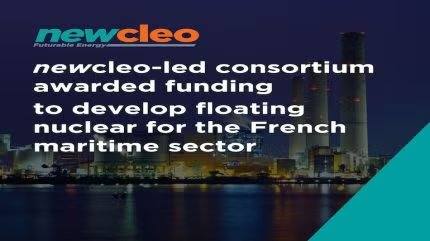
French consortium led by Newcleo secures nearly €1 million to validate floating nuclear power concept
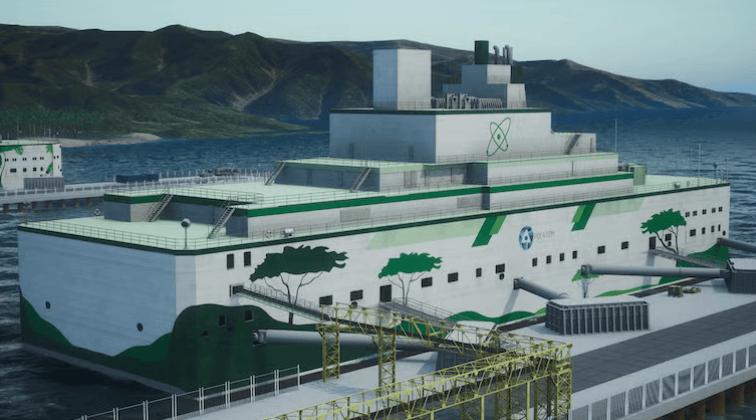
en.Wedoany.com Reported - A consortium led by French startup Newcleo has been selected under the "Supporting the Decarbonization of the French Maritime Sector" project call, managed by Bpifrance. The nearly €1 million (approximately $1.16 million) in funding awarded to the consortium will go toward the n-Floating project, which aims to validate the technical feasibility of a floating nuclear power concept based on multiple 200 MWe LFR-AS-200 reactors.
The consortium members include Newcleo, classification society Bureau Veritas Marine & Offshore, and French engineering firm ABMI Groupe, with the work expected to last approximately 18 months. Previously, Newcleo has collaborated with Fincantieri on nuclear-powered commercial vessels and with Saipem on offshore nuclear applications; n-Floating represents another extension of its maritime nuclear strategy.
According to Newcleo, the concept is designed for industrialization and large-scale deployment, drawing on mature experience from the maritime and offshore industries, and adopting design, construction, and operational methods developed by the oil and gas sector for floating energy production, storage, liquefaction, and regasification facilities. The early phase of the project focuses on nuclear barge concept studies, assessing its potential to provide reliable, low-carbon, and competitive energy in remote areas, ports and related industrial hubs, coastal regions, as well as in energy-intensive applications such as seawater desalination and low-carbon fuel production. The project will subsequently develop a roadmap for development and potential industrial deployment by 2036, with the goal of completing design and construction in France.
Bureau Veritas Marine & Offshore will provide expertise in classification, risk assessment, and certification, helping to evaluate the safety, regulatory, and technical issues associated with floating nuclear applications. Christophe Chauviere, Senior Vice President of Technical & Operations Excellence at the division, stated that large-scale decarbonization requires energy solutions that can be deployed safely and efficiently while offering scalability potential, and that n-Floating provides an opportunity to observe how advanced nuclear technology can combine with mature maritime practices. François Laborde, CEO of ABMI Groupe, noted that the project brings together three complementary capabilities: Newcleo provides reactor technology, Bureau Veritas contributes maritime regulatory knowledge, and ABMI relies on its engineering and delivery experience accumulated in complex maritime and nuclear projects.
LFR-AS-200 stands for Lead-cooled Fast Reactor – Amphora-Shaped, with 200 representing 200 megawatts of electrical power. This reactor type replaces water or sodium with molten liquid lead as the coolant and uses a proprietary mixed oxide (MOX) fuel made from recycled legacy nuclear waste and residual materials. The proprietary inner vessel, inspired by ancient amphorae, significantly reduces the primary system footprint, making it four times more compact than conventional liquid metal designs, while eliminating high-maintenance components such as in-vessel refueling machines, intermediate cooling loops, in-vessel grids, and complex pump flywheels. The steam generators use short helical tube bundles, partially positioned above the top head to reduce the risk of pipe rupture.
The design currently remains at the conceptual stage. The International Atomic Energy Agency (IAEA) classifies LFR-AS-200 as a "conceptual design" in its small modular reactor catalog; although the design has entered the UK Generic Design Assessment (GDA) and has had technical engagement with the U.S. Nuclear Regulatory Commission (NRC), these are only preliminary pre-application document reviews, evaluating mathematical models and safety theories rather than physical hardware. There are currently no operating lead-cooled fast reactors generating commercial power worldwide; the closest to completion is Russia's Brest-OD 300. Newcleo is advancing deployment through a staggered prototype validation strategy, with the only physical achievement to date being the non-nuclear test bench Precursor, currently being assembled at the Brasimone Research Center of the Italian National Agency for New Technologies, Energy and Sustainable Economic Development (ENEA), equipped with a 20-ton empty vessel and electric heaters to test the flow of over 100 tons of liquid lead, containing no nuclear fuel. Before the 200 MWe version can be approved for commercial manufacturing, a 30 MWe nuclear demonstration reactor must first be designed, licensed, and built in France, with a target timeline of 2031–2032.
Numerous technical and regulatory hurdles remain between the drawing board and a floating barge: molten lead is highly corrosive and will erode standard steel vessels at high temperatures, and the proprietary alloy required to perfect the LFR-AS-200 remains a research challenge; regulatory review will also take years to determine whether the amphora-shaped structure offers sufficient safety. The funding awarded by Bpifrance is essentially a feasibility study grant, covering engineering blueprints and risk calculations, and there is still considerable distance before the actual construction of a floating reactor.
Related Products
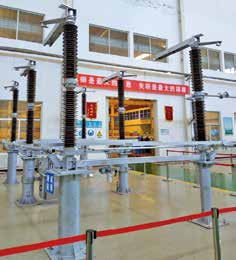

GW4-40.5/72.5/126/145/170/252/363/420 Series Double-column Horizontal Rotary High-voltage AC Disconnect Switch
SHANDONG TAIKAI DISCONNECTORS CO., LTD.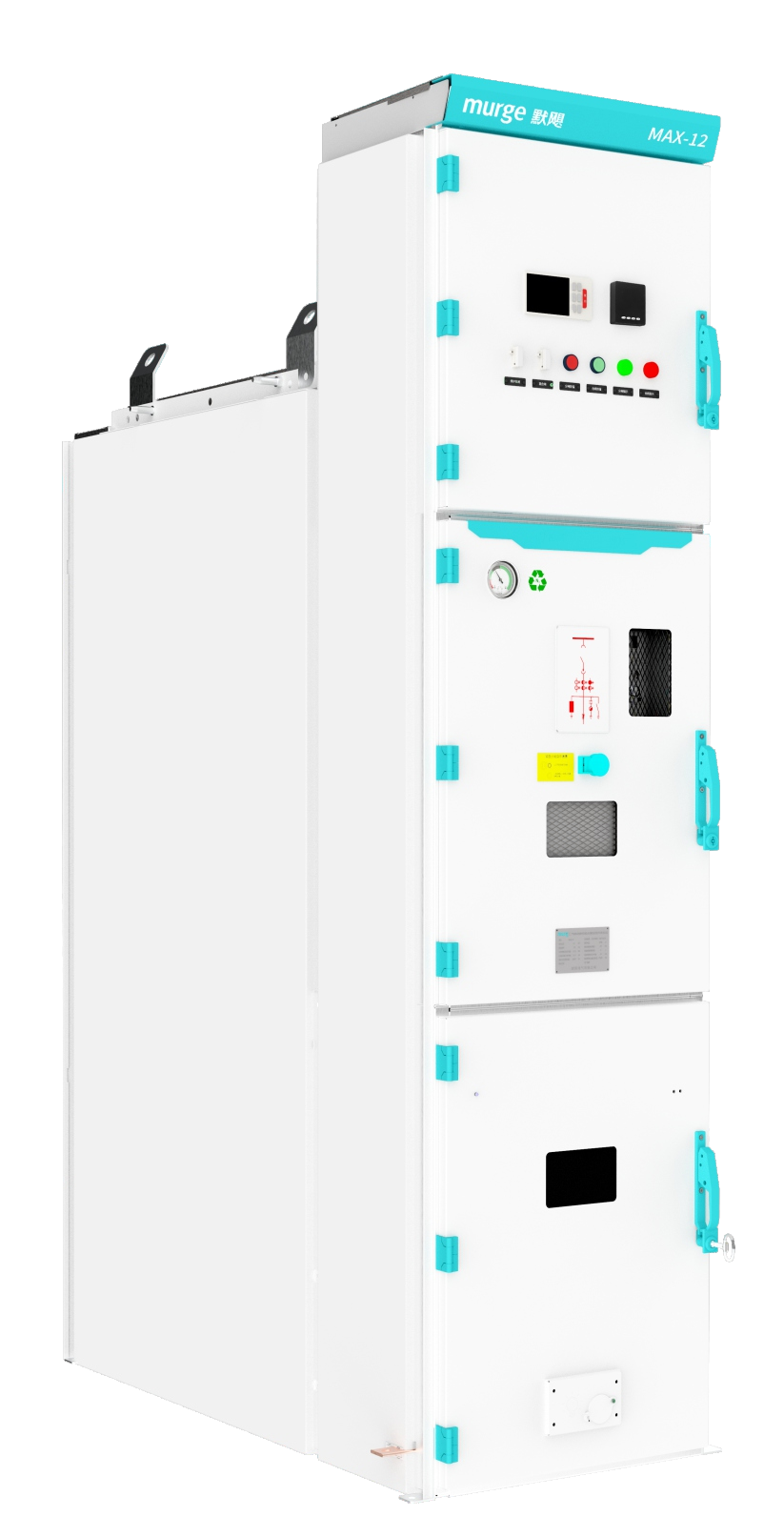
MAX-12 series Environmental Protection/SF6 gas insulated switchgear (C-GIS)
Murge Electric Co.,Ltd.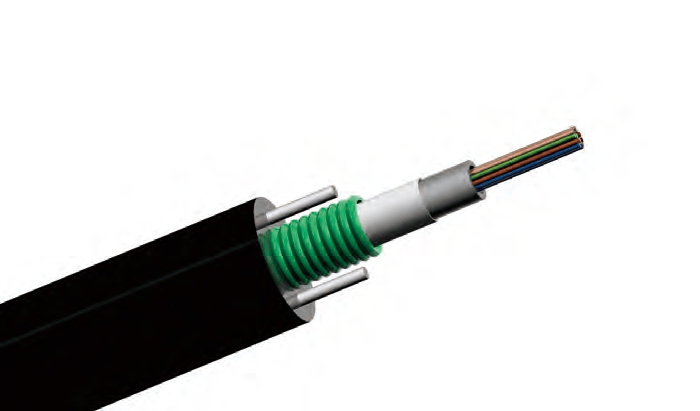
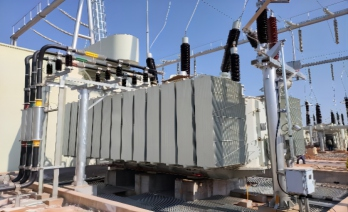
72.5kV 1250A 31.5kA SF6 free Gas-insulated Metal-enclosed Switchgear
Zhejiang Juhonkia Intelligent Electric Co., Ltd.
Forest and Grassland Heat Source Infrared Monitor
China Huayun Meteorological Technology Group Co., Ltd.

Modular Multifunctional Water Supply and Drainage Vehicle (18T)
Changsha Dewater Machinery Technology Co., Ltd.