The Real Bottleneck in America's Power Construction Boom: Demand Is No Longer the Problem—Execution Capability Is the Key
en.Wedoany.com Reported - U.S. power infrastructure is entering a sustained expansion cycle rarely seen in two decades. A special report recently released by MSI Economics, a research institution under MOCA Systems, Inc. (MSI), titled "Charging Up America: Construction Opportunities in U.S. Power Construction, 2025–2030," points out that by 2030, annual construction spending in U.S. power generation sectors including natural gas, solar, wind, and nuclear is expected to rise from approximately $70 billion in 2025 to around $150 billion, with cumulative construction spending over the six years approaching $691 billion.
This figure shows that the U.S. power industry does not lack demand. What truly determines whether the United States can complete its power expansion in the coming years is no longer "whether there are projects," but "whether projects can be delivered." Equipment delivery cycles, grid interconnection queues, skilled labor supply, and capital arrangements are becoming the core variables constraining the pace of U.S. power construction.
I. Demand Side: Data Centers and Advanced Manufacturing Reshape the Power Growth Curve
Over the past two decades, U.S. electricity demand growth has generally been relatively flat. But this situation is changing. The MSI Economics report notes that announced investments in data centers and advanced manufacturing have reached $1.66 trillion, pushing utility-scale power demand into a phase of sustained growth.
Two important trends underlie this change.
First, the rapid development of artificial intelligence, cloud computing, and the digital economy has made data centers a major source of new electricity demand. Large data centers not only consume enormous amounts of power but also have extremely high requirements for supply stability, continuity, and redundancy. The traditional power planning model, dominated by residential, commercial, and ordinary industrial loads, is now facing a new type of load that is more concentrated, more intense, and faster-growing.
Second, the reshoring of U.S. manufacturing and increased investment in advanced manufacturing are also driving up electricity demand. Industries such as semiconductors, batteries, and clean energy equipment tend to be characterized by high capital investment and high energy consumption, placing greater demands on regional grid carrying capacity. Therefore, power construction is not just an energy issue—it has also become a foundational condition for industrial competitiveness and regional economic development.
From this perspective, the expansion of U.S. power construction is not a short-term fluctuation but an infrastructure reallocation brought about by changes in industrial structure.
II. Regional Landscape: Texas Becomes the Growth Center, but Pressure Is Also Most Concentrated There
The report shows that by 2030, 87% of implied power generation construction spending in the United States will be concentrated in three interconnection grid regions, with the ERCOT market, where Texas is located, contributing nearly half of the growth. Although ERCOT's peak demand scale is smaller than that of PJM in the Mid-Atlantic region and MISO in the Midwest, its growth rate is approximately three times that of the latter two.
It is not surprising that Texas has become the focal point of U.S. power construction. The state possesses land resources, an energy industry foundation, a relatively fast project advancement mechanism, and substantial industrial and data center investment demand. Texas has long been an important market for U.S. wind, solar, and natural gas power generation, with a relatively high degree of marketization and relatively rapid investment response.
But rapid growth also means concentrated risk. The Texas grid has previously exposed reliability shortcomings due to extreme weather. If new power sources, transmission expansion, energy storage deployment, and load management cannot advance in sync, power supply-demand tension could evolve from an occasional problem into structural pressure.
Therefore, the Texas case shows that power construction cannot be measured solely by installed capacity scale—it must also be measured by system resilience. If new generation capacity cannot be effectively interconnected, dispatched, and operated stably, it will be difficult to convert into truly usable power supply guarantees.
III. Supply Bottlenecks: Equipment Shortages Are More Urgent Than Funding and Permitting
A key judgment of MSI Economics is that the primary constraint on current U.S. power construction is neither financing nor permitting, but equipment supply and execution capability.
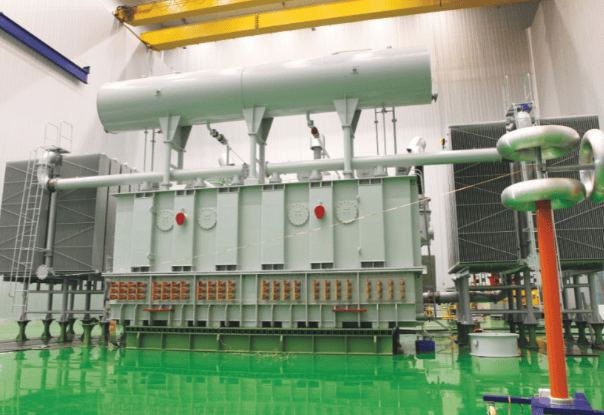
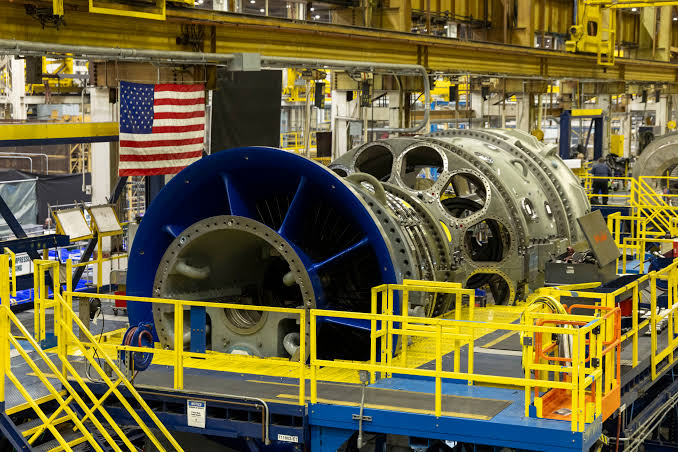
The report notes that delivery cycles for large transformers have been extended to as long as 128 weeks, and heavy-duty gas turbines may take 5 to 7 years from order to commercial operation. Meanwhile, domestic supply capacity is limited, with approximately half of upstream delays directly related to shortages of transformers and switchgear.
This means that even if a project secures funding, land, and market demand, it may still face delayed construction start or postponed commissioning because key equipment cannot be delivered on schedule. Power projects are highly chain-dependent—a delay in a single large transformer, a set of switchgear, or a gas turbine unit can affect the entire project timeline.
Equipment bottlenecks also create cascading effects. On one hand, lengthened delivery cycles drive up project costs, forcing developers to lock in equipment early and pay higher premiums; on the other hand, increased uncertainty affects financing arrangements, as investors pay closer attention to whether projects can generate cash flow on schedule.
This shows that the competitive focus of U.S. power construction is shifting from "competing for projects" to "competing for supply chains." Those who can lock in long-cycle equipment earlier will be more likely to gain a construction advantage in the coming years.
IV. Technology Pathways: Solar Expands Fastest, Natural Gas Remains the Reliability Backbone
The report predicts that solar will dominate new capacity additions, accounting for approximately 74% of capacity increments, with the lowest cost per megawatt. This reflects that U.S. utility-scale solar still possesses clear cost advantages and construction scale advantages.
But solar also has inherent limitations. Its output is affected by weather and day-night variations, requiring coordination with energy storage, transmission, and dispatch systems. For continuous loads such as data centers and advanced manufacturing, relying solely on intermittent power sources makes it difficult to meet high reliability requirements.
Therefore, natural gas power generation is still regarded as the most realistic expansion option among dispatchable power sources. The report notes that natural gas is the only dispatchable power source undergoing substantive expansion, and also the only technology pathway with rising cost per megawatt, with costs increasing approximately 28% since 2022. This reflects shortages of gas turbine equipment, rising construction costs, and intensified project competition.
Nuclear power plays a more complex role. The report mentions that nuclear power costs approximately 6 to 7 times more per megawatt than utility-scale solar, and the U.S. Energy Information Administration (EIA) expects no new nuclear capacity to come online before 2030. However, nuclear power has 85% to 95% continuous output capability, making it one of the few technologies that can sustainably provide stable low-carbon electricity. Therefore, despite limited short-term contribution, nuclear power still has strategic value.
This indicates that the U.S. power transition is not simply "new energy replacing traditional energy," but rather a search for balance among cost, reliability, carbon emissions, and construction cycles.
V. Capital Logic: Investment Shifts from Chasing Demand to Locking In Delivery Certainty
As power demand growth becomes clear, capital markets are also adjusting their strategies. The report notes that private investment institutions such as Blackstone and Brookfield are combining ownership of power generation assets with end-use electricity demand, supported by 15- to 20-year power purchase agreements. Meanwhile, approximately $30 billion in clean energy loans has been reallocated toward natural gas and nuclear power.
This change reflects capital's emphasis on "certainty." Power construction involves large-scale funding and long cycles, and investment returns depend heavily on whether projects can be built, interconnected, and sell electricity on schedule. Long-term power purchase agreements can help projects lock in revenue sources and also help large electricity consumers stabilize energy costs.
But the upstream shift of capital may also bring new problems. If large technology companies, data center operators, and capital institutions prioritize locking in power resources, it could exacerbate uneven distribution of regional power resources. The public power system must serve both industrial investment and guarantee electricity for residents and small and medium-sized enterprises, and policy regulation needs to maintain a balance between market efficiency and public fairness.
VI. Core Judgment: Construction Volume Is Delayed, Not Eliminated
MSI Economics believes that U.S. power construction demand has not disappeared, but has been postponed due to constraints in equipment, grid interconnection, and construction capacity. Manufacturers are expanding production, but most new capacity will only be released in 2028 and beyond. Therefore, from 2025 to 2027, U.S. power construction may still be in a phase of "strong demand but constrained capacity," with more projects concentrated in the latter half of this decade.
This judgment deserves attention. If a large number of projects are postponed to start construction in a concentrated manner after 2028, it could bring another round of congestion in construction resources, equipment supply, and grid interconnection. In other words, today's delays, if poorly managed, could become tomorrow's more severe bottlenecks.
Therefore, the key to U.S. power construction is not simply expanding investment scale, but improving project sequencing, supply chain coordination, and cross-regional grid planning capabilities.
VII. Recommendations: From Demand-Driven to Execution Governance
Overall, U.S. power construction is at an important turning point. The demand side is driven by data centers and advanced manufacturing, with strong growth certainty; the supply side is constrained by equipment, labor, grid interconnection, and capital pacing. In the coming years, the core factor determining the success or failure of U.S. power expansion will be the efficiency of the execution system.
To improve construction delivery capability, progress is needed in at least four areas.
First, strengthen the critical equipment supply chain. Long-cycle equipment such as large transformers, switchgear, and gas turbines should be incorporated into key industrial planning, domestic manufacturing expansion should be encouraged, and a more transparent delivery cycle information mechanism should be established.
Second, reform the grid interconnection queue mechanism. Mature projects with financing, equipment, and land conditions should be prioritized, "placeholder" applications should be reduced, and grid interconnection efficiency should be improved.
Third, coordinate the power source mix. Solar can serve as the main body of new capacity additions, but energy storage, natural gas peaking, transmission networks, and long-term low-carbon stable power sources must be developed in parallel to avoid declining system reliability.
Fourth, enhance labor and engineering management capabilities. Power construction is not only a capital-intensive industry but also a professional engineering capability-intensive industry. Training skilled workers, optimizing project management, and improving construction coordination efficiency will directly affect construction speed.
Overall, the opportunities in U.S. power construction are enormous, but the constraints are equally real. The judgment of MSI Chief Economist Brandon Michalski is quite summarizing: what limits this round of expansion is not demand, but execution. The companies and investors that truly benefit in the future are not those who simply chase demand, but those who can connect the chains of equipment, grid interconnection, labor, and capital.
This also provides inspiration for the global energy transition: the second half of energy infrastructure competition is not just a competition of planning capability and investment scale, but also a competition of supply chain, engineering organization, and system governance capabilities.
Related Products
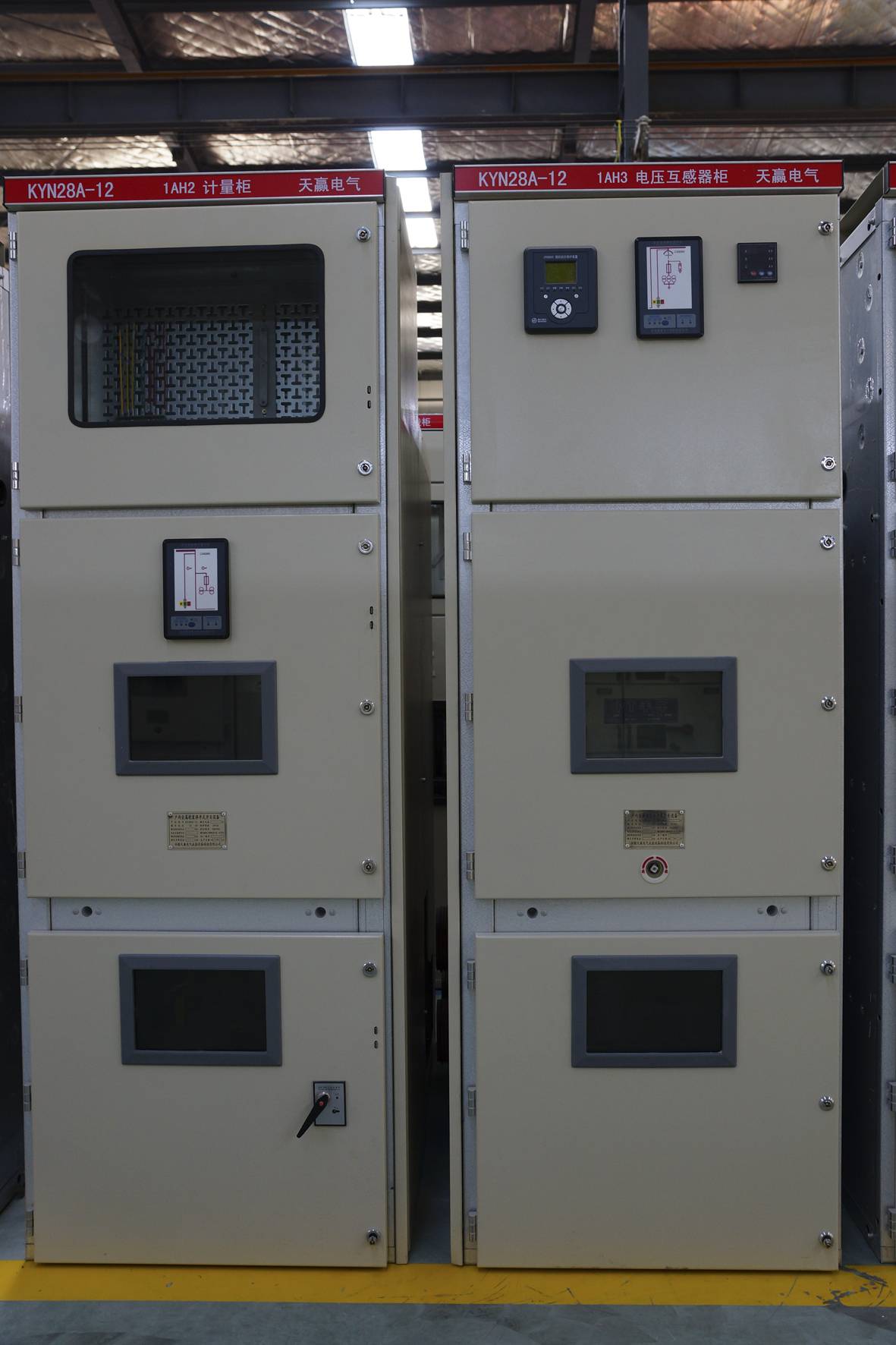

KYN28 - High Voltage Switchgear
Anhui Tianying Electrical Equipment Manufacturing Co., Ltd.
CAP1400 main feedwater flow nozzle flowmeter.
Jiangsu Hongda Instrument Technology Co., LTD.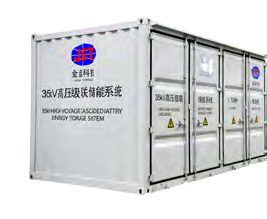
6kV-35kV Medium and High Voltage Direct-Connected Energy Storage System
Hainan Jinpan Smart Technology Co., Ltd.

Forest and Grassland Heat Source Infrared Monitor
China Huayun Meteorological Technology Group Co., Ltd.
Off-Grid Fuel Cell Supercharging Station (180kW Configuration)
Shanghai REFIRE Group Limited