South Korea Plans to Cut Middle East Crude Import Share to 50%
en.Wedoany.com Reported - On September 23, South Korea's Ministry of Trade, Industry and Energy announced a 10-year natural resource security plan, proposing to reduce the share of Middle Eastern crude in South Korea's crude oil imports to 50% by 2035, and to expand crude oil reserves and non-Middle Eastern supply sources. In 2025, about 70% of South Korea's imported crude oil came from the Middle East, with most of that volume requiring transport through the Strait of Hormuz. The plan lowers the 2035 target for the Middle East crude import share by 20 percentage points from the 2025 level.
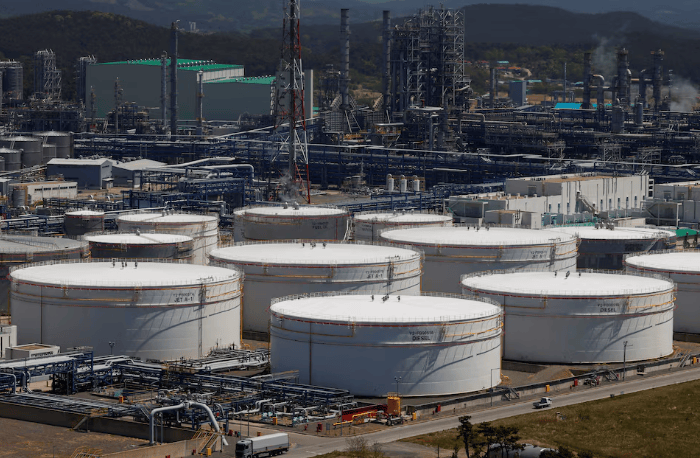
On crude oil reserves, South Korea plans to adjust its existing reserve system and add about 20 million barrels of crude oil reserve capacity by 2030. The government will also expand sources of condensate supply, which is mainly used for naphtha production. South Korea currently relies on imports for about 45% of its naphtha demand, of which about 77% comes from the Middle East. After recent disruptions to Middle East energy transport, South Korea's petrochemical industry has faced tight naphtha supply, and raw material supply has been included in this resource security plan.
Natural gas supply has also been included in the scope of import source adjustment. South Korea proposes to keep its dependence on Middle Eastern natural gas imports below 30% by 2035. In 2025, South Korea had already reduced the share of Middle Eastern natural gas imports to 20%, and future policy will continue to focus on diversifying supply sources and transport routes. This indicator uses a different control threshold from crude oil supply; on the crude oil side, the focus is on reducing the Middle East import share from about 70% in 2025 to 50% in 2035.
South Korea has already adjusted its crude oil security measures several times this year. On September 14, South Korea's Ministry of Trade, Industry and Energy held an emergency meeting to review crude oil supply and demand, at which point South Korea's refining industry had secured more than 90% of the crude oil import volume for September and October compared with the same period the previous year. The meeting also reviewed the impact on South Korea's crude oil supply from shipping in the Strait of Hormuz and the Red Sea and from attacks on Saudi Arabia's East-West Pipeline.
This 10-year plan also expands the list of critical minerals from 38 to 51, adding 10 rare earth elements as well as resources such as germanium. The South Korean government will incorporate crude oil, natural gas, petrochemical raw materials, and critical mineral supply chains into its resource security system, and will advance implementation through import source adjustment, reserve expansion, and expansion of the critical raw materials list.