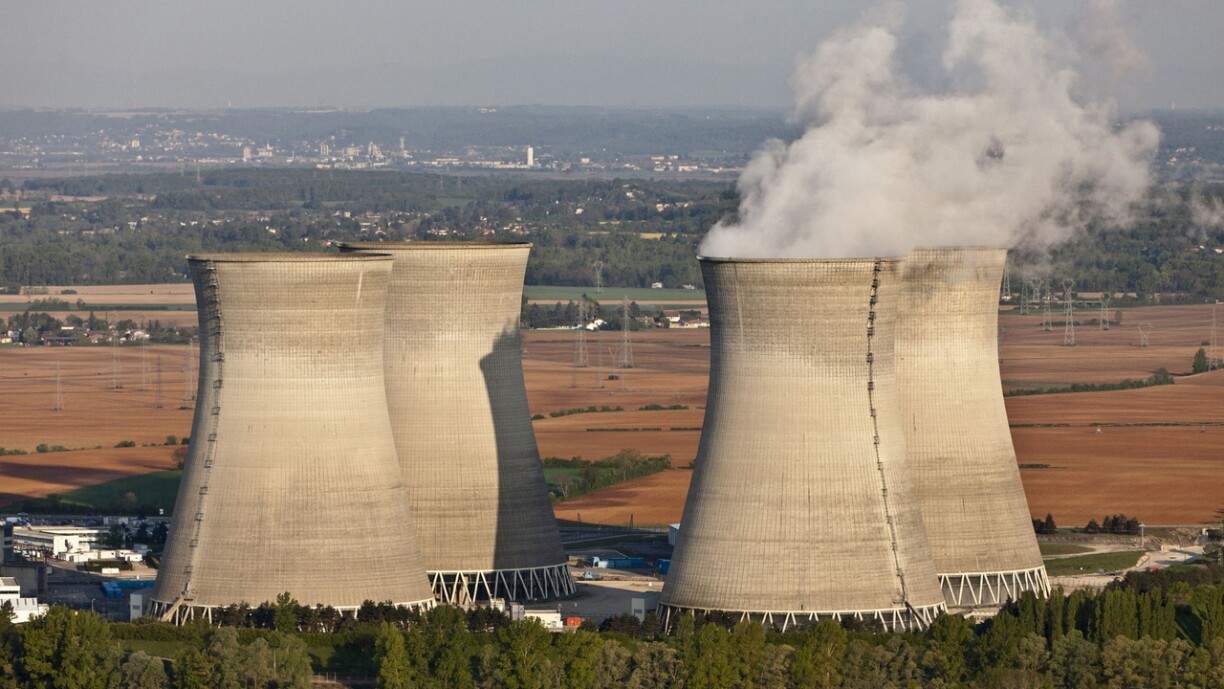
The Game Between Economies of Scale and "PPT Reactors": Why Is the World's Number One Nuclear Power Country Absent from the SMR Carnival?
en.Wedoany.com Reported - Over the past several years, the global energy sector has witnessed a wave of fervent narratives surrounding small modular reactors (SMRs). From Silicon Valley giants in the United States scrambling to procure "microreactors" for computing centers, to the United Kingdom, Canada, and Sweden competing to tout them as the "ultimate silver bullet" for zero-carbon transition, SMRs have been portrayed as a disruptive technology that is cheaper, more agile, and free of delay risks.
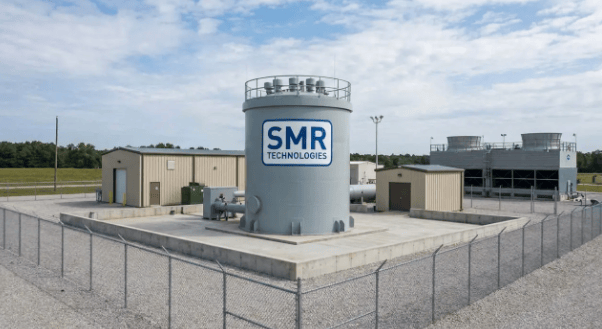
However, amid this nearly deafening wave of capital and public opinion, the world's most representative nuclear power country—France, whose nuclear power generation share has consistently remained near 70%—has displayed a rare calm, hesitation, and even institutional cold shoulder. Although the French state-owned power giant EDF (Électricité de France) once announced its NUWARD reactor vision, its actual actions have amounted to a near "strategic abstention": it has not only kept its main R&D muscle firmly pinned on the large-scale EPR2 reactor, but even after NUWARD encountered design bottlenecks, it decisively abandoned the original modular concept, forcibly upgraded the reactor specification to 400 MWe, and quietly withdrew from the traditional SMR camp.
Why does France refuse to buy in? For a country possessing the world's most complete nuclear energy industrial ecosystem and regulatory framework, its cold-eyed detachment is by no means an accidental industrial misjudgment, but rather a deep-seated defense grounded in heavy-industry organizational philosophy, nuclear safety engineering bottom lines, full-lifecycle levelized cost of electricity, and resource allocation priorities. To examine France's choice is, in essence, to strip away the outer garment of the global SMR "PPT frenzy" and provide global energy decision-makers with a sober reflection replete with rational warnings.
Illusion and Reality: The "Performance Collapse" of Global SMR Industrial Deployment
1. The Brutal Contrast Between Conceptual Hype and Meager Track Record
The core prescription offered by SMR advocates is to use "factory prefabrication, modular assembly, and scaled replication" to break the "capital curse" of traditional large reactors—tens of billions of dollars in initial investment and construction delays exceeding a decade. According to the OECD Nuclear Energy Agency (OECD-NEA), there are currently as many as 127 SMR designs at various paper-study stages worldwide.
However, as of 2026, only two SMRs worldwide have actually been grid-connected for commercial operation:
China's High-Temperature Gas-Cooled Reactor Pebble-Bed Module commercial demonstration project (HTR-PM), grid-connected in 2021;
Russia's "Akademik Lomonosov" floating nuclear power plant (equipped with two KLT-40S pressurized water reactors), commissioned in 2019 in Pevek in the Far North.
Apart from these two examples and a very small number of demonstration reactors in the pre-construction phase (such as Canada's BWRX-300, the U.S. Kairos Hermes, TerraPower Natrium, and China's Hainan "Linglong One"), the entire industry is sustained almost entirely by commercial financing PPTs and rendering images.
2. The Capacity Factor Disaster: Operational Evidence Shatters the Myth
More damning still, the scant operational data available has not validated the promise of high reliability. According to International Atomic Energy Agency (IAEA) data, the median annual load factor (capacity factor) of commercial large nuclear power reactors worldwide has long remained stable above 88%. Yet in the measured performance of SMRs already in operation:
China's HTR-PM (Pebble-Bed Module High-Temperature Gas-Cooled Reactor Nuclear Power Plant) had a load factor of less than 21% in 2024;
Russia's floating reactor's long-term average load factor hovers at only around 30%.
Extremely low load factors mean frequent equipment shutdowns for defect elimination and exorbitantly high comprehensive operation and maintenance costs. Coupled with unverified waste streams from new designs and heterogeneous nuclear safety standards, the so-called "plug-and-play, stable baseload" promise of SMRs has suffered its first heavy blow in the face of industrial reality.
The Anchor of French National Will: Heavy-Industry Centralization Against Capital Fragmentation
France's restraint toward SMRs is, in essence, a fundamental divergence between its unique heavy-industry organizational paradigm and the Anglo-American model.
1. Two Diametrically Opposed Industrial Philosophies: France vs. the United States
The American Model (decentralization and speculative capital-driven): Due to Westinghouse's bankruptcy and restructuring, and the Vogtle expansion project's deep entanglement in difficulties, the U.S. domestic heavy-industry supply chain for large nuclear reactors has been nearly severed. Under the dual pressure of venture capital and power-consumption panic among tech giants, the United States pins its hopes on private start-ups to explore dozens of technological branches (molten salt, sodium-cooled, high-temperature gas-cooled, lead-cooled, etc.) through asset-light, capital-market-driven hype. This model is essentially substituting financial speculation for systems engineering.
The French Model (state coordination, technological convergence, and scale standardization): Since the establishment of the Messmer Plan in the 1970s, French nuclear power has followed a path of state capitalism characterized by heavy government intervention, EDF overseeing the overall picture, and the Atomic Energy Commission (CEA) tackling foundational research. By "Gallicizing" early imported technologies, France covered the entire nation with 57 units using only three generations of standard reactor types. For France, nuclear energy is a lifeline network concerning national sovereignty, and cannot tolerate arbitrary trial-and-error by small private capital.
2. Absolute Prioritization of Talent and Resources: EPR2 Is the True National Cornerstone
In terms of R&D resource allocation, the French have used actions to puncture the polite public relations rhetoric of "also pursuing SMRs":
Resource Allocation Imbalance: Within EDF, to advance the R&D and engineering of the third-generation improved large reactor EPR2, more than 1,000 top nuclear engineers have been committed over the long term; whereas the permanent technical team assigned to the SMR flagship project NUWARD numbered only 10 to 15 people.
Strategic Resolve and State Endorsement: The €129.8 million in support allocated by French President Macron under the "France 2030" plan for advanced reactors was attached with extremely stringent phased review red lines; at the national level, Macron had long since decided to prioritize the construction of 6 large EPR2 units, while retaining the option to build 8 more in the future. On France's national strategic scales, SMRs have always been merely a marginal "technological defensive reserve," not an alternative.
The Professional Sobriety of the French Nuclear Establishment: Safety Redundancy, Supply Chain, and the Privatization Trap
Public skepticism regarding SMR technological maturity from all major core stakeholders within the French system constitutes multiple firewalls against the blind frenzy.
1. Professional Rejection by the Independent Nuclear Safety Regulator (ASNR)
The French Nuclear Safety Authority (ASNR) and parliamentary scientific assessment bodies have repeatedly submitted stern reports to decision-makers:
Many SMR-touted innovative "passive safety" features and advanced coolant loops have "never been fully proven at engineering scale" in terms of their real physical reliability and failure-prevention mechanisms;
Regarding SMR advocates' vision of building them in "high-energy-consumption industrial and mining parks" or "densely populated peripheral areas," ASNR directly sounded the alarm: proximity to industrial clusters and residential areas would not reduce risk but would instead require dedicated safety objectives and external impact resistance standards far more stringent than those for traditional large reactors, which in turn would further erode the already extremely fragile economics of SMRs.
2. Ideological Resistance from Industrial Unions: Vigilance Against the "Startup-ization of Nuclear Power"
France's largest energy union organization, FNME-CGT, has fiercely criticized the privatization tendency of SMRs. The union astutely pointed out that entrusting nuclear industry R&D—which carries extremely high public risk attributes—to startup capital pursuing short-term risk returns is a betrayal of the bottom line of social safety. Nuclear power assets have the inherent attributes of "heavy assets, long cycles, and strong negative externalities." Startup companies have fragile equity structures, easily broken capital chains, and a greater tendency to use public relations rhetoric to conceal process defects—this stands in natural structural opposition to the conservative ethics of nuclear safety.
3. A Sharp Wake-Up Call from a Strategic Master: Beware of Political Theater
Former French High Commissioner for Atomic Energy Yves Bréchet, in testimony before the Belgian Parliament, pointedly stated: "SMRs must never become a pretext for politicians to divert scarce national resources in pursuit of international headlines and to whitewash their own technological ambitions." He warned that any SMR project that departs from systematic science and rigorous engineering review, and is decided by politicians on a whim, will ultimately degenerate into a massive financial black hole and an industrial laughingstock.
Global Lessons from the SMR Ebb Tide
France's vigilance and prudence toward SMRs acts as a potent sedative, offering highly practical reference value for countries currently facing the extension of aging nuclear units and anxiety over energy transition.
1. The Disillusionment of Capital Markets Is Already Happening
As demonstrated in overseas markets, the speculative myth of blindly embracing SMRs has begun to shatter. Lacking the support of scalable deliverables, previously capital-hyped SMR star companies on U.S. stock markets (such as NuScale Power, Nano Nuclear, Oklo, and X-energy) have successively suffered institutional short-selling and cliff-edge market capitalization shrinkage over the past period. The market is voting with its feet, punishing those reckless actions that attempt to reduce the rigorous laws of heavy industry to a "Silicon Valley-style venture capital myth."
2. The Deadly Crowding-Out of "Opportunity Cost"
It must be soberly recognized that the most severe bottleneck currently facing the global nuclear industry is not "reactors not being built small enough," but rather the shortage of qualified industrial workers, the drain of top nuclear engineering talent, the degradation of heavy equipment manufacturing supply chains, and low regulatory approval efficiency. Under the rigid constraints of highly limited budgets, talent, and manufacturing capacity, betting on SMRs necessarily means extracting precious engineers and funds from existing mature large pressurized water reactor projects, flexible grid transformation, and renewable energy infrastructure. Sacrificing certain, currently grid-connectable generation capacity for an uncertain "long-term modular blueprint" is a classic strategically suboptimal choice.
The Scientific Path to Building a Multi-Tiered Nuclear Energy System
Rejecting mindless hype does not mean completely foreclosing the potential application of small reactors in specific niche scenarios. A healthy nuclear modernization strategy should return to objective engineering logic and establish a layered defense and differentiated advancement mechanism:
Uphold Fundamentals While Innovating: Anchor Mature Large Reactors as the Cornerstone of the National Grid. Energy authorities and large utility enterprises must maintain strategic resolve, firmly establishing mature Generation III/III+ large pressurized water reactors (such as Hualong One, Guohe One, EPR2, etc.) as the mainstay bearing the national grid baseload, concentrating whole-industry-chain resources on honing standardized construction capabilities to achieve batch cost reduction, and must not disperse core engineering forces due to external capital concept fads.
Strictly Guard Entry: Establish Penetrating Full-Lifecycle Technology Assessment Thresholds. Implement strict "concept stripping" for all types of SMR R&D projects; nuclear safety regulators should establish independent industrial feasibility and load factor verification standards. Reject commercial packaging that remains merely at the stage of computational fluid simulation and PPT; require applicant entities to provide full-scale key component fatigue resistance empirical data and closed-loop waste disposal plans before receiving substantive financial subsidies.
Precise Positioning: Return to the "Gap-Filling" Essence of SMRs. Thoroughly strip away the unrealistic narrative of SMRs replacing large baseload power plants, and strictly converge their application boundaries to specific niche markets—namely islands lacking large main grid support, deep-sea oil and gas platforms, remote polar industrial and mining areas, and specific industrial concentrated high-parameter heating scenarios. Replace the false illusion of comprehensive substitution with a "specialized, refined, distinctive, and innovative" special supplementary positioning.
Guard Against Capital Spillover Risks and Safety Culture Deviance. In the process of innovating nuclear energy investment and financing mechanisms, it is imperative to rigorously prevent private startup companies from using AI computing hype to "cash out" through capital markets. Resolutely implement the centralized accountability system of heavy-asset nuclear engineering, ensuring that whether for large reactors or modular microreactors, safety and quality control authority always remains firmly in the hands of professional national teams with long-term backstop capabilities.
France's "absence" is not backwardness, but rather a restrained choice made by a veteran industrial nation after deep deliberation over physical laws, capital impulses, and social responsibility. When the tide recedes, on the true examination ground of grid stability and climate transition, what can still hold up the cornerstone of human civilization are those down-to-earth industrial forces tempered by the passage of time.
Related Products

IS(B)□-M·RL Series Oil-immersed 3D Transformer (Planar / 3D Wound Core)
Guangdong Kehua Electric Power Technology Co., Ltd.


Manufacturer Direct Sales Tesla New Energy Electric Vehicle Universal DC 180kW Dual-gun Charging Pile Commercial Fast Charger
Anhui Haidira Electric Technology Co., Ltd.

0.66kV Power Supply Instrument Transformer
Guangdong Sihui Instrument Transformer Works Co., Ltd.