Energy Sovereignty, Geopolitical Deterrence, and the Decarbonization Dilemma: A Panoramic Perspective on Estonia's Nuclear Ambitions
en.Wedoany.com Reported - At the intersection of the geopolitical fault line on the eastern shore of the Baltic Sea and Europe's ambitious radical decarbonization blueprint, Estonia is standing at a historic crossroads that will determine the nation's fate. Estonian Public Broadcasting (ERR) recently published an in-depth interview with the country's newly minted nuclear physics PhD Andrei Goronovski (currently a nuclear engineer at Fermi Energia) and Hando Tohver (currently an advisor on radiation and nuclear safety at the Ministry of Climate). The two experts not only define nuclear energy as an "irreplaceable cornerstone" for achieving the zero-carbon transition, but also put forward a highly striking geopolitical assertion: nuclear power plants are not a strategic vulnerability, but rather Estonia's national "security guarantee."
In conventional understanding, small nations adjacent to powerful neighbors building nuclear reactors are often regarded as exposing themselves to enormous potential risks in geopolitical conflicts; however, in the eyes of these two scientists at the forefront of decision-making and industry, the underlying physics logic, international game rules, and microeconomics of modern nuclear energy are reconstructing this traditional assumption. This article will conduct a systematic analysis across four major dimensions—macro-geopolitics and defense gaming, EU energy policy and industrial transformation, hardcore technological iteration and solid waste management, and public opinion and talent reconstruction—to deeply deconstruct the strategic calculus and real-world challenges behind this small Baltic nation's energy revolution.
Geopolitics and Defense Gaming: The Deterrence Logic and Strategic Paradox of "Security Guarantee"
1. Passive Risk or Strategic Barrier? Reconstructing the "Nuclear-Related Deterrence" Formula
During the Cold War, the nuclear reactors at the Paldiski Soviet nuclear submarine training base turned Estonia into a frontline position; the shadow of the Chernobyl disaster and the concrete sarcophagus left behind after the Soviet Union's collapse further left society deeply traumatized. However, Goronovski and Tohver propose that in the context of modern full-spectrum hybrid warfare, an operating civilian nuclear power plant actually exerts an implicit "passive geopolitical deterrence" effect.
The underlying logic of this judgment lies in Asymmetric Escalation Cost:
Establishment of an internationalized defense red line: Civilian nuclear facilities are subject to strict supervision by the International Atomic Energy Agency (IAEA) and protected by international conventions. In a conventional military conflict, if an adversary deliberately conducts kinetic strikes against a nuclear power plant of international concern, it would be directly characterized as an extreme atrocity undermining the fundamental international security order, and would inevitably rapidly trigger large-scale escalation and intervention under the collective defense clauses of NATO and other allies.
Physical retaliation through cross-border ecological disaster: Estonia is located in the wind corridor on the western edge of the Eurasian continent, and radioactive fallout from any large-scale nuclear leak would never stop at national borders. As Tohver states, if an aggressor attacks nuclear facilities, it would cause unpredictable transnational nuclear disasters, directly spilling the geopolitical conflict over into all of Europe and even the aggressor's own territory, with the comprehensive diplomatic, economic, and retaliatory costs rising exponentially.
2. Empirical Testing Amid War: Lessons from the Zaporizhzhia Nuclear Power Plant for Small Nations
This "security guarantee theory" is not a fanciful academic hypothesis, but is built upon the testing of recent brutal real-world combat cases. In the Russia-Ukraine conflict that has persisted for years, the Zaporizhzhia Nuclear Power Plant (ZNPP), located on the front line and under occupation, became a global focal point.
Despite missiles screaming across the combat zone and the power grid repeatedly being disconnected, the nuclear power plant did not experience a catastrophic radioactive release. The two physicists point out that the stringent containment design of modern reactors is sufficient to withstand direct impacts from large commercial aircraft and even conventional munitions; after entering "Cold Shutdown" status, the reactor systems demonstrated extremely high structural resilience. This empirical experience provides confidence for energy security decision-making along the Baltic coast: modern industrial-grade survivability has transformed nuclear facilities from "fragile bombs" into an unshakable physical fortress.
Macro Policy and Industrial Dilemma: The Only Solution Under the EU's 2040 Decarbonization Pressure
1. The End of a Traditional Cornerstone: The Twilight of the Oil Shale Economy
For a long time, Estonia relied on oil shale (Oil Shale) from the Narva region in the northeast of the country for electricity self-sufficiency, but the high-carbon, high-pollution attributes of oil shale power generation are unsustainable in the face of the EU's radical climate regulations. With the high prices of EU Emissions Trading System (EU ETS) allowances and the mandatory targets of substantial decarbonization by 2040 and full carbon neutrality by 2050 pressing down, oil shale power plants are accelerating toward shutdown.
2. Grid Vulnerability of a "Wind and Solar Island"
In the process of phasing out fossil fuels, Estonia and its Baltic neighbors are vigorously promoting offshore wind and photovoltaic industries. However, the high-latitude sunless periods of Nordic winters and the Baltic Sea's prolonged "Dunkelflaute" (wind lull) periods mean that intermittent renewable energy sources cannot independently shoulder the baseload power guarantee of the grid.
Bottomless pit of peak-shaving costs: If relying solely on large-scale energy storage (BESS) or cross-border submarine interconnection cables, the high capacity costs during extreme weather and grid disconnection would destroy the competitiveness of industry and commerce.
Lifeline of autonomous controllability: The three Baltic states are comprehensively cutting their ties with the post-Soviet unified dispatch grid (BRELL) with Russia and integrating into the Continental European grid. Without local high-density stable baseload support, complete reliance on spot input from the Nordic electricity market would severely weaken the nation's sovereign defense line.
Against this backdrop, Goronovski delivers an extremely realistic verdict: "If Estonia wants to maintain prosperity and development, apart from nuclear energy, we have no alternative power generation solution in terms of economics and sustainability."
Technology Pathway and Technical Closed Loop: Innovative Breakthroughs from SMRs to Radioactive Waste
Estonia has not blindly followed the traditional multi-gigawatt (GW) large heavy water reactors or pressurized water reactors, but rather, led by the private innovative company Fermi Energia, has anchored on fourth-generation small modular reactors (SMRs, such as the BWRX-300 and other technology pathways). Small-scale reactors feature low initial investment, short construction periods, and well-developed passive safety systems, and have not only prompted the Estonian Parliament (Riigikogu) to pass the Nuclear Energy and Safety Act at the legislative level, but also achieved closed-loop breakthroughs at the specific scientific research and application level.
The doctoral academic papers of Goronovski and Tohver precisely target the two most intractable and publicly questioned bottlenecks in the current global nuclear energy industry:
1. "Fast Track" for Waste Disposal: Open-Source Models and Hot-Cold Waste Co-Location Algorithms
In traditional nuclear waste disposal schemes, spent fuel and high-activity waste require up to a century of above-ground interim storage and cooling before they can be transferred to deep geological repositories. Tohver, through the self-developed Wastimate open-source calculation program, overturned the monopoly of expensive commercial closed-source software on nuclide diffusion safety assessment.
Active hybrid degradation scheme: Through algorithmic optimization of ratios, freshly generated high-level radioactive waste and older waste with a longer storage history are "hot-cold mixed and encapsulated" within a single disposal unit, averaging out heat release and activity peaks. This technology can advance the safe burial time span of deep geological repositories by decades, significantly compressing the post-processing cycle and construction management costs.
2. High-Value Utilization of Local Industrial Solid Waste: Basalt-Boron Fiber Radiation-Shielding Concrete
In response to the thousands of cubic meters of shielding materials needed for the decommissioning of the historical Paldiski nuclear submarine facilities, Tohver proposed a circular economy solution:
Utilizing industrial shale ash from Estonia's traditional oil shale combustion as a cementitious material;
Compounding basalt-boron fibers (Basalt-Boron Fibers, BBF) to successfully develop a new type of ultra-light high-strength shielding concrete;
Experimental data shows that BBF can reduce harmful secondary gamma rays generated during neutron capture by more than 50%, achieving a win-win between local industrial solid waste and high-tech nuclear protection.
3. Breaking Radiation Panic: Objective Quantification of Radioactivity in the Built Environment
Goronovski's research shatters the public's widespread cognitive blind spot regarding "radioactivity." He introduced naturally occurring radioactive materials (NORM) from red mud, an aluminum industry waste, into the life cycle assessment (LCA) system, establishing a new evaluation classification. Empirical measurements prove that eco-friendly building materials made from red mud through standardized utilization have comprehensive radioactive exposure even lower than some traditional natural granite and clay building materials. This scientific evidence provides key quantitative basis for dispelling the public's irrational panic of "turning pale at the mention of nuclear."
Social Consensus and Talent Paradigm: The Challenge of Building a Cold-Start Ecosystem
Although the logic is complete from strategy to technology, Estonia still faces two major mountains on its path toward joining the nuclear energy club: ecological political resistance and human resource gaps.
1. A Torn Social Perception: The Tug-of-War Between Majority Public Opinion and Radical Environmentalism
Environmental groups represented by the Estonian Fund for Nature (ELF) have long held a firm opposition to nuclear power, with their core demands centering on long-term ecological irreversibility and unknown geological risks. However, in recent years, opinion polls show that Estonian society's acceptance of nuclear energy has surprisingly stabilized at a high level of 60% to 70%, leading other traditional energy sources. This shift stems from the public's urgent reflection on the survival imperative of "staying warm and keeping the lights on" after the outbreak of the Russia-Ukraine conflict. As the experts point out, most of the opposition stems from outdated memories of Chernobyl-era old technology, and the science communication battle to bridge the cognitive gap still needs to be continuously advanced.
2. The Illusion of a Talent Gap: The Practical Feasibility of "Nuclear Conversion" for Traditional Thermal Power Workers
Estonian society widely worries: can a small country with a population of less than 1.4 million support the operation of a highly sophisticated nuclear industry? In response to this concern, the two scholars point out the distinction between modern engineering operations and academic research and development:
Structured talent echelon: Macro-strategic planning, physical core calculations, and safety reviews indeed require top-tier experts (as demonstrated by the scientific research strength reserved by the Ministry of Climate and regulatory authorities);
Homology of conventional power plant maintenance: The conventional island (Turbine Island) and auxiliary systems of a nuclear power plant contain large numbers of pumps, valves, steam generators, pipes, and heat exchangers, whose operating specifications highly overlap with those of conventional thermal power plants and chemical plants.
Fermi Energia plans to directly conduct specialized nuclear protocol retraining for the technical blue-collar workers soon to be displaced from the Narva oil shale power plants. This "transformation rather than replacement" talent strategy not only reduces training costs, but also provides a high-quality industrial safety net for unemployed workers in the oil shale region, defusing the potential social risks of regional economic collapse.
Conclusion
Estonia's nuclear energy debate is, in essence, a miniature sample of numerous small and medium-sized economies worldwide caught in the multiple crevices of energy transition, geopolitical confrontation, and livelihood economics. The discourse of the two Estonian nuclear physicists breaks free from traditional dogmatism, elevating nuclear power to a new strategic dimension of "sovereign survival technology" and "geopolitical barrier."
To ensure that Estonia and more similarly situated countries can steadily implement nuclear energy advancement, the following constructive pathways should be adopted in the future:
Establish cross-party legislative continuity: Nuclear energy projects have decades-long cycles and must rely on rigid spatial planning and legislative frameworks to withstand policy fluctuation risks brought by election cycles and party alternation.
Deepen Baltic regional coordination: Establish unified grid connection and consumption mechanisms and regulatory coordination standards with neighboring countries such as Latvia and Lithuania, and even explore regional joint investment and equity participation models to avoid redundant construction and market infighting.
Promote commercialization of the "nuclear energy-industry-academia-solid waste" closed loop: Rapidly engineer cutting-edge patented technologies such as low-temperature mixed waste encapsulation (Wastimate) and shale ash radiation-shielding concrete, transforming nuclear energy projects from mere "heavy capital expenditure" into innovation clusters with high value-added technological spillovers.
Advance public participation mechanisms with transparency: Using detailed measured radioactive baseline data as a weapon, establish an open and transparent public communication platform for site selection, thoroughly dissolving "NIMBY" effects and historical trauma sentiments.
On the ever-changing Eastern European plain, as the precise calculations of modern physics and the cold realities of geopolitics fully intertwine, Estonia's nuclear energy choice is no longer merely a simple electricity supply and demand bill, but an ultimate insurance policy concerning the nation's survival rights and autonomy for decades to come. (This article provides objective analysis based on public information and relevant parties' statements, aiming to present multidimensional perspectives. Some content was organized with the assistance of artificial intelligence technology, and the specific factual determinations involved in the text still require further independent verification and validation.)
Related Products


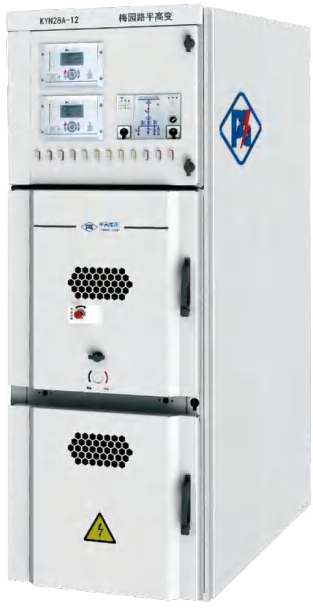
KYN28A-12 Metal Armored Removable Switchgear
Tianjin Ping Gao Intelligent Electric Co., Ltd.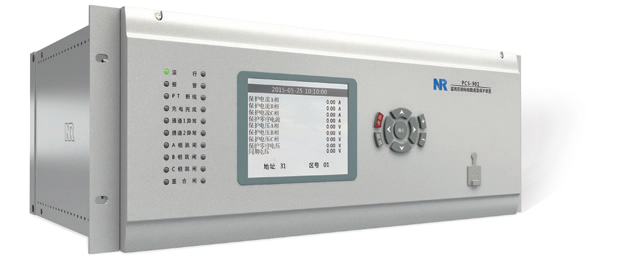
PCS-901 Series Ultra (Extra) High-voltage Transmission Line Complete Protection Device
Nanjing NR Electric Co., Ltd.

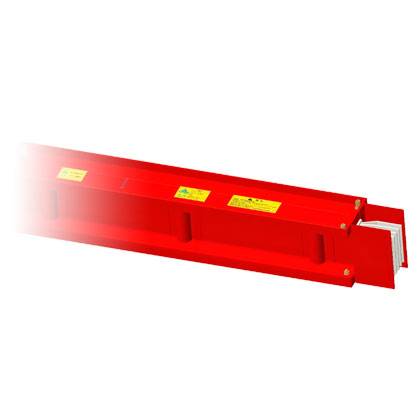
Mineral-insulated Compact Busway (Fire-resistant Busduct)
Zhuhai Guangle Electric Busway Co., Ltd.
Bidirectional Metal Hard Sealed Seawater Butterfly Valve
Henan Quanshun Flow Control Science & Technology Co., Ltd.
1000kV Jin Southeast-Nanyang-Jingmen UHV AC Transmission and Transformation Pilot Demonstration Project
Anhui Hongyuan Steel Tower Co., Ltd.