China's first demonstration unit of the new-generation medical heavy-ion accelerator has been completed in Huizhou
en.Wedoany.com Reported - On October 23, the Chinese Academy of Sciences announced that the first demonstration unit of the domestically developed new-generation medical heavy-ion accelerator has been completed at the Huizhou Heavy Ion Medical Center in Guangdong Province. The unit was developed by the Institute of Modern Physics of the Chinese Academy of Sciences and adopts the Superconducting Ion Medical Machine (SIMM), an ultra-compact rotating-beam heavy-ion therapy system. Its footprint has been reduced from 4,600 square meters in the first generation to 1,200 square meters, and its designed annual treatment capacity has increased from 1,000 cases to 2,000–5,000 cases. It has now entered the equipment testing phase and is expected to begin clinical trials by the end of 2026.
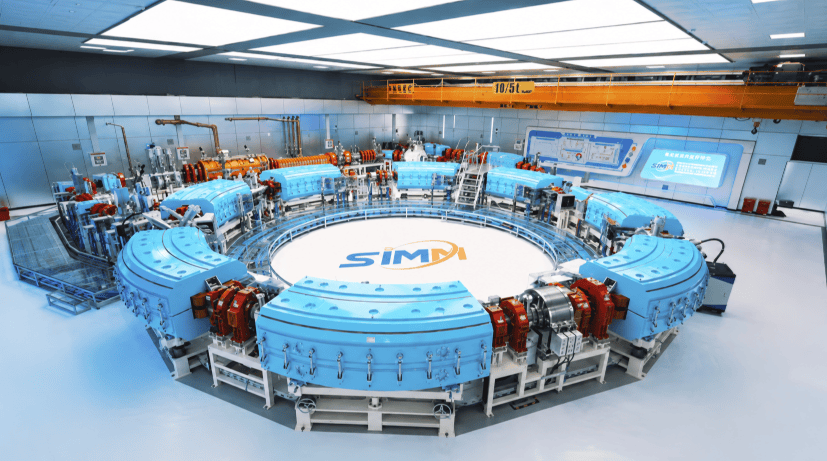
The new-generation unit integrates a disc-structured milliampere-level high-intensity linear injector, an ultra-short-circumference high-ramp-rate synchrotron, and a high-performance intelligent rotating beam delivery system. Among them, the synchrotron, through redesign of the beam optics structure, has compressed the circumference of the ring accelerator to 36 meters; the high-intensity linear injector can provide various ion beams such as protons, helium, and carbon, meeting the beam injection requirements of a multi-ion therapy system.
The beam delivery system adopts a single-beamline rotating distribution scheme, can connect to multiple treatment rooms, and provides different irradiation angles such as 0 degrees, 45 degrees, and 90 degrees. According to the design specifications published by the R&D team, the system can increase the number of treatment rooms from the conventional 3 to 4 to 9 to 15, reduce operating energy consumption to about one-third that of the first-generation unit, and decrease the construction area of accelerator facilities and equipment operating costs.
The project was launched for R&D and construction in May 2024, with the Institute of Modern Physics of the Chinese Academy of Sciences and local medical institutions in Huizhou advancing the implementation of the unit. After completion of the first demonstration unit, equipment safety, stability, and reliability testing will be carried out sequentially, followed by clinical trials and medical device registration procedures.