Gene switches enable 3D-printed bone tissue to autonomously grow new blood vessels, offering hope for treating bone defects caused by trauma or infection
en.Wedoany.com Reported - An interdisciplinary team at Pennsylvania State University in the United States has achieved a breakthrough: after programming cells, they used gene switch technology to enable 3D-printed bone tissue to autonomously generate new blood vessels. This achievement brings new hope for treating bone defects caused by severe trauma or infection. The related paper was published in the latest issue of the Chemical Engineering Journal.
One of the biggest challenges in bone tissue regeneration is how to form a vascular network inside the newly generated tissue. Without a blood supply, thick bone tissue cannot survive or grow normally. Traditional methods have limited effectiveness in promoting vascularization.
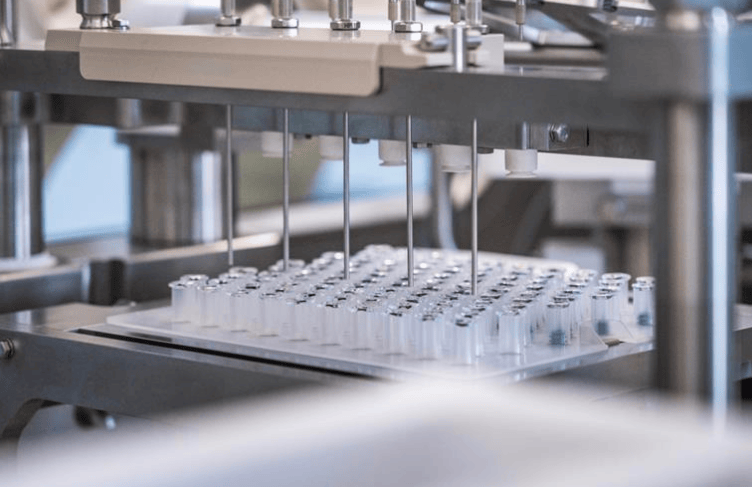
The research team employed an advanced technique called "aspiration-assisted bioprinting." This technology can precisely place tiny clusters of living cells—spheroids—at designated positions on a hydrogel scaffold. This precise manipulation enables uniform cell distribution, thereby ensuring consistency in tissue regeneration.
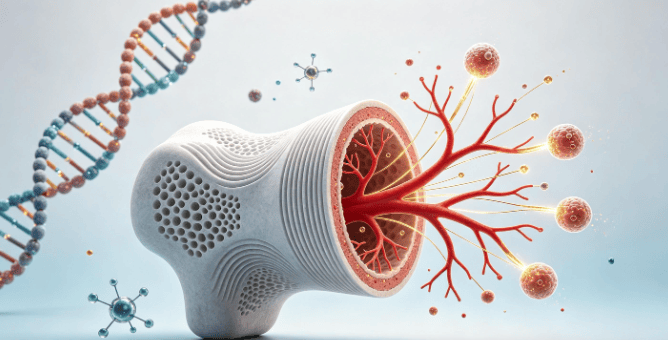
To endow these spheroids with different functions, the research team obtained undifferentiated stem cells from commercial sources and introduced two specific gene regulatory molecules: miR-148b and miR-210. These two molecules act like gene switches—the former guides cells toward osteogenic differentiation, while the latter initiates the angiogenesis program.
After several days of culture, these programmed cells were assembled into spheroids and then embedded into gel scaffolds via 3D printing. Over the following 28 days, the cells gradually matured and differentiated within the scaffolds, ultimately forming tissue structures with dual bone and vascular functions.
Animal experiments validated the effectiveness of this approach. In a bone defect model in immunodeficient mice, without any treatment, bone tissue recovered only about 35% of the area after six weeks; with implantation of blank scaffolds without special spheroids, the recovery area increased to 93%. When mixed spheroids carrying both gene switches were used, the effect was even more pronounced—not only was the bone tissue coverage area larger, but the expression of the vascular endothelial marker CD31 was also significantly elevated, indicating more active new blood vessel formation.
The research team believes that spheroids with different functions may exhibit synergistic effects, jointly promoting the overall growth of bone and blood vessels. The team's next step is to further explore this synergistic mechanism in larger animal models and assess whether angiogenesis may have any negative effects on bone tissue growth.
This technology is currently primarily aimed at patients with large-scale bone defects caused by cancer, infection, or severe trauma, and is not applicable to routine fracture treatment. Since all materials used are already commercially produced, this technology has strong scalability and is expected to accelerate its path toward clinical application in the future.
In the field of regenerative medicine, there is a formidable hurdle: enabling new tissue implanted in the body to grow its own vascular network. Past implant materials were often "passive," merely waiting for surrounding blood vessels to slowly grow in, and were highly susceptible to necrosis due to ischemia. Now, scientists have essentially preset growth instructions for cells, transforming originally "inert" materials into "living" tissues capable of self-improvement. In fact, the application of this concept is likely to extend beyond orthopedics. In the future, the construction of muscle, soft tissue, and even more complex organs could benefit from it. Moreover, since all raw materials are already commercially available with no complex barriers, this means the threshold for moving from the laboratory to the operating room has been significantly lowered, potentially benefiting patients more quickly.