China Academy of Engineering Physics Develops the World's First Ultrafast All-Fiber Rangefinder
en.Wedoany.com Reported - On November 26, the China Academy of Engineering Physics announced that the research team led by Researcher Weng Jidong has successfully developed the world's first all-fiber frequency-domain interferometric precision rangefinder with ultrafast time response in the near-infrared band. The device features femtosecond-level time response, nanosecond-level time resolution, and micrometer-level ranging accuracy, with a real-time ranging frequency of 10 million measurements per second. It can be used for dynamic measurement under extreme working conditions such as explosion and combustion experiments, aeroengines, rocket engines, and gas turbines.
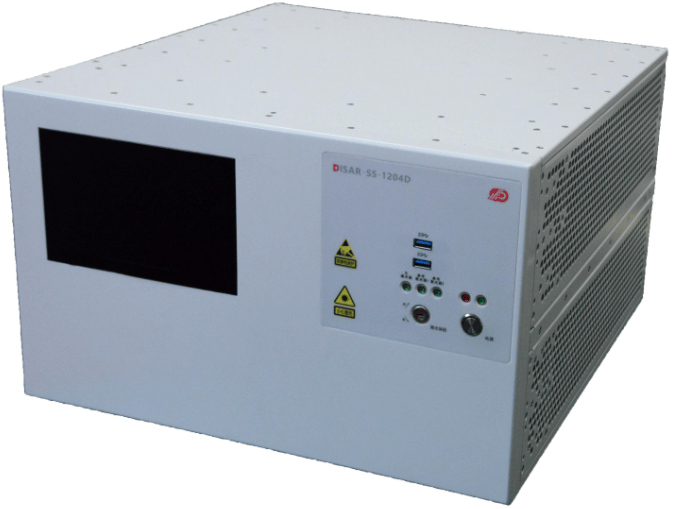
The device was developed to address the difficulty of real-time and precise measurement of high-temperature, high-speed moving objects in extreme environments such as explosions and combustion. Traditional ranging technologies often face the constraint of decreased measurement accuracy when improving time response speed. The research team proposed a time-of-flight ranging theory based on optical frequency-domain interference, which obtains target motion distance information by analyzing interference signals. In theory, this can improve time-of-flight measurement accuracy to the attosecond level, corresponding to nanometer-level distance measurement.
During the engineering process, the team shifted the original visible-light ranging system based on discrete optical components to an all-fiber structure and extended the operating band to the near-infrared band used in commercial optical communications. The system adopts the technical route of "chirped pulse amplification + frequency-domain-to-time-domain linear mapping," utilizing the frequency-domain coherence of mode-locked broadband femtosecond pulse lasers to convert frequency-domain interference signals into time-domain interference signals with high fidelity, thereby reducing the limitations imposed by complex optical components on system integration and engineering applications.
To address the temperature resistance of sensors in high-temperature flow fields, the team carried out research on material selection, structural design, thermal management, packaging, and calibration, and developed a micro fiber-optic sensor with a maximum temperature resistance of 2,100 kelvins, which can meet measurement needs in high-temperature environments inside engines.
The data processing system adopts a three-stage pipeline architecture based on a field-programmable gate array (FPGA), combining serial sampling, parallel caching, and parallel processing to complete the processing of massive raw data at the device end and transmit only the computation results externally. This scheme separates real-time measurement from data transmission and storage, achieving 10 million ranging measurements per second and reducing the pressure of high-speed data acquisition on external transmission and storage systems.
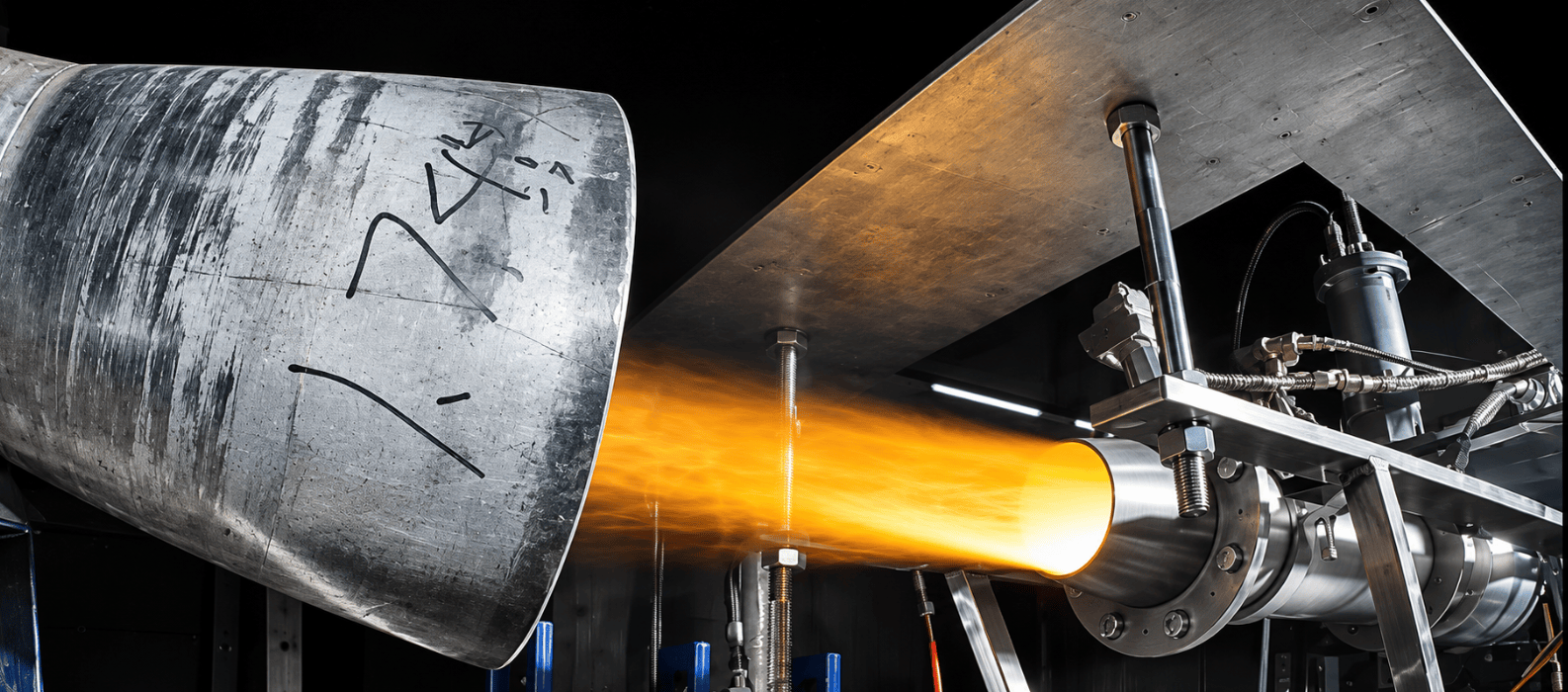
The device has been applied to explosion and combustion experiments and used for dynamic testing of equipment such as aeroengines, rocket engines, and gas turbines. The research team obtained, for the first time, data on turbine rotor structural clearance and vibration characteristics under ultra-high-temperature conditions, which can provide a measurement basis for internal structural clearance detection, vibration analysis, performance optimization, and fault diagnosis of engines.