Wedoany.com Report-Aug. 9, In Wakefield, Massachusetts, a 5-MW battery storage microgrid has begun commercial operation, providing grid services and backup power to Wakefield Memorial High School and Northeast Metropolitan Regional Vocational High School. Lightshift Energy, in partnership with Wakefield Municipal Gas and Light Department (WMGLD) and Massachusetts Municipal Wholesale Electric Co. (MMWEC), developed the system to enhance local energy reliability and sustainability.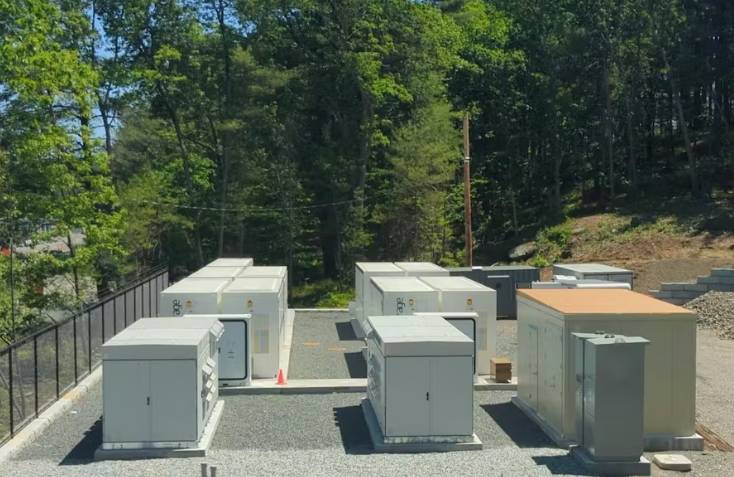
The microgrid primarily supports the grid by discharging stored energy during high-demand periods, potentially saving customers $20 million in electricity costs over its lifespan. During regional power outages, it ensures continuous power supply to the two schools, maintaining their operations without reliance on traditional generators.
Peter Dion, general manager of WMGLD, stated: “Energy storage was our first choice when identifying a more cost-effective and renewable solution to power the schools, compared to diesel backup generators that would have cost $1.2 million per generator. We are incredibly grateful to have the entire town’s support to deploy the Lightshift battery that will provide cleaner, cheaper, and more reliable electricity to our schools.”
To mark the project’s launch, Lightshift Energy donated $10,000 to the Boys & Girls Club of MetroNorth to establish an Energy Education Center, fostering education for young community members. This aligns with Lightshift’s Beyond the Grid initiative, which supports organizations in regions where the company operates energy projects.
Rory Jones, co-founder and managing partner of Lightshift Energy, said: “This project is such a great example of the many ways energy storage strengthens the communities we partner with. We are bringing clean backup power to schools and supporting their electrification while also providing WMGLD customers with major, risk-free savings.”
This project is the third collaboration between Lightshift Energy and MMWEC. Previously, they launched a 3-MW microgrid in Groton, Massachusetts, within the Groton Electric Light Department’s service area. That system employs peak shaving—storing energy during low-demand periods and releasing it during peak times—to reduce costs and emissions while providing backup power to Florence Roche Elementary School.
The Wakefield and Groton initiatives showcase innovative energy storage, prioritizing cost efficiency and environmental benefits. These microgrids support local schools and communities, advancing sustainable energy infrastructure in Massachusetts.