Renew Inks Pact With Google to Build 150 MW Solar Project in India
Wedoany.com Report-Dec.17, India's ReNew Energy Global announced that it has entered into a long-term agreement with Alphabet's Google to develop a 150-megawatt solar power facility in the western Indian state of Rajasthan.
This partnership supports Google's aim to run entirely on carbon-free energy by 2030. It also fits with India's plans to increase its non-fossil fuel power generation capacity to 500 gigawatts by the end of the decade.
Several major U.S. technology companies, such as Amazon and Microsoft, are pursuing similar large-scale renewable energy agreements around the world to lower emissions from their data centers.
The 150-megawatt project, set to begin operations in 2026, is expected to produce around 425,000 megawatt hours of clean electricity annually. This volume can supply power to more than 360,000 households in India each year.
ReNew Energy Global ranks among the leading independent power producers in India, with its listing on a U.S. exchange. The company holds a clean energy portfolio of approximately 18.5 gigawatts as of early 2025.
"...it (agreement) brings new solar capacity onto the grid in a key region, and helps address challenging portions of our value chain emissions," Vrushali Gaud, global director, climate operations at Google said.
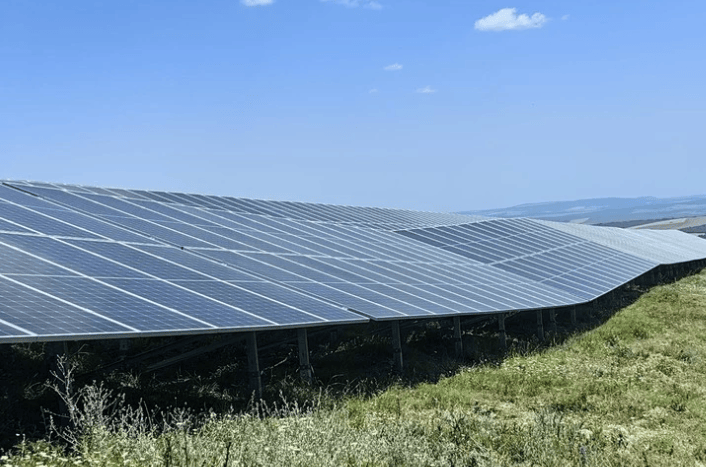
The project adds to solar infrastructure in Rajasthan, an area well-suited for such developments due to abundant sunlight and suitable terrain.
This addition strengthens the regional electricity network and advances the use of renewable resources.
Collaborations of this kind enable technology companies to meet sustainability targets while supporting the growth of clean energy production.
Corporate demand for renewable power drives funding into new facilities, creating employment opportunities and improving local infrastructure.
ReNew's experience in renewable project delivery complements Google's emphasis on reducing environmental impact across its operations.
Such agreements form part of a wider trend where businesses secure dedicated renewable supplies to match rising electricity needs with lower-emission sources.
The arrangement demonstrates effective cooperation between renewable energy developers and large energy consumers in expanding solar generation.
Overall, this deal contributes to the ongoing expansion of sustainable electricity options, benefiting both corporate goals and national energy objectives.
Related Products



Standard Nozzle Flowmeter
Jinggong Automatic Control Instrument Complete Technology Development Company
Aero Piston Engine - FF600 Two-Stroke Opposed Two-Cylinder Engine
China Times Prospect Science & Technology Co., Ltd.


TAI Slew-drive Single-axis Independent 1P Tracking Bracket System
ANTAI TECHNOLOGY CO., LTD.
0.66kV Power Supply Instrument Transformer
Guangdong Sihui Instrument Transformer Works Co., Ltd.

Inductive Power Harvesting Self-Powered Device - Safuneng
SELF ENERGY TECHNOLOGY (SHENZHEN) CO., LTD.