Sophia University Uses 2-ABZ to Help Tin Perovskite Solar Cells Retain 84.94% of Initial Efficiency After 100 Days
en.Wedoany.com Reported - Researchers from Sophia University and the National Institute for Materials Science (NIMS) in Japan have introduced 2-aminobenzothiazole (2-ABZ) into quasi-two-dimensional (q-2D) Ruddlesden-Popper tin perovskite solar cells (SnPSCs) to suppress tin oxidation, a problem that has long affected the efficiency and lifespan of such devices. The research team stated that this additive strategy can simultaneously enhance the photovoltaic performance and extend the device lifespan of the cells, potentially advancing the commercialization of lead-free perovskite solar cells.
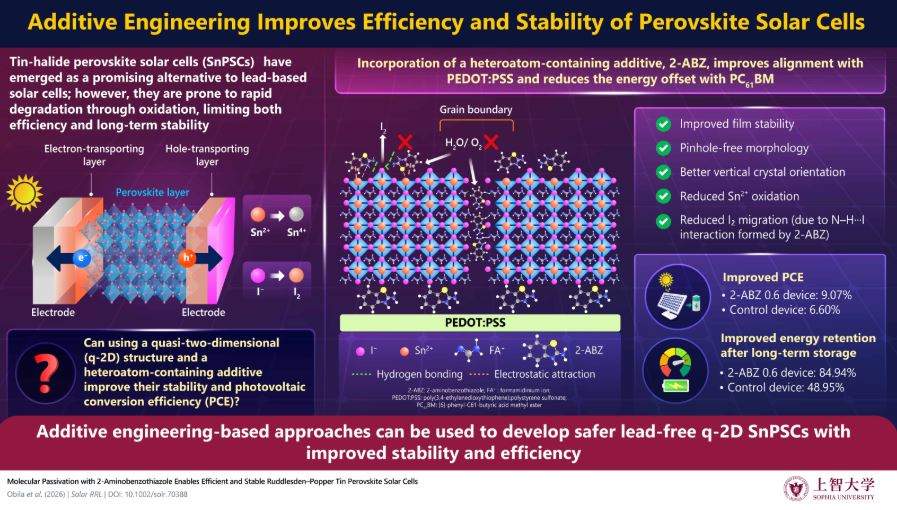
2-ABZ is a heteroatomic molecule containing nitrogen, carbon, sulfur, and hydrogen. The research team explained that while many passivation additives target only a single degradation mechanism, 2-ABZ performs multiple complementary functions simultaneously during perovskite film formation and device operation: regulating crystal growth, reducing trap state formation, preventing ion migration, suppressing tin oxidation, and improving interfacial energy level alignment—thereby addressing multiple intrinsic weaknesses that have long limited the efficiency improvement of SnPSCs.
Professor Yuko Takeoka, project leader from the Department of Materials and Life Sciences, Faculty of Science and Technology at Sophia University, stated that the accumulation of 2-ABZ at the interface is crucial for reducing buried defects in the perovskite layer. The substance can form dense nucleation sites at the bottom of the film, thereby generating high-quality and stable perovskite films.
These effects are ultimately reflected in long-term performance tests. Unencapsulated solar cells containing 2-ABZ retained 84.94% of their initial efficiency after 100 days of storage, while untreated devices retained only 48.95%. During continuous operation under simulated sunlight, the treated devices retained nearly 89% of their original performance after 10 hours, whereas the control devices degraded rapidly within one hour. Surface analysis revealed that 2-ABZ suppressed the oxidation of Sn²⁺ to Sn⁴⁺, which is the primary degradation pathway for tin perovskites. X-ray photoelectron spectroscopy also showed a significant reduction in oxidized iodine species, and time-of-flight secondary ion mass spectrometry confirmed that iodide migration was substantially inhibited.
At the application level, while silicon-based solar cells require vast tracts of flat land, perovskite solar cells (PSCs)—being lightweight, flexible, and shape-controllable—are regarded as a promising next-generation photovoltaic technology. Improvements in efficiency and lifespan are crucial for such cells to achieve commercial viability. Takeoka stated that these findings provide a viable pathway for developing safer lead-free solar cells and are also expected to expand the range of photovoltaic applications.
The research findings were published on June 15, 2026, in the journal Solar RRL, Volume 10, Issue 11.
Related Products
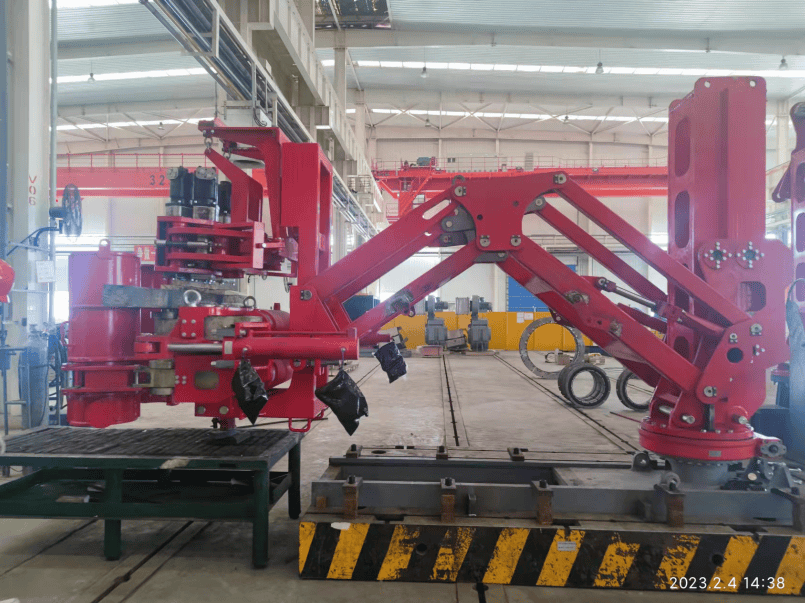


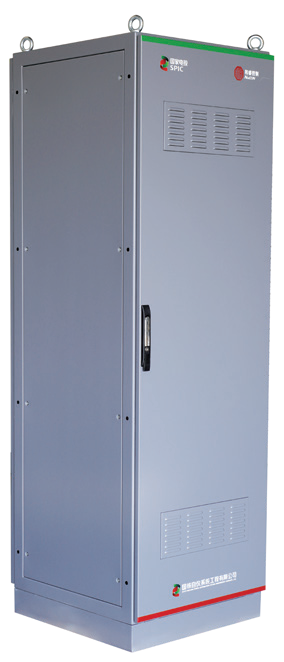
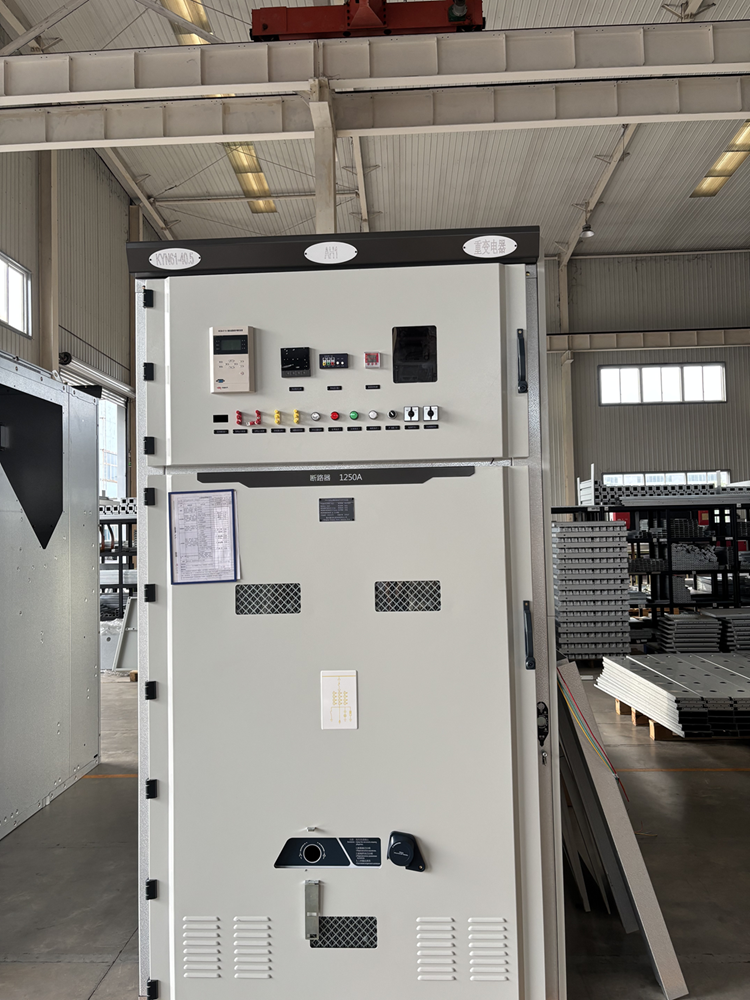
KYN61-40.5 Indoor AC Metal-clad Removable Switchgear
Chongqing Transformer Co., Ltd.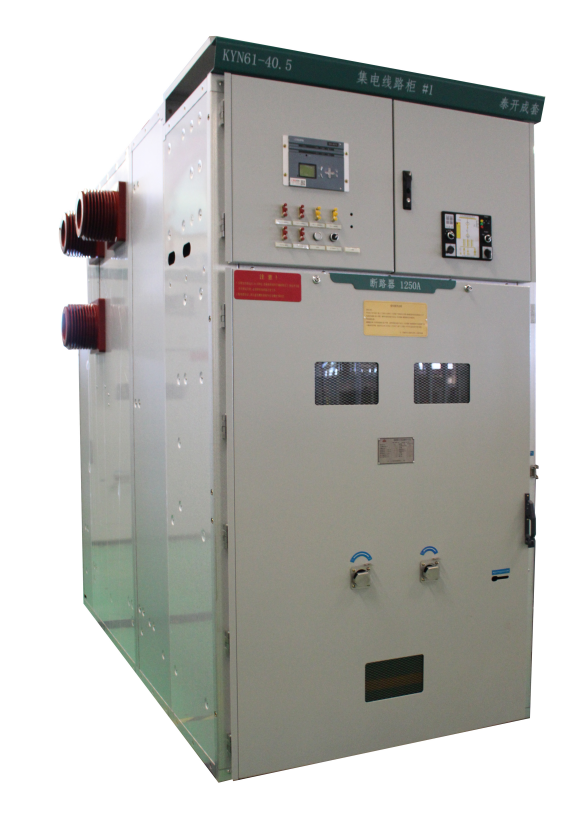
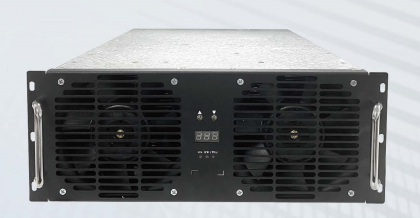
80kW Megawatt Supercharging Module TH80F10030C9
Shijiazhuang Tonhe Electronics Technologies Co., Ltd.

"Shunyi 1600" Deep-submerging Bottom-sitting Multi-functional Wind Power Engineering Vessel
Zhengli Offshore Engineering Co., Ltd.
Hydraulic Turbine Genset
Dongfang Electric Corporation Dongfang Electric Machinery Co., Ltd.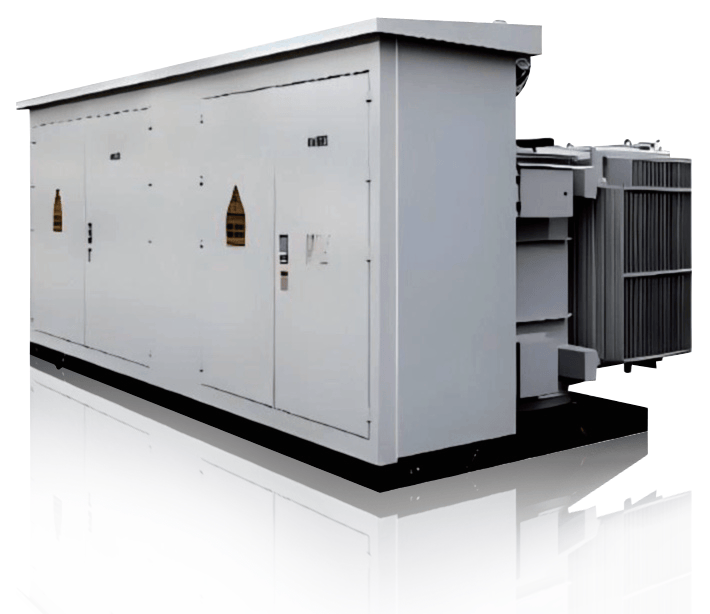
H-40.5/0.4~1.14kV New Energy Power Generation Dedicated High Voltage/Low Voltage Prefabricated Substation
XJ (Xiamen) Intelligent Power Equipment Co., Ltd.