American Airlines Implements New 25-Hour Cockpit Voice Recorder Rule
Wedoany.com Report on Feb 4th, The Federal Aviation Administration has officially issued a regulation requiring newly manufactured aircraft to extend the retention time of cockpit voice recorders from the original two hours to 25 hours. This measure aims to prevent critical evidence from being overwritten before investigators can obtain it. It applies to multiple operational categories where recorders are mandatory, and smaller operators will be granted a longer transition period.
This regulation is based on the FAA Reauthorization Act passed in 2024, which requires all commercial aircraft in the United States to be equipped with 25-hour recording devices and sets a retrofit path for existing passenger aircraft fleets by 2030. Europe has had similar requirements for new aircraft since 2021.
Cockpit voice recorders capture voice communications, radio transmissions, alarms, and background sounds within the cockpit. When incidents are not promptly identified or the aircraft continues to operate, the original two-hour loop recording may overwrite relevant audio, compromising the integrity of investigations. Regulators believe that extending the recording window in the U.S. aviation industry can reduce this risk and enhance the industry's ability to learn from safety events.
The National Transportation Safety Board has advocated for this reform for many years. Tim LeBaron, Director of the NTSB Office of Aviation Safety, stated: "Cockpit voice recorders are one of the most valuable tools in accident investigations. They provide real-time information about flight crew intentions and coordination, which is crucial for developing safety recommendations." Since 2018, at least 14 investigations have been affected due to recordings being overwritten.
The new U.S. aviation regulation primarily adjusts the minimum standard rather than mandating a change in equipment type. The FAA stated that for newly manufactured aircraft, the cost increase is moderate, and installation complexity remains largely unchanged. However, some small aircraft manufacturers may face additional integration work.
Regarding concerns about flight crew privacy, the FAA emphasized that existing U.S. aviation protection measures will continue to apply, and extending the recording time will not alter information handling requirements. This move aligns U.S. standards more closely with European ones. The practical impact will be phased in: newly delivered aircraft will be equipped with 25-hour recorders as standard, while existing fleets will be gradually upgraded through retrofit programs.
Related Products


Pantograph-Catenary Comprehensive Detection Device (1C)
CHENGDU TANGYUAN ELECTRIC CO., LTD.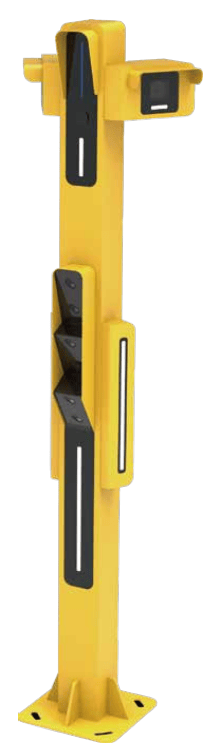

ERW Welded Pipe (Black Pipe and Hot-dip Galvanized Steel Pipe)
Handan Zhengda Steel Pipe Co., Ltd.
"Shunyi 1600" Deep-submerging Bottom-sitting Multi-functional Wind Power Engineering Vessel
Zhengli Offshore Engineering Co., Ltd.
GSR6-27.5kV SF6 Free Gas-insulated Metal-enclosed Switchgear
Zhejiang Juhonkia Intelligent Electric Co., Ltd.
3m intelligent buoy combining navigation safety and real-time marine monitoring integrated navigation and marine monitoring system for real-time maritime data
Chengdu Dixin Technology Co., Ltd.


WGQY Series Aircraft Tow Tractor-WGQY15, WGQY27
Weihai Guangtai Airport Equipment Co., Ltd.