A New Method for Intelligent and Efficient Carbon Dioxide Storage
Wedoany.com Report on Feb 5th, Climate change is a major challenge facing humanity, and carbon dioxide, as the primary greenhouse gas, has drawn significant attention to its storage technologies. Scientists from Saarland University and htw saar published a review in the journal Advanced Functional Materials, introducing new pathways for efficient carbon dioxide storage using high-tech materials.
The paper explores various methods for carbon dioxide capture, offering new technological ideas for addressing climate change.
Existing technologies for capturing and storing carbon dioxide are costly, with processing fees ranging from 50 to 150 US dollars per ton, and their effectiveness is limited. Negative emission technologies also struggle to significantly reduce atmospheric carbon dioxide levels on their own. Therefore, researchers are exploring more efficient solutions.
In their study, Professor Markus Gallei of Polymer Chemistry at Saarland University and his colleagues focused on stimulus-responsive organic materials. These materials can absorb and release carbon dioxide through various stimuli such as temperature, electricity, and light.
Markus Gallei explained: "The core of these technologies lies in the 'switchability' of absorbing or releasing carbon dioxide. Through stimulus triggers, the materials can selectively capture and release carbon dioxide." This intelligent material system consumes less energy than existing technologies, offering new possibilities for carbon dioxide storage.
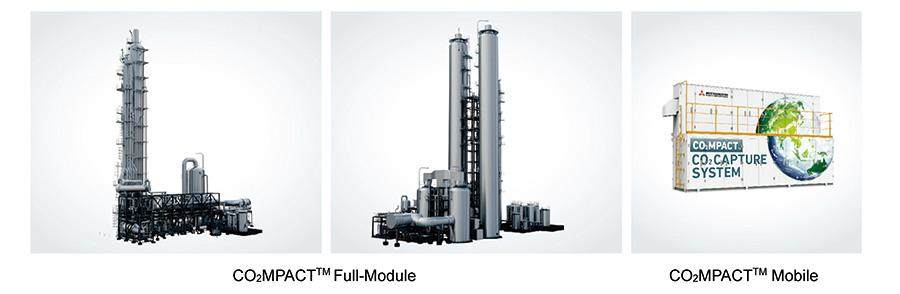
However, this technology requires high purity of carbon dioxide and is suitable for specific industrial scenarios. Markus Gallei stated: "Compact systems based on this could be used for mobile burners or small industrial enterprises."
This research is part of the ENFOSAAR project, funded by the Saarland Transformation Fund, which aims to promote the development of innovative technologies to combat climate change. The researchers hope this work will serve as a reference for scientists worldwide and collectively advance the progress of carbon dioxide storage technology.
Related Products


CAP1400 main feedwater flow nozzle flowmeter.
Jiangsu Hongda Instrument Technology Co., LTD.
CITIC Heavy Industries Offshore Wind Power Equipment Hydraulic Pile Hammer
CITIC Heavy Industries Co., Ltd.
Ultrasonic Wind Speed and Direction Instrument
Kingmach Measurement & Monitoring Technology Co., Ltd.