Alaska Airlines Cargo Business Integration Completed
Wedoany.com Report on Feb 5th, Alaska Air Group recently announced that its cargo division has taken the lead in completing the business integration with Hawaiian Airlines, becoming the first fully integrated operational department since the acquisition in September 2024. This integration involves the unification of booking systems and the consolidation of sales methods, aiming to attract more cargo customers and, leveraging the merger opportunity, expand internationally for the first time.
According to the fourth-quarter financial report, Alaska Airlines' cargo revenue increased by 11% year-on-year to $146 million. Within this, the former Hawaiian Airlines cargo business grew by 11.6%, while the former Alaska Airlines cargo revenue grew by 5%. Full-year cargo revenue was $549 million, up 19% year-on-year. Hawaiian Airlines' performance includes revenue from operating 10 Airbus A330-300 freighters for the Amazon logistics network, with the final two aircraft delivered last summer. The financial report shows that the integration of cargo systems and teams for both companies was completed in January of this year.
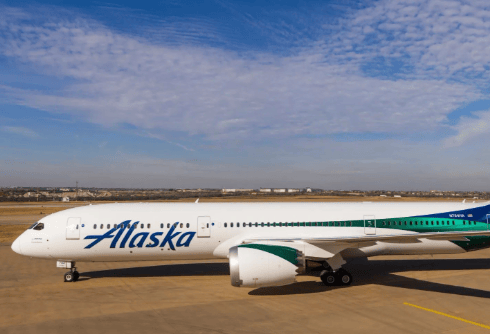
Chief Operating Officer Jason Berry stated in an analyst conference call: "The Hawaiian Airlines merger has elevated the high-end performance and profit margins of the cargo business while creating new growth opportunities. We see positive momentum across the board. In fact, we just achieved a single sales platform earlier this month, which really... makes it much simpler for our cargo customers to book with us." Alaska Airlines began using Airbus A330-200 passenger aircraft from the Hawaiian Airlines fleet last year to operate routes from its Seattle hub to Tokyo and Seoul. This month, the company added Boeing 787-9 Dreamliner aircraft to the Tokyo route, enhancing both passenger and cargo capacity.
Management revealed during the earnings call that all systems, personnel, and processes are largely in place to support the launch of cargo services to London Heathrow and Rome in the spring. Alaska Airlines plans to use the Boeing 787-9 wide-body aircraft acquired in the Hawaiian Airlines transaction to commence passenger services to these cities, with cargo being transported in the belly hold. The integration of passenger booking systems is expected to be completed in late April. Spokesperson Tricia Brookbauer confirmed that Alaska Airlines also launched its GoldStreak package express service in the Hawaiian Islands in January, which provides guaranteed transport on the next available flight for urgent shipments within the United States.
Ian Morgan, Vice President of Alaska Airlines Cargo, commented in a cargo newsletter: "Alaska Airlines' international expansion allows it, for the first time, to offer transportation services to global freight forwarders. The company will work to consolidate cargo from across Europe to its hubs. Almost every country with an airline has flights to London, so we will be able to connect with more airlines from an interline perspective, extending our network reach beyond London. Similarly, we will sell cargo not only to Rome but also beyond Rome. We will also sell cargo from other locations into Rome and London, feeding them into the Alaska Airlines Cargo network in the United States. This is all part of our effort to expand our global footprint." Integration efforts also include co-locating cargo teams in Seattle, New York JFK, Hawaii, and Portland to create unified cargo drop-off points for shippers.
Overall, Alaska Air Group's performance exceeded analyst expectations, with adjusted earnings per share at 43 cents. Revenue increased by 3% year-on-year to $3.6 billion, while adjusted net profit decreased from $125 million to $50 million. Management noted that the first quarter might see a loss due to high fuel prices but expects robust performance for the remainder of the year, driven by strong demand, new international routes, and cost synergies from the Hawaiian Airlines merger. In the fourth quarter, the company obtained a single operating certificate for Alaska Airlines and its new subsidiary but will continue to operate Hawaiian Airlines as an independent brand.