Wedoany.com Report on Feb 11th, The latest Global Port Tracker report released by the National Retail Federation (NRF) and maritime consulting firm Hackett Associates indicates that U.S. retail container import volumes are projected to experience a year-on-year decline in the first half of 2026. The report covers major ports including Los Angeles/Long Beach, Oakland, Tacoma, Seattle, Houston, New York/New Jersey, Hampton Roads, Charleston and Savannah, Miami, Jacksonville, and Port Everglades in Fort Lauderdale, Florida.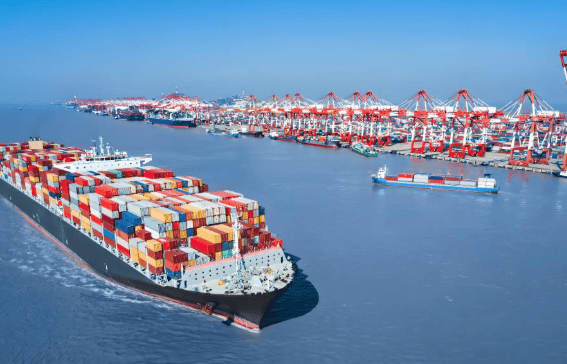
The report notes that cargo import data primarily counts the number of containers entering the U.S., not the value of goods, so it is not directly correlated with retail sales or employment figures. However, import volumes can roughly reflect retailer expectations. For December 2025, the import volume for ports with available data (excluding Houston and Charleston) was 1.99 million twenty-foot equivalent units (TEUs), a decrease of 1.7% month-over-month but an increase of 6.6% year-over-year.
Jonathan Gold, Vice President for Supply Chain and Customs Policy at the NRF, stated: "Tariffs remain a focal point of debate in courts and Congress, and their impact on imports is already evident. This situation underscores the need for clear and predictable trade policies to support supply chain certainty and reliability, business planning, and consumer affordability. Tariffs are a tax on American businesses and ultimately are paid by consumers through higher prices."
The report forecasts monthly import figures for the first half of 2026: 2.11 million TEUs in January, down 5.2% year-on-year; 1.97 million TEUs in February, down 3.1%; 1.89 million TEUs in March, down 12%; 2.05 million TEUs in April, down 7.1%; 2.13 million TEUs in May, up 9.3%; and 2.12 million TEUs in June, up 8%. If the forecasts are accurate, the total U.S. container import volume for the first half of 2026 will reach 12.27 million TEUs, a 2% year-on-year decrease, with a projected full-year decline of 2.3%.
Ben Hackett, founder of Hackett Associates, wrote in the report that using tariffs as a coercive tool is leading to shifts in global trade relationships. He added that the economic and financial pressures on reliable supply chains and shipping have become apparent, citing examples such as Canada's pivot toward increased trade and investment with the EU and China, and the EU's agreement on a trade deal with India.
Overall, U.S. container imports may face a downward trend in the first half of 2026, influenced by tariff policies, adjustments in trade relationships, and supply chain factors. The report also mentions that a Supreme Court ruling on the legality of tariffs may be imminent, and an unfavorable outcome could trigger further uncertainty. Meanwhile, with the resumption of Suez Canal transits and new vessel deliveries, shipping rates may decline, but this also reflects issues of overcapacity and limited economic growth.