
Black holes, the most gravitationally dominant objects in the universe, dramatically warp surrounding spacetime and, when disturbed, produce detectable gravitational waves in quasi-normal modes. These waves are particularly strong during events like black hole mergers, offering scientists a unique opportunity to measure black hole mass and shape. However, accurately calculating these rapidly decaying vibrations has long been a major challenge in theoretical physics.
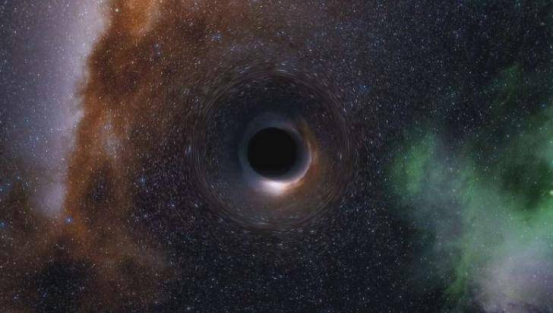
Inspired by this problem, a team of researchers at Kyoto University has published a new study in Physical Review D, proposing the use of the mathematical technique known as exact Wentzel–Kramers–Brillouin (exact WKB) analysis to track wave behavior from black holes far into space. While the exact WKB method has been studied in mathematics for some time, its application in physics—especially black hole research—is still emerging. Corresponding author Taiga Miyachi said: "The foundations of the exact WKB method were largely laid primarily by Japanese mathematicians. As a Japanese researcher, I feel particularly familiar with this field."
By extending the space near black holes into the complex plane, the team meticulously tracked wave modes, revealing the rich geometric structure of black holes—including the previously often-overlooked phenomenon of Stokes lines. These lines describe locations where wave properties change abruptly. By incorporating the complex features of these lines into their analysis, the team successfully developed a method that systematically and precisely captures the structure of rapidly decaying vibration frequencies. Miyachi remarked: "We were surprised to discover that the underlying structure of these vibrations is both complex and beautiful. The spiral patterns found in the mathematical analysis are key to understanding the full picture of quasi-normal modes."
This research not only provides multiple theoretical models for analyzing black hole "ringdown" signals but may also improve the precision of future gravitational wave observations, enabling deeper and more reliable understanding of the nature and geometry of the universe. Looking ahead, the team plans to extend the method to rotating black holes and explore the application of exact WKB analysis in studying quantum gravity effects.