
A new study from the HUN-REN Research Centre for Astronomy and Earth Sciences in Hungary suggests that moons orbiting rogue planets may maintain liquid water through tidal heating, potentially providing habitable environments for extraterrestrial life. This research opens a new path for exploring life forms in the Milky Way.
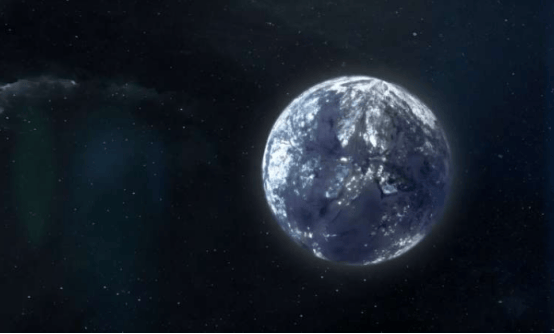
The research team used dynamical simulations to analyze the orbital evolution of planets and their moons after a supernova explosion. They found that even after the star disappears, the moons can remain gravitationally bound to the planet. Paper authors Viktória Fröhlich and Zsolt Regály stated: "According to our results, planets ejected during a Type II supernova explosion retain their moons in all cases."
Simulation data show that approximately 12% to 15% of rogue moons can generate tidal heating intensities comparable to those of Enceladus and Europa. The orbital eccentricity of these moons can reach up to 0.88, ensuring a continuous energy source over geological timescales. The researchers emphasized in the paper: "The timescale for eccentricity decay exceeds the age of the solar system, meaning the satellites have been continuously heated for billions of years."
This study is the first to systematically demonstrate the long-term habitability potential of rogue satellite systems. Compared with traditional exoplanets orbiting stars, these worlds in darkness maintain suitable environments through internal heat sources, expanding the theoretical boundaries of the habitable zone. With the deployment of next-generation observational facilities such as the Nancy Grace Roman Space Telescope, the detection of such objects will gradually become possible.
The researchers noted that there may be a vast number of such rogue satellite systems in the Milky Way, potentially reaching trillions. These findings will drive a paradigm shift in astrobiology research, prompting scientists to search for signs of life in a much broader cosmic space.