
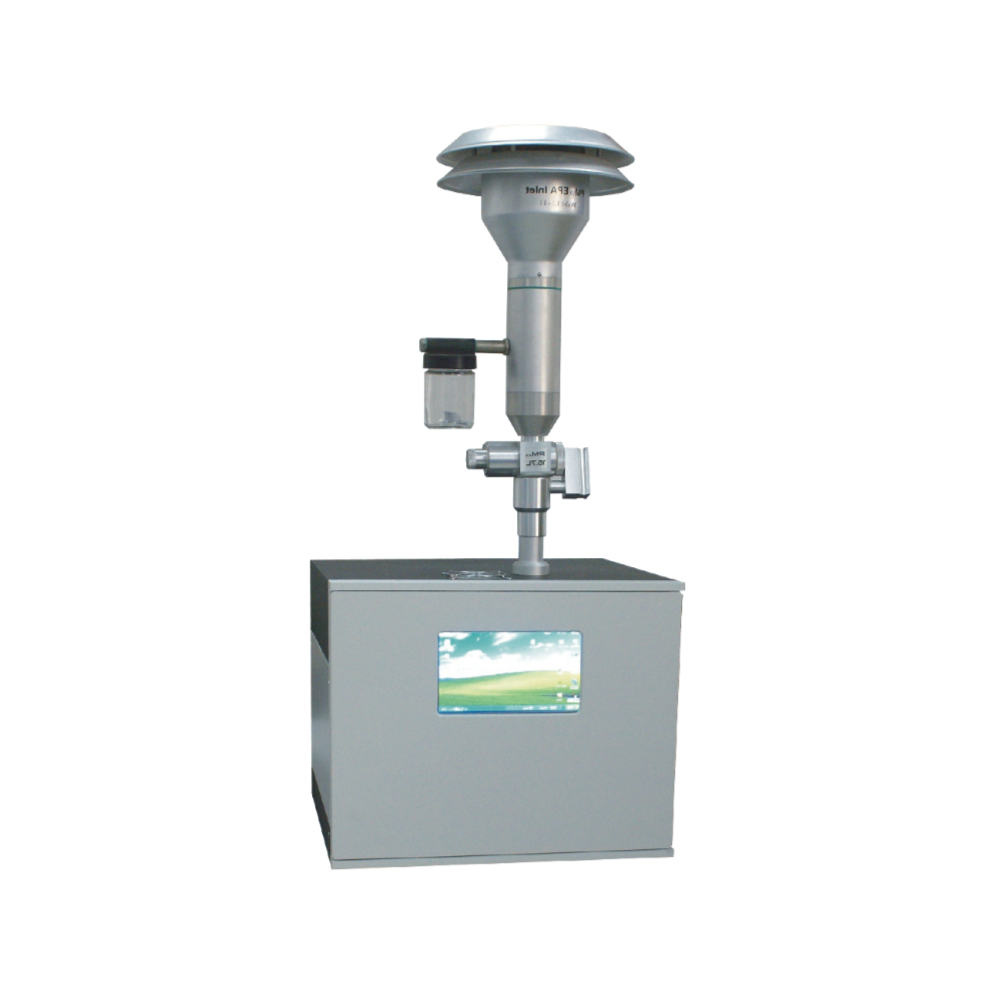


The product complies with Q/WYH 14-2015 TH-2016 Online Analyzer for Heavy Metals in Ambient Air; US EPA IO-3.3 X-ray Fluorescence Spectrometry for Detection of Heavy Metals in Environmental Particulate Matter; GB3095-2012 Ambient Air Quality Standard; HJ/T 212-2005 Data Transmission Standard for Online Automatic Monitoring (Monitoring) Systems of Pollution Sources.
Application Scope
The TH-2016 online analyzer for heavy metals in ambient air is the first instrument developed and designed by our company specifically for monitoring and analyzing heavy metal pollution in the atmospheric environment. The instrument combines automatic enrichment technology for atmospheric particulate matter, automatically enriching particles within a certain aerodynamic diameter range (TSP, PM₁₀ or PM₂.₅) onto a roll filter, and uses the world's leading highly integrated detector and X-ray fluorescence digital multi-channel analysis technology to detect X-ray fluorescence generated by heavy metal particles under X-ray excitation. After timed and constant-flow enrichment, the concentrations of heavy metals can be directly measured to achieve automatic continuous monitoring of PM₁₀, PM₂.₅, and more than 30 heavy metals including lead, iron, cadmium, chromium, arsenic, etc. in the air. The main unit adopts an international standard 19" chassis, which can be installed on mobile monitoring vehicles or in standard cabinets of atmospheric automatic stations.
Instrument Features
• The instrument is produced according to the US EPA IO-3.3 standard method.
• Perfectly combines imported X-ray fluorescence (XRF) detection device with automatic enrichment technology for atmospheric particulate matter.
• Optional TSP, PM₁₀, or PM₂.₅ particulate cutter to achieve distribution measurement of heavy metal particles at different aerodynamic diameters.
• Precise measurement of lead, arsenic, and mercury heavy metal contents, with detector sensitivity at ng/m³ level, expandable to 32 heavy metal elements.
• The main unit adopts an international standard 19" chassis, which can be installed in standard cabinets of atmospheric automatic stations or on mobile monitoring vehicles.
• The instrument has 3 built-in filters that automatically switch for low-background measurement; built-in calibration module for simultaneous automatic calibration of horizontal and vertical coordinates.
• Uses EPA-certified thin-film standards for one-time calibration, no need for calibration after leaving the factory.
• Features multiple data transmission methods including RS232/485, USB, GPRS, Ethernet card, enabling remote transmission, monitoring, and verification of operating parameters, status, and data.
• The system software adopts advanced hierarchical modular design with powerful and flexible functions for data setting, calibration, saving, display, query, analysis, transmission, etc. Users can also quickly and conveniently customize and expand any other custom functions.
