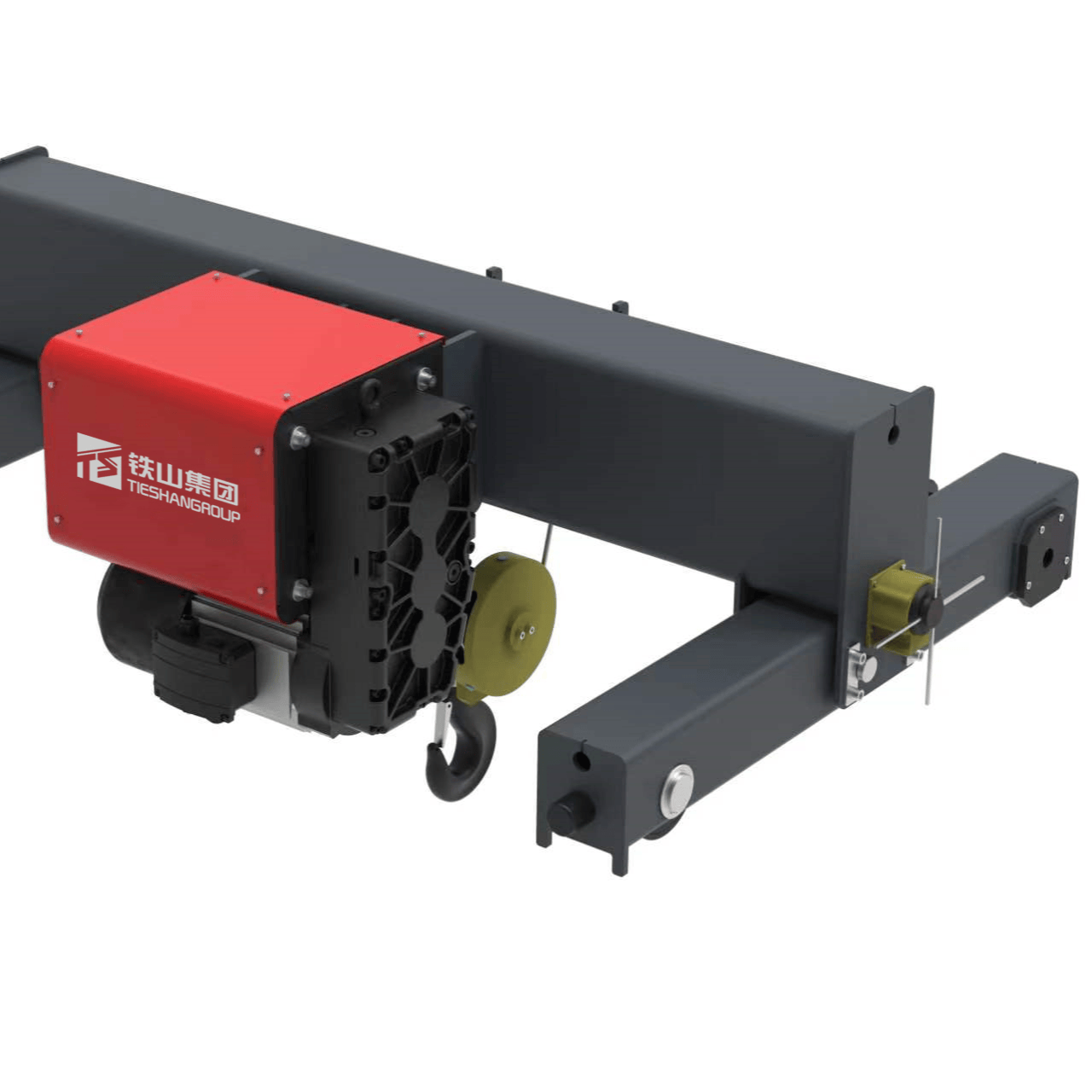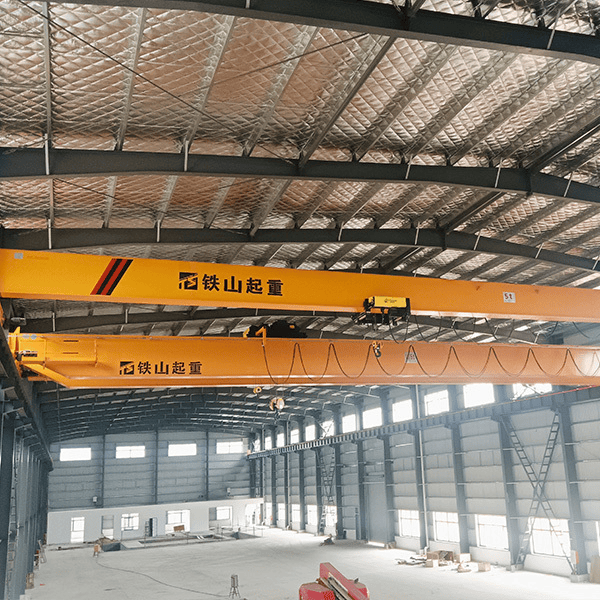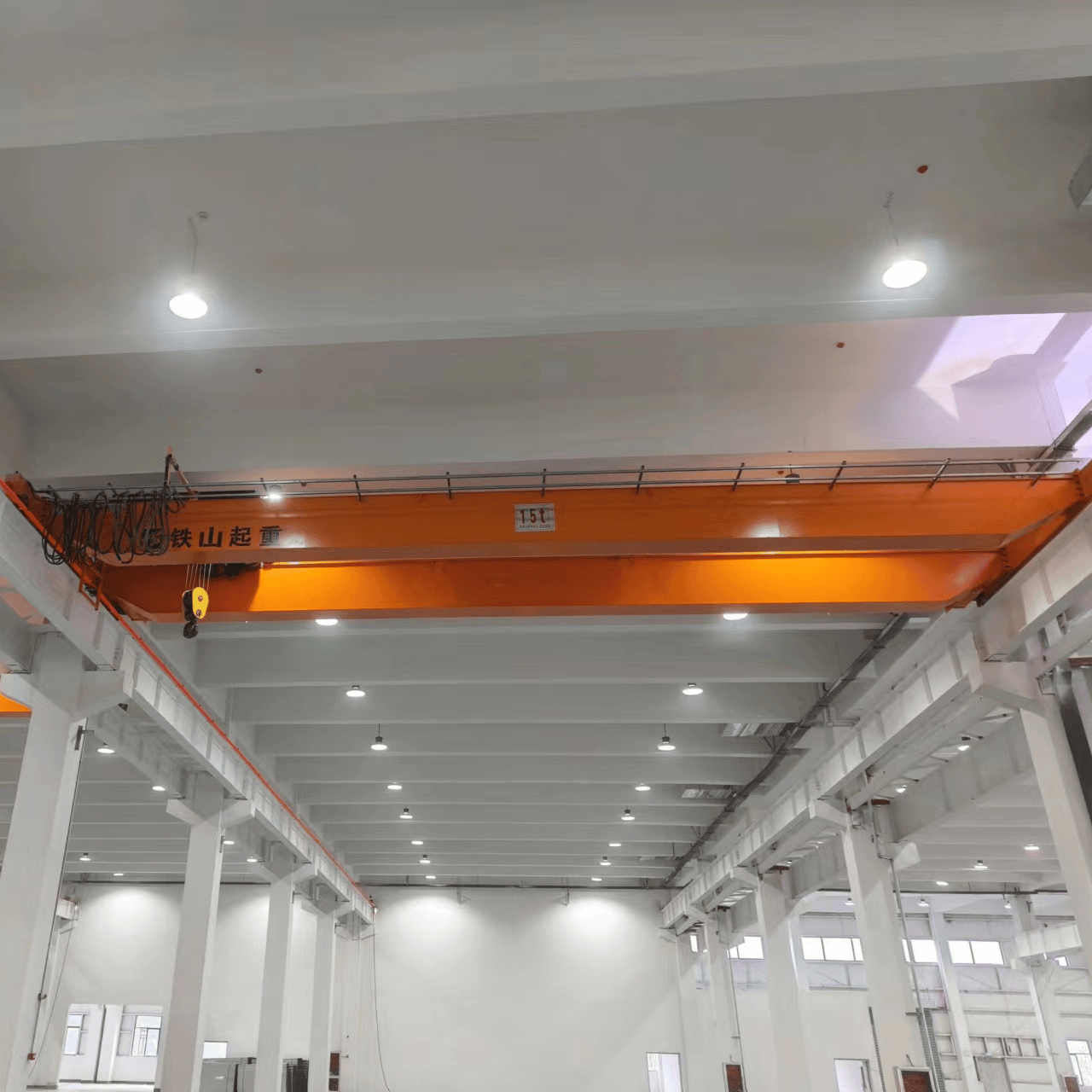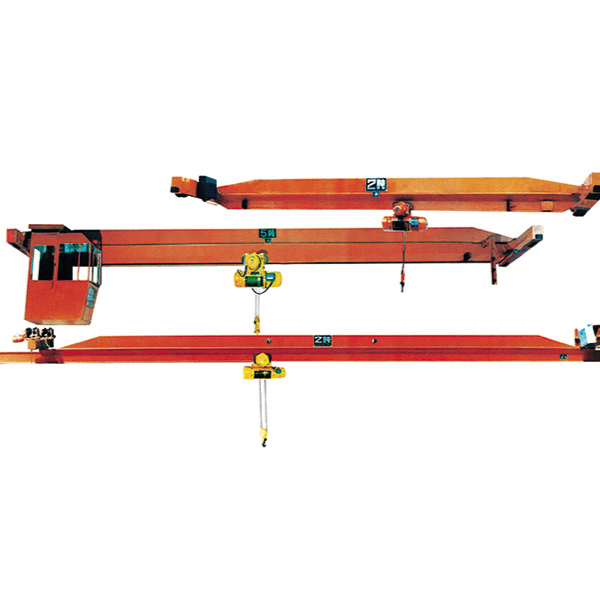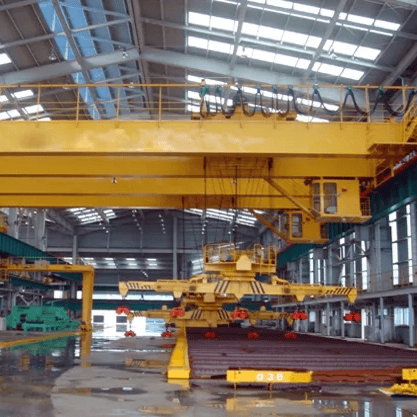


The metallurgical bridge crane is specifically designed for high-temperature, high-dust, 24-hour continuous heavy-load conditions in smelting and foundry workshops, primarily used for lifting molten steel ladles, molten iron ladles, incandescent steel ingots, slag pots, and other high-temperature heavy loads. Its safety redundancy is far higher than that of ordinary QD general-purpose double-girder cranes.
Main Model Distinctions
- QDY Metallurgical Hook Bridge Crane Double-girder structure, most commonly used in small and medium-sized foundries; lifting capacity 5-75t, entire machine A7 duty class, used for lifting molten metal and incandescent solid metal; the bottom of the main girder is equipped with a heat insulation shield, and the main hoist must have dual braking.
- YZ (YZS) Foundry Crane The mainstay of medium and large steel plants, with large tonnage above 75t, double-girder/four-girder structure, duty class A7-A8; equipped with main and auxiliary hooks, capable of ladle tilting and hot metal mixing operations, with the highest safety configuration level, used at steelmaking converters and continuous casting stations.
- QN Type: Specifically for blast furnace casthouses, with enhanced heat insulation and high-temperature resistance protection, and higher ambient radiant temperature.
⚠️Important Note: Ordinary QD-A6 double-girder cranes are prohibited from lifting molten steel or molten metal, as they do not meet mandatory metallurgical safety requirements.
Overall Structural Features
1. Metal structure: Reinforced box-type double main girders with heat insulation protective layer installed at the bottom, resistant to thermal radiation, with high fatigue strength; the trolley frame and crane frame are designed with high-temperature strengthening. 2. Hoisting mechanism: Mandatory dual braking for the main hoist (service brake + independent safety brake), metal-core high-temperature-resistant wire ropes, with increased safety factors for the drum and gears. 3. Electrical system: H-class high-temperature-resistant insulation for motors, dust-proof and heat-insulated control cabinets, high-temperature-resistant main components; all operated from the cab (with insulated air conditioning), with ground remote control rarely used. 4. Operation mode: Enclosed insulated operator cab with air conditioning; variable frequency speed control as the primary method. 5. Working environment: -10°C to +60°C, withstanding high-temperature thermal radiation; high dust; continuous 24h frequent operation.
Applicable Scenarios
Steelmaking, foundry, non-ferrous smelting, and rolling mill workshops; lifting molten steel ladles, molten iron ladles, slag pots, and incandescent steel ingots and billets.