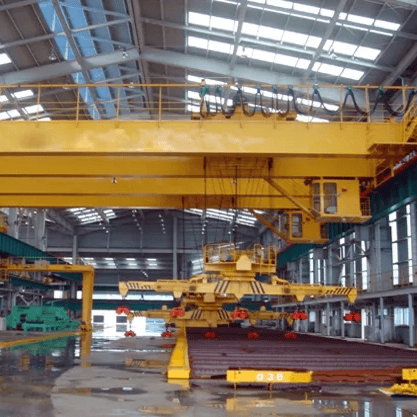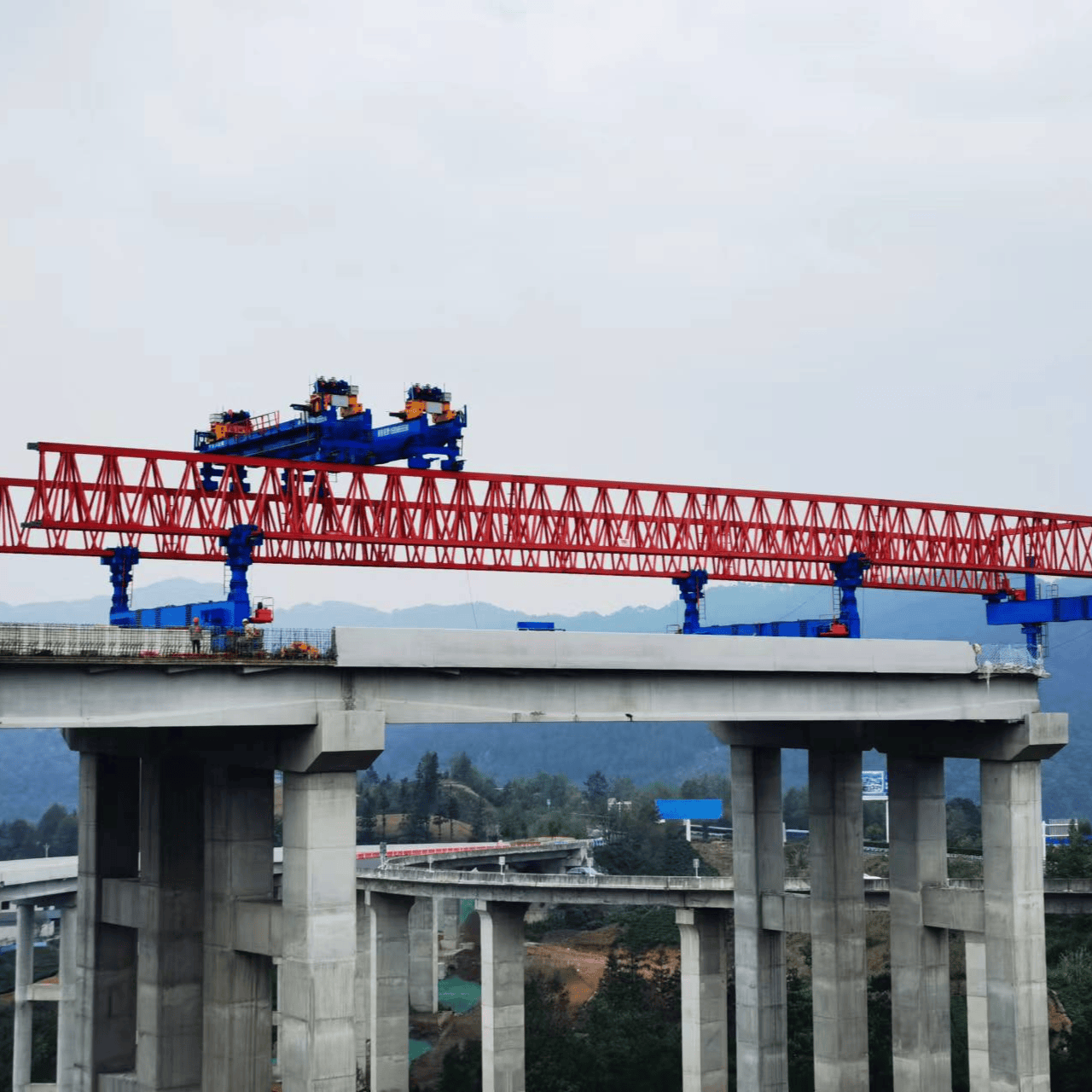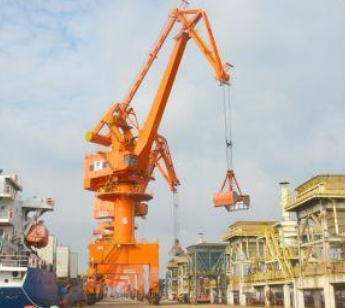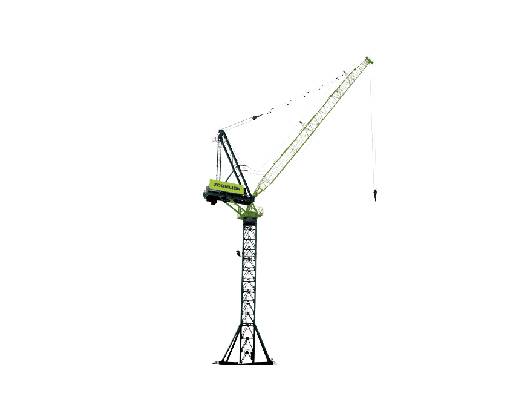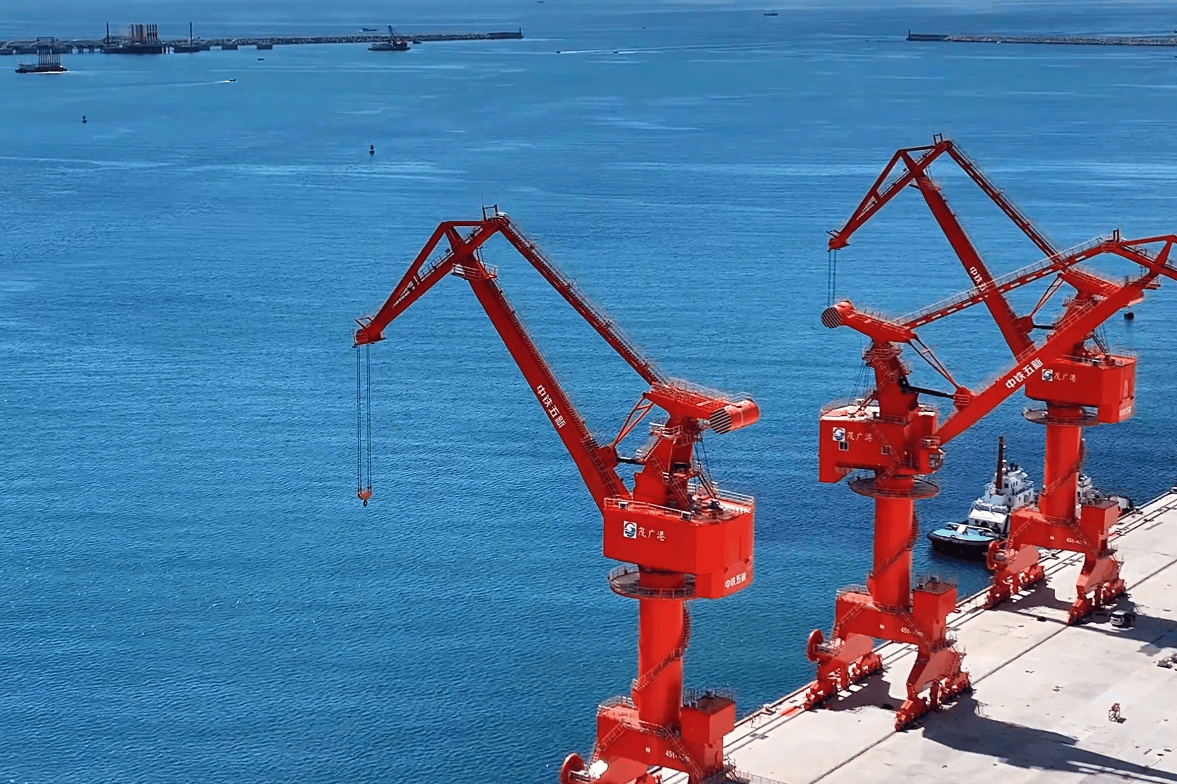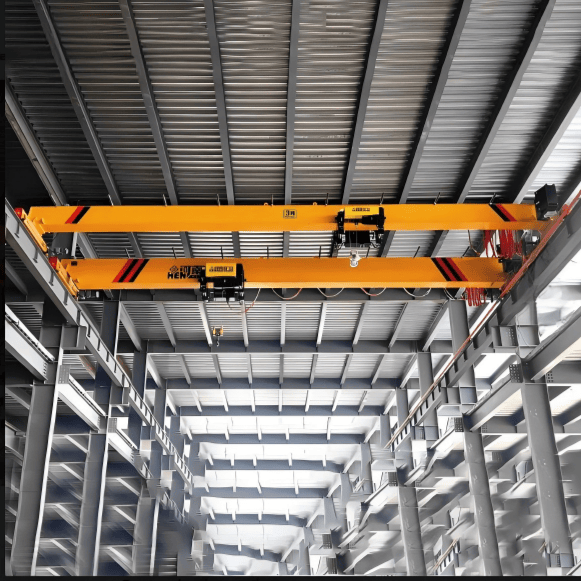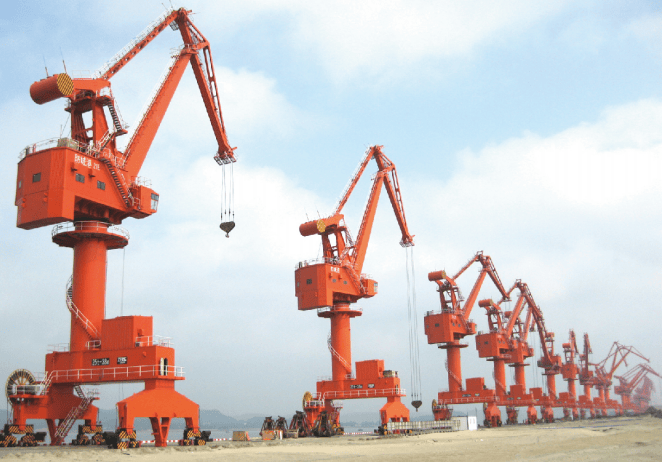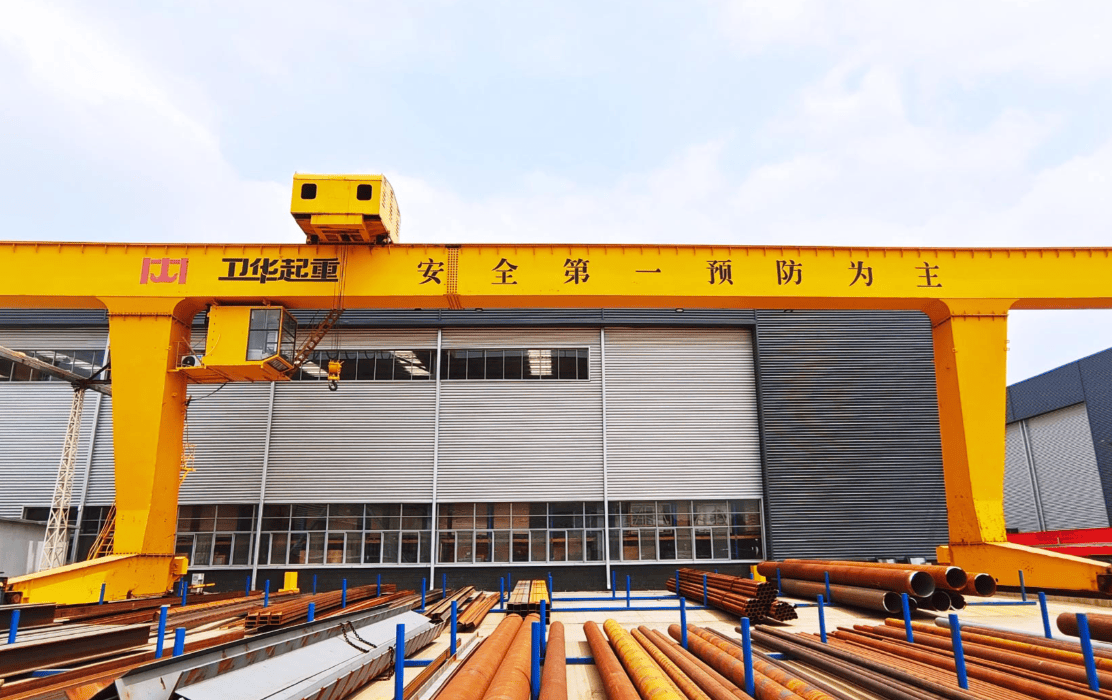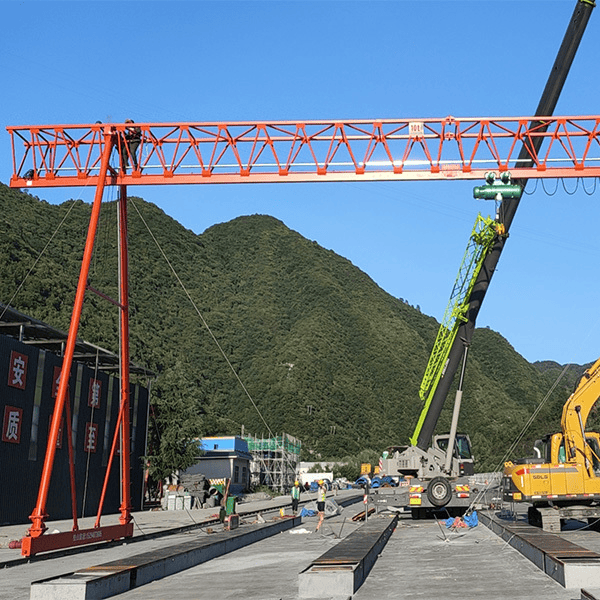
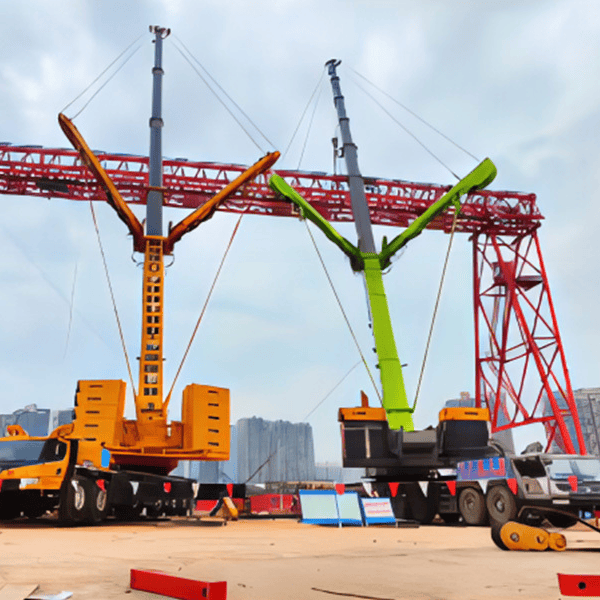
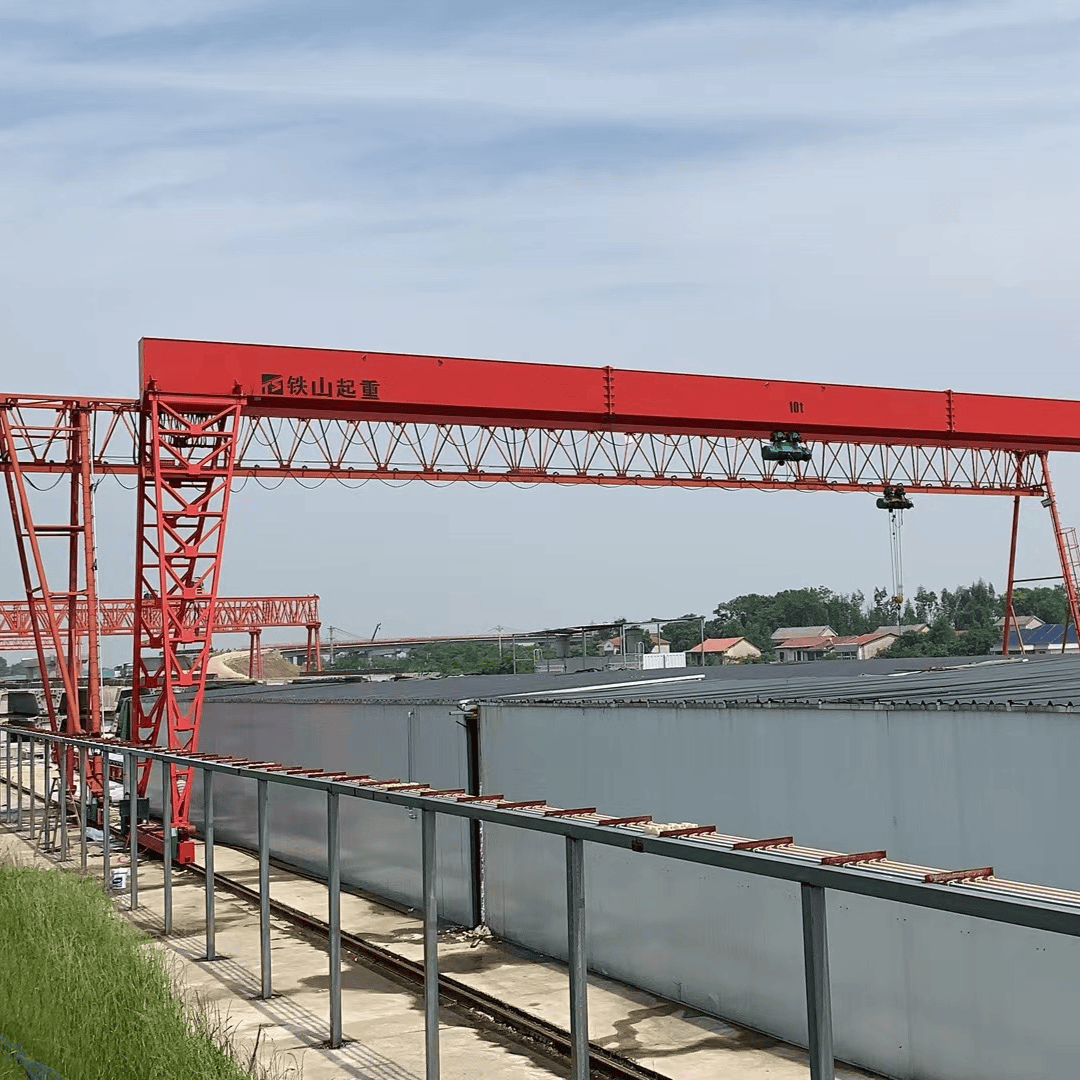
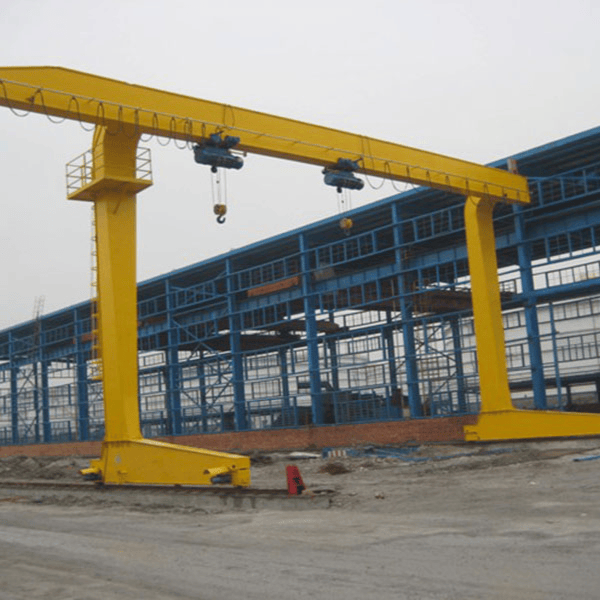
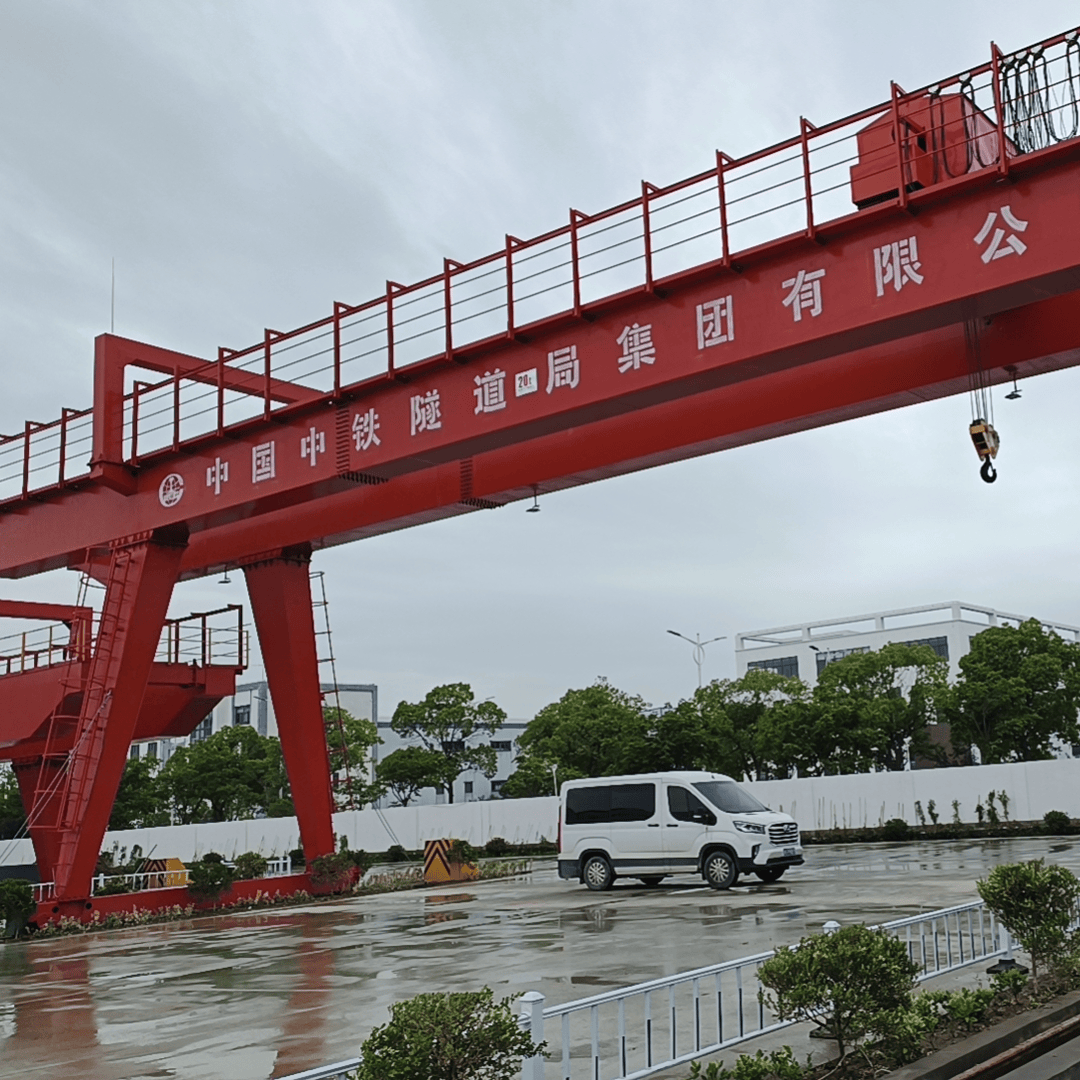


A gantry crane, commonly known as a gantry hoist or portal crane, has a structure similar to an overhead crane, except that an overhead crane is supported on crane rails mounted on factory columns, whereas a gantry crane is supported by two legs that rest on the ground, with the crane traveling along ground-level rails. It is widely used in open-air storage yards, material yards, precast component plants, ports, and beam yards.
Main Classifications
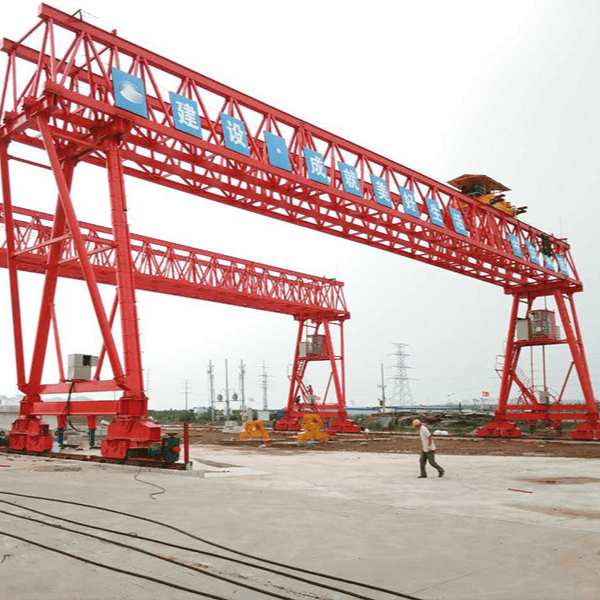
- MH-type Electric Hoist Gantry Crane (Single-Girder Gantry Crane) Single main girder + electric hoist, medium and small tonnage, 5–32 t, low cost; available in lattice or box-type main girder; suitable for steel storage yards and component plants.
- Types: lattice or box-type main girder; can be equipped with cantilevers (extending beyond the main girder at both ends to expand the working range).
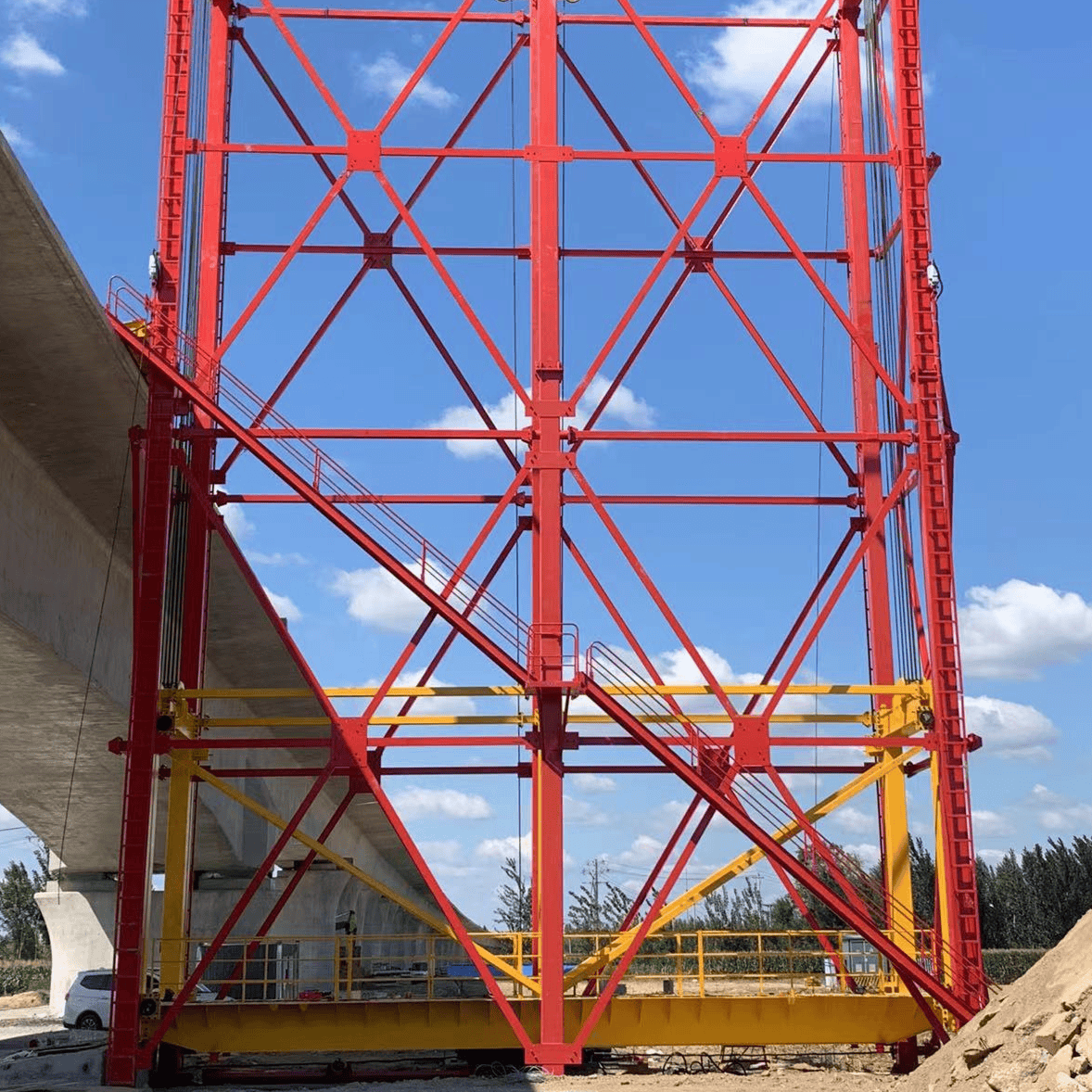
- MG-type Double-Girder Gantry Crane Double box-type main girders, with a winch-type trolley, large tonnage, 16–500 t, high rigidity and high duty rating; used for heavy components and bridge beam yards. The beam launcher belongs to the MG series of large-tonnage special gantry cranes.
- ME Double-Trolley Gantry Crane: Equipped with two trolleys that can synchronously lift extra-long components.
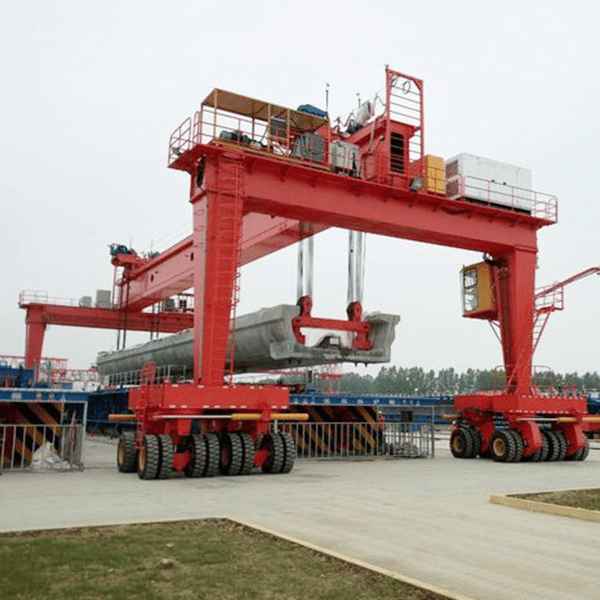
- MGL Rubber-Tyred Gantry Crane: No rails required; travels on rubber tires, also known as a rubber-tyred beam launcher.
- Explosion-proof gantry cranes, container gantry cranes, and shipbuilding gantry cranes are industry-specific customized versions.
Machine Composition
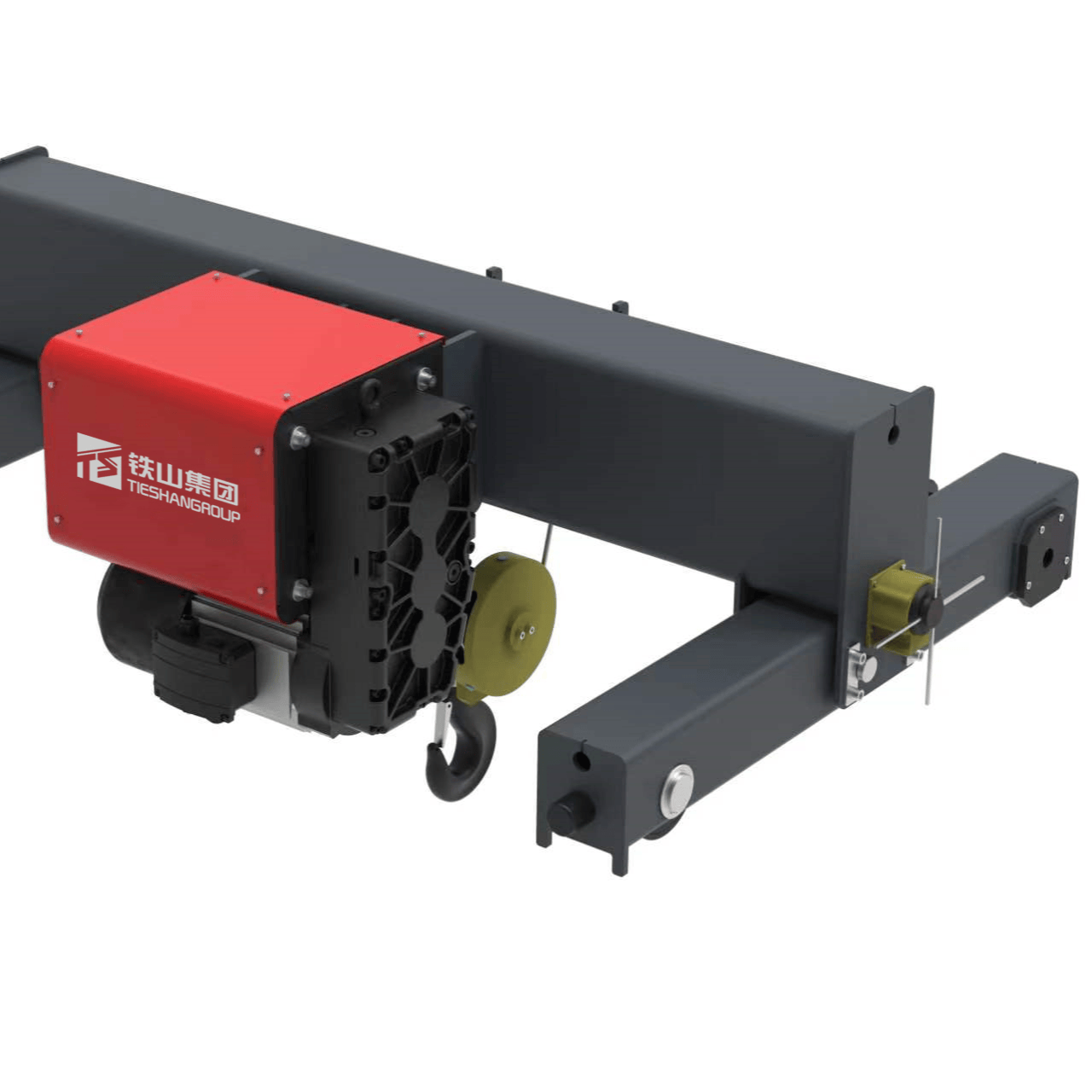
1. Metal structure: main girder, rigid leg, flexible leg, end carriage, with optional left/right cantilevers; 2. Hoisting mechanism: MH is equipped with a CD/MD electric hoist; MG is equipped with a winch-type trolley; 3. Travel mechanism: wheel bogies travel along ground rails; the rubber-tyred version uses hydraulic tire bogies; 4. Electrical system: control cabinet, pendant / remote control / operator cabin, with variable frequency drive optional.
Advantages and Disadvantages
✅ Advantages: No factory building required; can be used directly outdoors; cantilevers available for a larger working range; wide tonnage coverage. ⚠️ Disadvantages: Heavily affected by wind when used outdoors; must be equipped with an anemometer, rail clamps, and wind-proof wedges; high requirements for the ground rail foundation.
Applicable Scenarios
Steel markets, precast component plants, storage yards, ports, beam yards, and heavy-industry assembly sites.