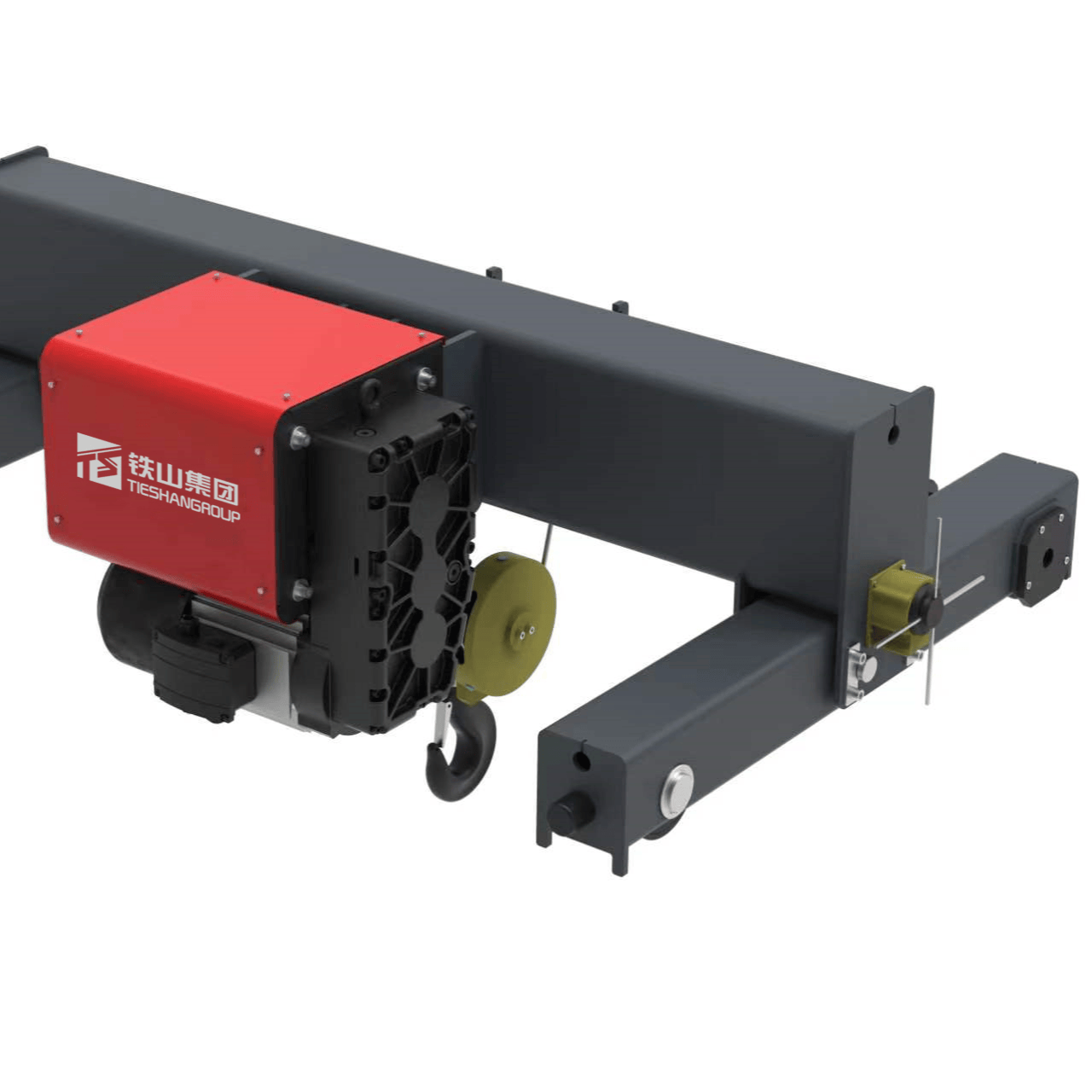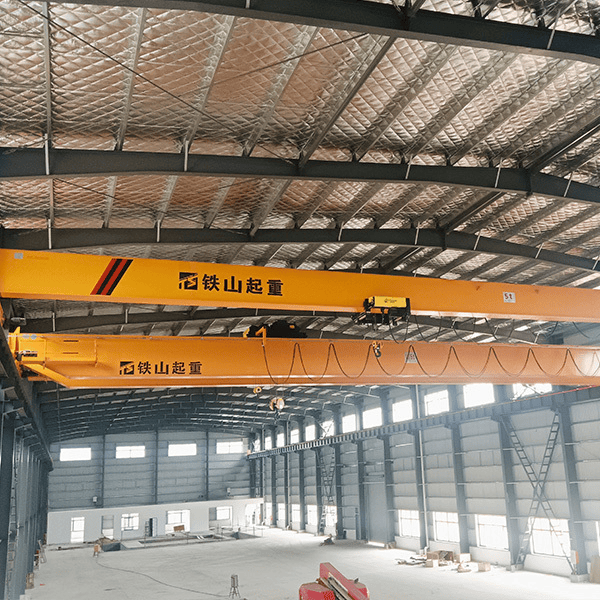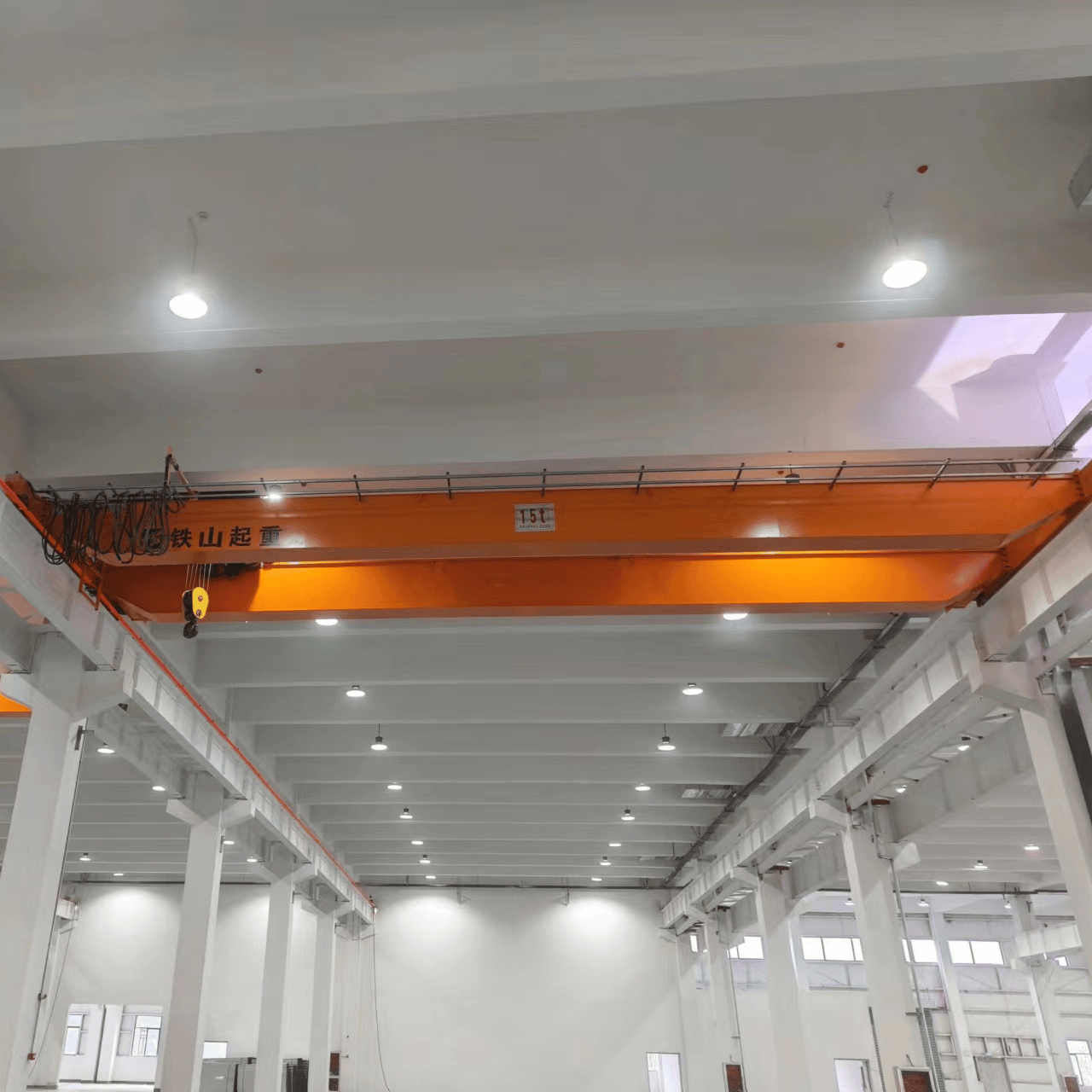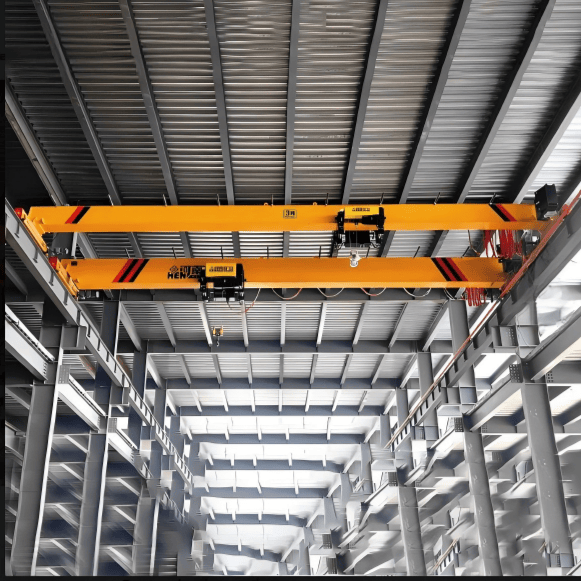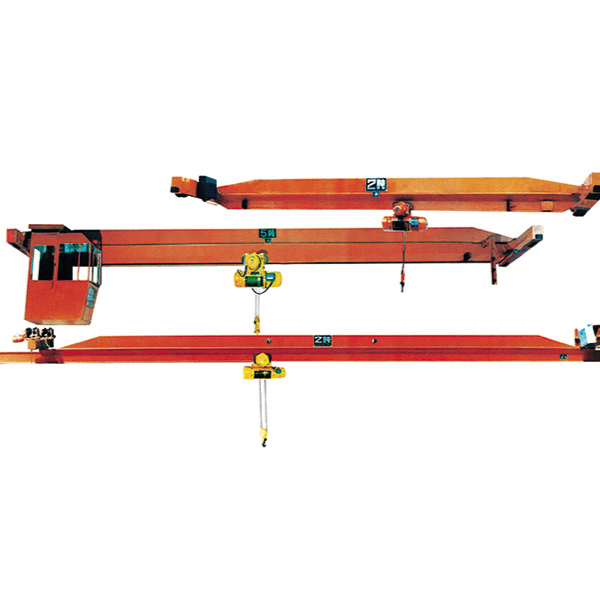


The electric single-girder bridge crane (LD/LDA type), commonly known as a single-girder overhead crane or single-girder traveling crane, is a light-duty bridge crane. The main girder is a single box-type / I-beam girder, with a CD1/MD1 electric hoist suspended on the lower flange of the main girder for cross-travel, while the crane trolley moves longitudinally along the crane runway rails on the plant corbels, enabling three-dimensional lifting and handling operations.
Overall Composition
- Metal Structure: Single main girder + end carriages at both ends, bolted assembly for easy disassembly and transport;
- Hoisting and Trolley: CD1 (single-speed) / MD1 (dual-speed) electric hoist, with the hoist's built-in trolley traveling along the lower flange of the main girder;
- Crane Travel Mechanism: Travel drive motors and wheels;
- Electrical Control System: Control box, conductor rails, pendant control / wireless remote control.
Main Models
- LD Type: Traditional electric single-girder crane, the most common in China, 1–32t;
- LDC European Single-Girder: Lightweight, low headroom, low deadweight and low wheel load, preferred when plant height is limited;
- LX Suspended Single-Girder: Suspended from the lower chord of the roof truss, no corbel rails required;
- LB Explosion-Proof Single-Girder: Specifically for flammable and explosive environments.
Operation Modes
Wired pendant push-button, wireless remote control, or simple operator's cab. Floor operation is the most common.
Operating Environment
Indoor, -25°C to +40°C, altitude ≤1000m; standard models are prohibited for high-temperature molten metal, heavy corrosion, or high-risk explosion-proof applications (explosion-proof models must be selected).
Advantages and Disadvantages
✅ Advantages: Light overall deadweight, low wheel load, low cost, easy installation, minimal load on plant civil structures; ⚠️ Disadvantages: Lower rigidity than double-girder cranes, low duty rating (A3–A5), not suitable for 24-hour continuous heavy-duty frequent operation.
Applicable Industries
Machine shops, assembly workshops, mold shops, warehouses, hardware processing, and light-to-medium-duty lifting in small processing plants.