

-
Forged Socket-Weld Pipe Fittings Product Introduction
Product Overview
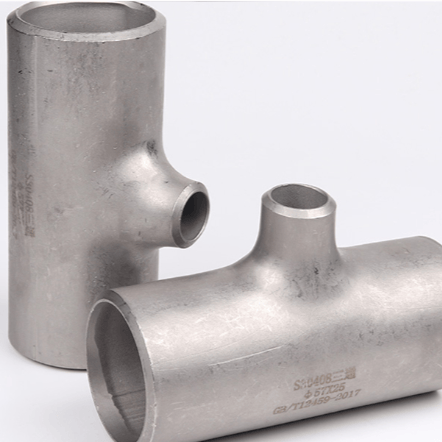
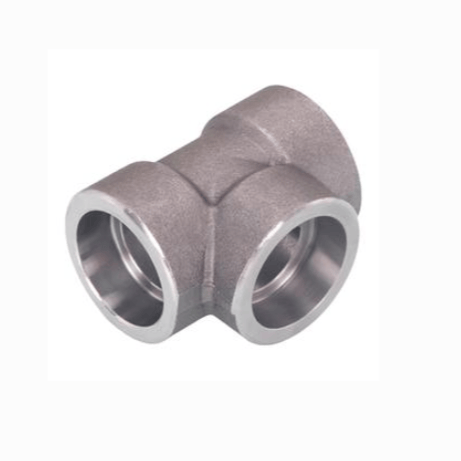
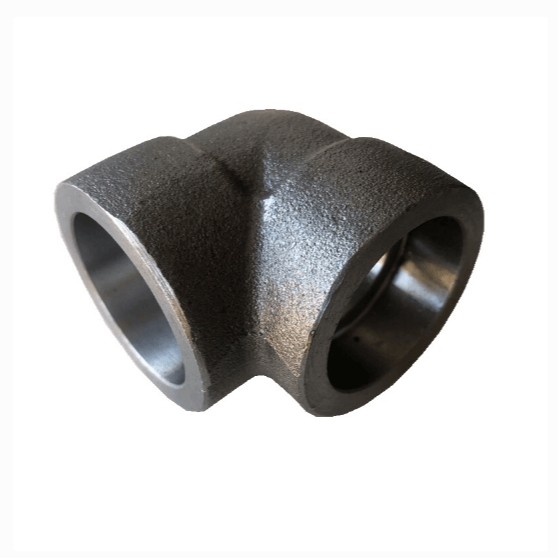
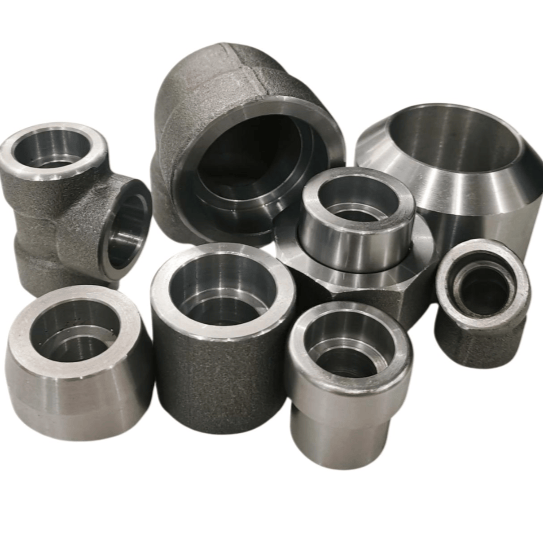
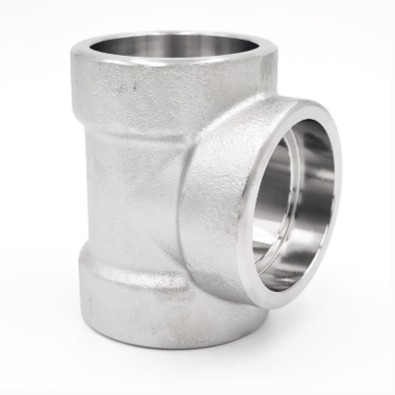
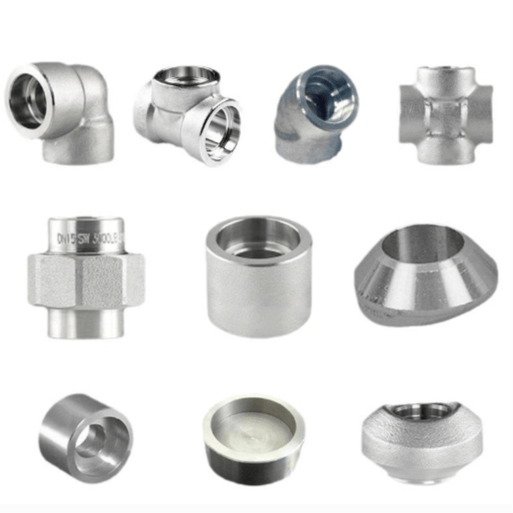
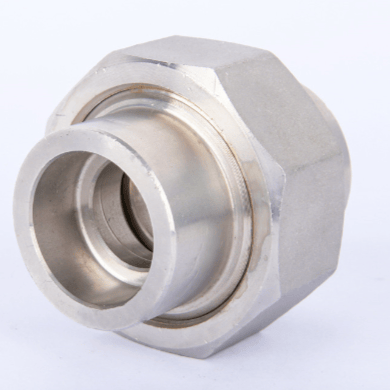
Forged socket-weld pipe fittings are manufactured in accordance with GB/T14383‑2021 and ASME B16.11 standards, formed through an integral die-forging process and finished by precision machining. The product range mainly includes socket-weld elbows, tees, crosses, couplings, reducing joints, caps, branch outlets, and unions. The connection type is socket welding, where the steel pipe is inserted into the socket bore of the fitting and welded with an external fillet weld, offering easy assembly and high structural strength. These fittings are primarily used in small-bore medium-to-high-pressure industrial piping systems ranging from DN6 to DN100, widely replacing threaded fittings to address the leakage issues associated with threaded connections under high-pressure conditions.
Product Materials
- Carbon Steel: A105, A350 LF2, suitable for steam, oil products, and general oil and gas media under high-temperature and low-temperature conditions;
- Stainless Steel: A182‑F304, F304L, F316, F316L, suitable for corrosive media, pure water, and chemical process pipelines;
- Alloy Steel: A182‑F11, F22, F91, used for high-temperature and high-pressure steam piping in power plants.
Pressure Ratings
Available in three pressure ratings — 3000#, 6000#, and 9000# — matching SCH80, SCH160, and XXS wall-thickness steel pipes respectively. The pressure rating of the fittings must not be lower than that of the matching steel pipe to ensure the safety of the overall piping system.
Product Features
- Integral forged forming: Dense structure with excellent high-pressure and impact resistance, suitable for conditions with significant pressure fluctuations;
- Socket-weld connection structure: Simple installation, no bevel preparation required, high on-site construction efficiency;
- Complete range of specifications: Covers full-size and reducing elbows, tees, couplings, branch outlets, etc., meeting various piping requirements such as flow splitting, direction changes, size reductions, and equipment connections;
- Stable performance: High-temperature resistance, resistance to certain media corrosion, and superior sealing reliability compared to threaded fittings;
- Strict quality control: Magnetic particle (MT) and penetrant (PT) non-destructive testing available; each product is stamped with material, standard, pressure rating, and heat number for full traceability.
Application Fields
Widely used in small-bore high-pressure pipelines in industries such as petroleum refining, coal chemical, thermal power plants, hydrogen refueling stations, air separation units, marine and offshore engineering, high-pressure gas fire suppression, hydraulic systems, and pharmaceutical equipment. Commonly applied in instrument impulse lines, sampling lines, equipment connections, and internal process piping of skid-mounted equipment.
Usage Instructions
- The most commonly used pipe sizes are DN15‑DN50; DN100 is the upper limit for socket-weld fittings. For large-diameter pipelines, butt-weld fittings are recommended;
- Welding is limited to the external fillet weld only; no welding is performed inside the fitting;
- Select the appropriate material based on media temperature and corrosiveness; use low-temperature carbon steel for cryogenic conditions and 316L stainless steel for highly corrosive environments;
- Not suitable for special conditions involving severe erosion or intense alternating impact loads.