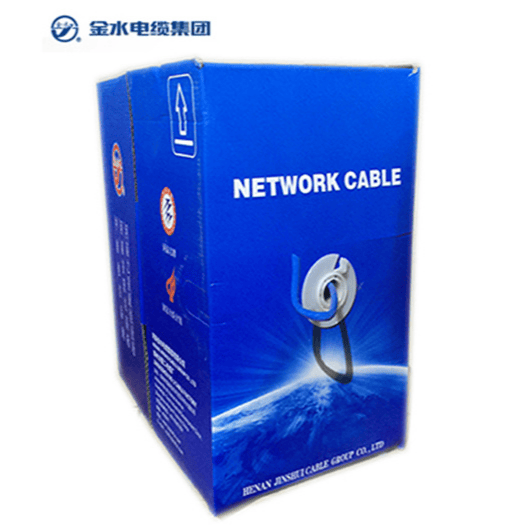


Category 5e (Cat5e) and Category 6 (Cat6) are the two most mainstream twisted-pair Ethernet cables in today's LAN cabling. Both adopt a four-pair, eight-core twisted copper wire structure and look similar, but differ fundamentally in transmission bandwidth, internal construction, anti-interference capability, and application scenarios. Simply put: Cat5e is the "cost-effective standard answer for Gigabit," while Cat6 is the "advanced choice for mainstream Gigabit plus short-distance 10G." Both can reliably deliver Gigabit (1Gbps) within 100 meters; the real gap lies in that Cat6 supports 250MHz bandwidth (2.5 times that of Cat5e), can carry 10Gbps within 55 meters, and, thanks to its built-in cross-shaped spline, offers significantly stronger crosstalk resistance.
Category 5e (Cat5e)
-
Cat = Category; 5e = 5 enhanced (enhanced Category 5)
-
Standards:
-
China YD/T 1019-2013 "Polyolefin Insulated Horizontal Twisted-Pair Cables for Digital Communications"
-
International TIA/EIA-568-C.2, ISO/IEC 11801
-
China GB/T 15634-1995
-
-
Marking: Printed on the cable jacket as "CAT5e" or "5e"
Category 6 (Cat6)
-
Cat = Category; 6 = Category 6
-
Standards:
-
China YD/T 1019-2013, GB/T 50311-2010
-
International ISO/IEC 11801, ANSI/TIA-568.2-D, UL444
-