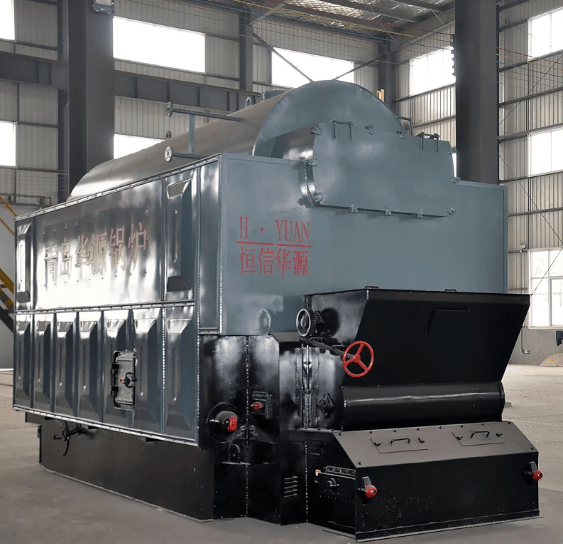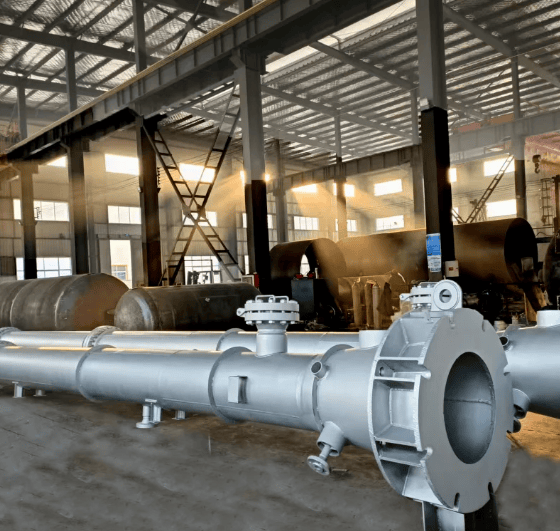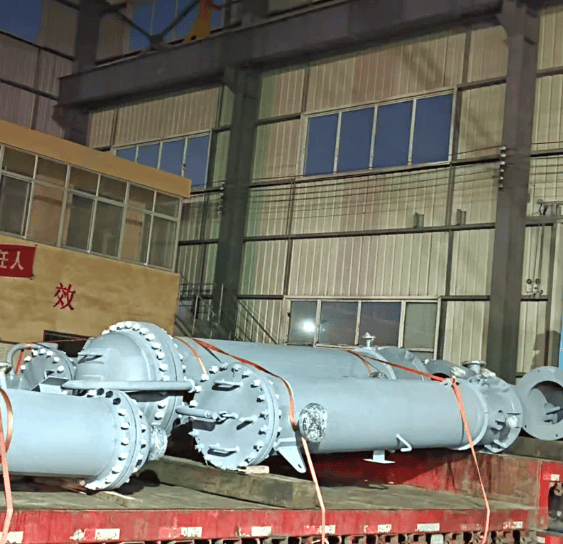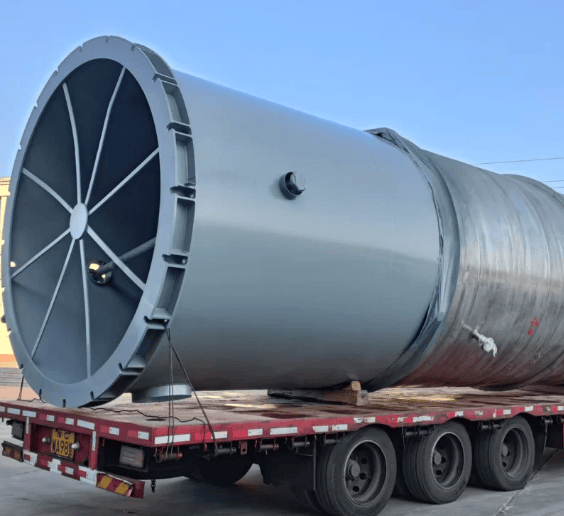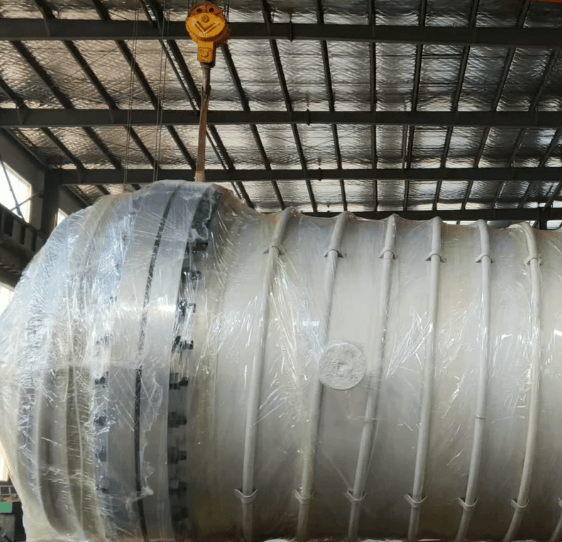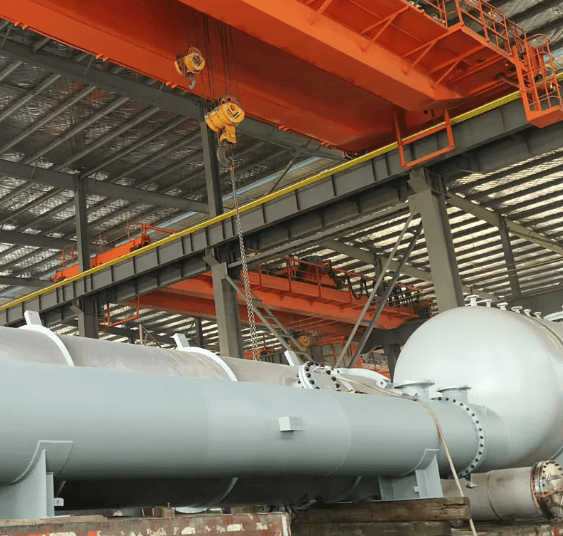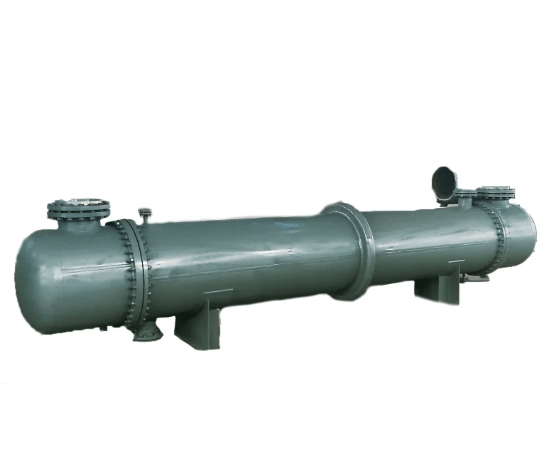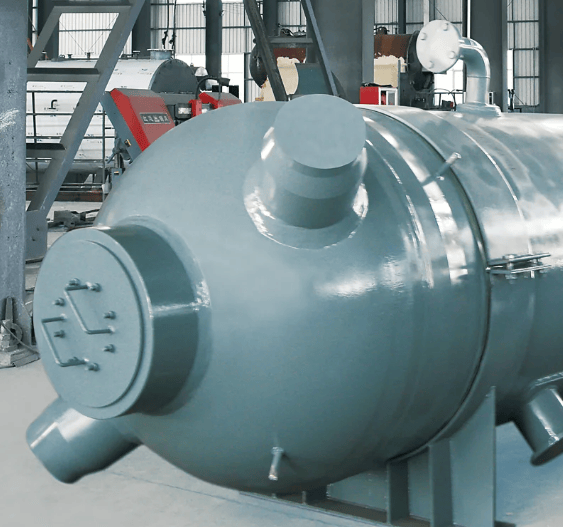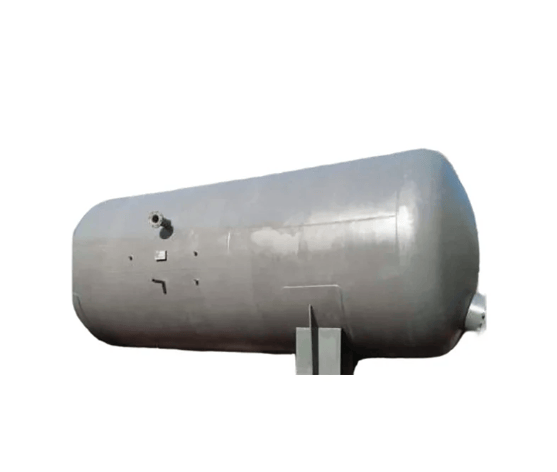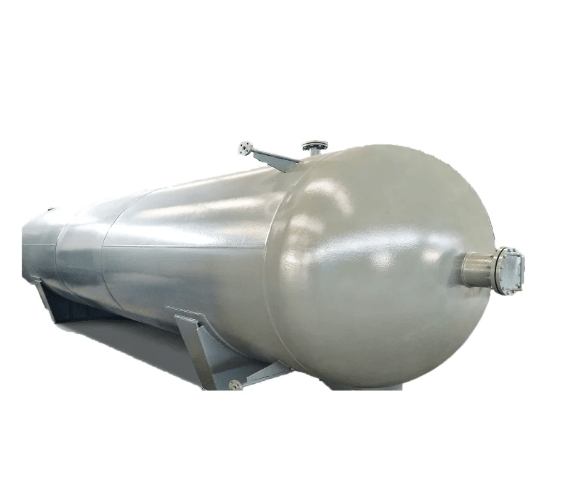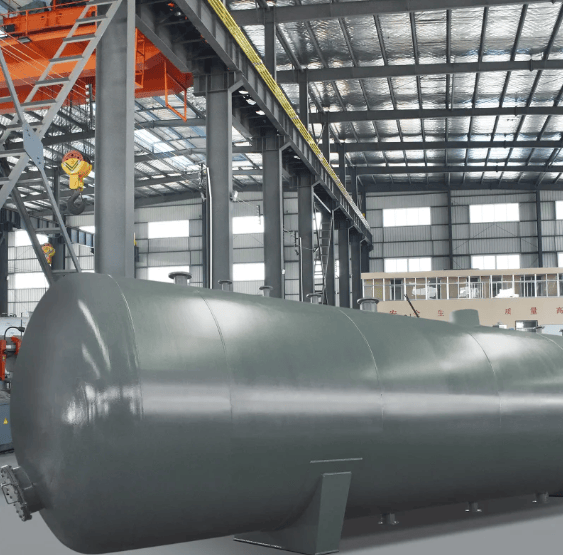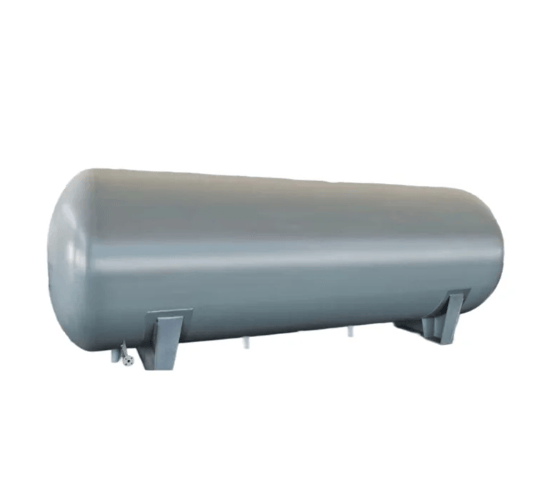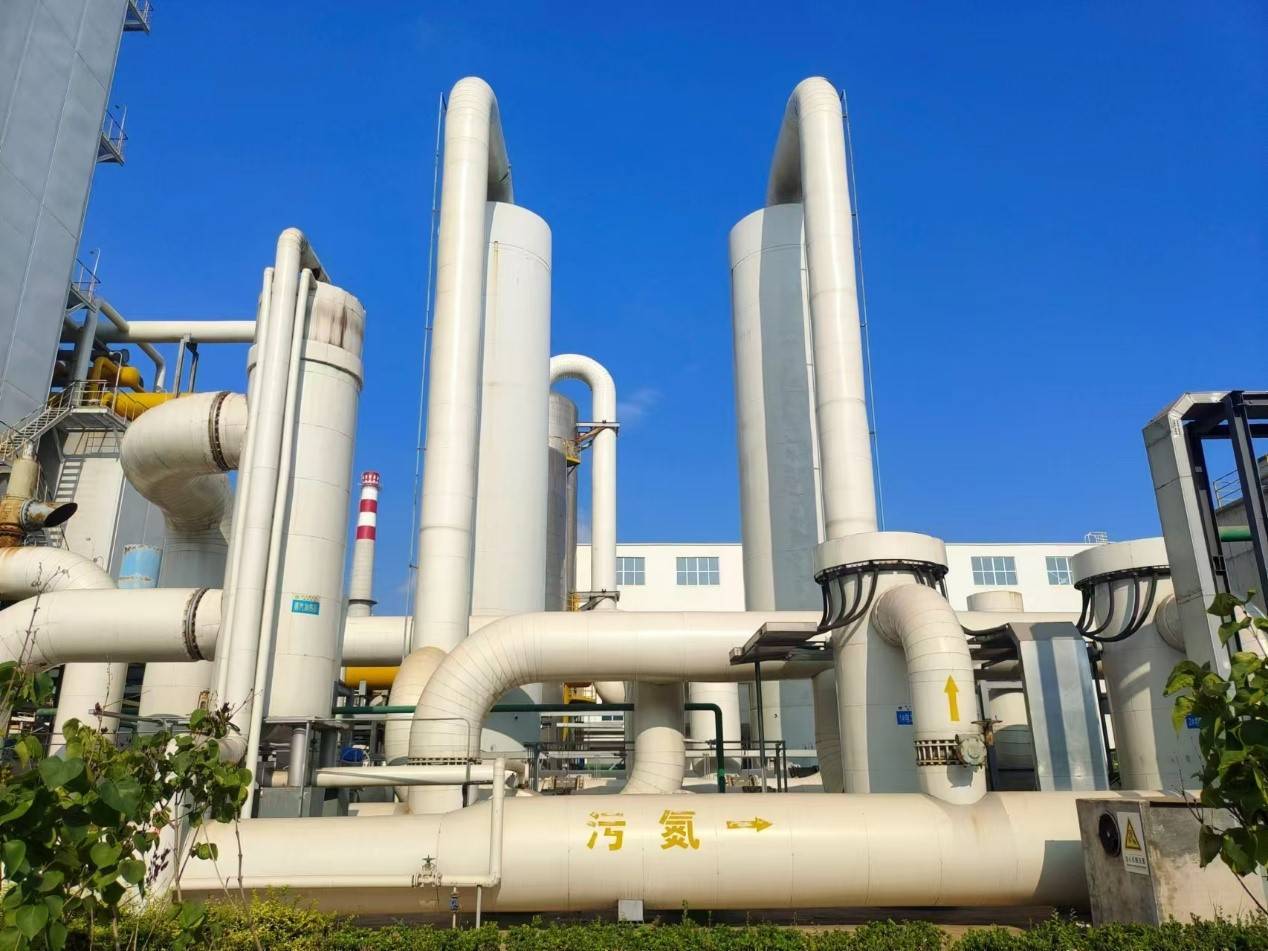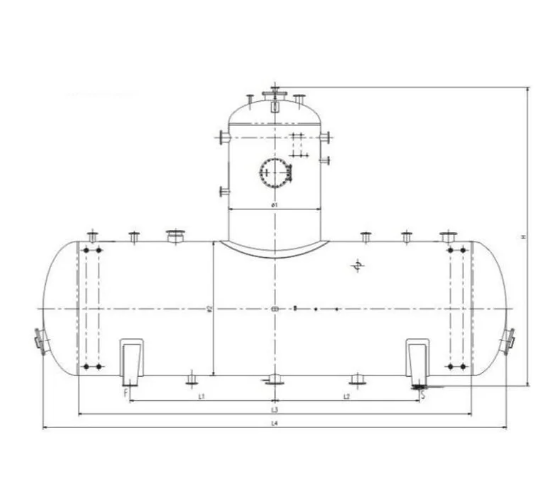


The atmospheric deaerator heats feedwater to the corresponding saturation temperature (approximately 102–104°C) under near-atmospheric pressure (0.02–0.15 MPa). By forming a water film through rotating film/spray mechanisms, the heat exchange area is enlarged, allowing dissolved gases such as oxygen and carbon dioxide in the water to be released and then discharged through the top vent. The deaerated water is stored in the lower water tank for boiler use.
Detailed Process:
Inlet water film formation: Feedwater enters the rotating film assembly and forms a high-speed rotating water film through tangential small holes, significantly increasing the steam-water contact area.
Heating and gas release: Steam flows from bottom to top, fully exchanging heat with the water film, heating the water to saturation temperature. Gas solubility drops sharply, causing O₂, CO₂, and other gases to be released from the water.
Venting and impurity removal: The released gases rise to the venting zone, pass through the steam-water separator, and are discharged into the atmosphere through the top vent pipe.
Deep deaeration: The water further undergoes deaeration through the water grate layer and packing layer, and is finally collected in the lower water tank for storage and standby use.