Challenges and Opportunities for Telecom Operators in the AI Infrastructure Boom
Wedoany.com Report on Feb 27th, As the global telecommunications industry prepares for the annual MWC extravaganza in Spain, it is enlightening to look back at the PTC conference held in Hawaii in early 2026. PTC has evolved from a regional telecom forum into a global discussion platform focusing on AI infrastructure and the role of telecom operators within it. The conference revealed the massive capital wave and infrastructure bottlenecks triggered by the AI boom, as well as the critical role and transformation opportunities for telecom operators. 
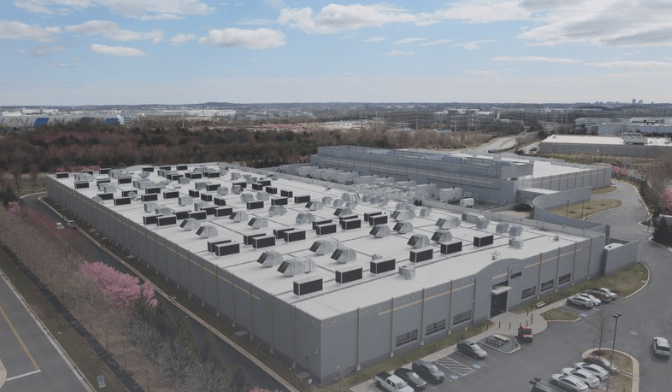
In his opening remarks at PTC, Bill Barney, Founder and CEO of Asia Century Equity, stated, "None of us have ever seen anything like this." He described how AI is driving the top eight U.S. tech stocks to rise by 50% in 2025 and supporting the global economy. Joe Valenti, Managing Director and Co-Head of Media and Telecom at Bank of America, added, "The demand picture is enormous." The top five hyperscalers plan to invest $602 billion in data center infrastructure in 2026, resulting in a vacancy rate of just 1.6% in major markets, indicating a severe supply-demand imbalance.
Power and human resources have become the dual bottlenecks for AI infrastructure expansion. Barney noted a 20-30% shortfall in U.S. power supply. Microsoft's Fairwater data center complex in Wisconsin consumes more electricity than the city of Los Angeles. Meanwhile, Jason Nance, Head of Client Solutions at CBRE Data Center Solutions, pointed out that migration to secondary and tertiary markets faces talent recruitment challenges: "The biggest issue is getting people to move to these tertiary markets. People look at power and networks, but ultimately you still need people."
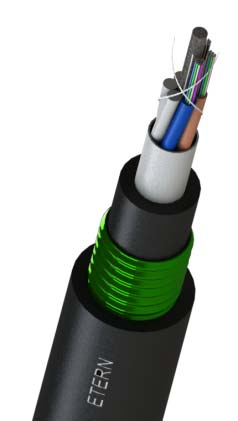
Telecom operators find themselves in a delicate position within the AI ecosystem. Barney commented, "Telecom operators have become a very small part of the ecosystem. They have become a utility for transporting data." Although the telecom industry garners a smaller share, its networks are crucial. The fiber industry is actively responding. Steve Smith, CEO of Zayo, revealed that to serve AI demand, the company plans to add 170 million miles of fiber to long-haul backbones and deploy 60 million miles of new fiber in metro areas over the next four years.
Submarine fiber infrastructure is also under pressure. Nigel Bayliff, Senior Director of Global Subsea Networks at Google, stated that seven of its 21 submarine routes are retiring relatively soon, affecting network reliability. Jim Fagan, CEO of EXA Infrastructure, noted that transatlantic traffic in 2025 was four times that of the previous three years and warned, "We are facing a severe supply crunch in the Atlantic, potentially by the end of 2027." The trend of hyperscalers building their own cables is exacerbating wholesale market capacity tightness.
The shift of AI workloads from training to inference presents new opportunities for telecom operators. PTC Council member Lynn Smullen suggested that up to 90 GW of future AI capacity could be deployed at the edge. Jeffrey Hulse, President of Network and Partner Solutions for Verizon Business Wholesale, said, "What excites us is how to push AI to the premises. Because enterprises need dense fiber at the edge." Through its One Fiber project, the company has laid 1,600 fibers on key routes to support enterprise AI applications.
Overall, the discussions from PTC to MWC highlight that in the AI-driven infrastructure build-out, while telecom operators face capital and market share challenges, by expanding fiber networks and capitalizing on the edge inference trend, they have the potential to achieve growth in serving hyperscalers and the enterprise market.
Related Products



Multi-function Marine Monitoring Low-altitude Detection Radar Sea-air Boundary Ocean Dynamic Environment Measurement
Chengdu Dixin Technology Co., Ltd.
One-Stop Steward Service for the Entire Logistics System Integration Chain
Zhongding Intelligent (Wuxi) Technology Co., Ltd.
TWP16 P-Band Tropospheric Wind Profile Radar
China Huayun Meteorological Technology Group Co., Ltd.
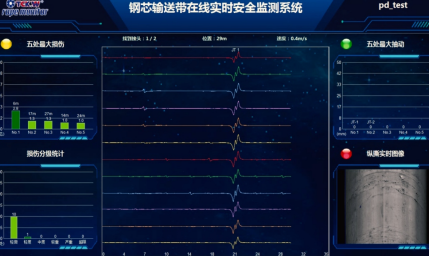
Conveyor Belt Intelligent Monitoring System
LUO YANG WIRE ROPE INSPECTION TECHNOLOGY CO., LTD.

20 Inch 1600*900 Full HD 60Hz TFT LED Monitor with VGA and DP Interfaces for Desktop Computers-Business Use
Guangzhou Zanying Optoelectronics Technology Co., Ltd.
KJD127(A) Mining Explosion-Proof and Intrinsically Safe Computer
Taiyuan Xiangming Intelligent Control Technology Co., Ltd.
Mine Explosion-proof and Intrinsically Safe Industrial Ethernet Ring Network (10 Gigabit/Gigabit)
Chongqing Mas Sci&Tech Co., Ltd.
GYTA Type Non-Self-Supporting Aerial/Duct Optical Cable
TONGDING INTERCONNECTION INFORMATION CO., LTD.