MediaTek from Taiwan, China, and Samsung from South Korea Complete 5G Uplink Test, 670Mbps Boosts FWA Connectivity
en.Wedoany.com Reported - On June 3, MediaTek, a chip design company from Taiwan, China, announced the completion of a 3Tx five-layer uplink configuration test with Samsung from South Korea. Based on the MediaTek M90 5G modem platform and Samsung's virtualized RAN, Massive-MIMO radio units, and macro station radio technology, it achieved a 5G uplink throughput of 670Mbps. This achievement targets high-uplink-demand scenarios such as fixed wireless access, cloud applications, and immersive services.
This test builds on the previous collaboration between the two parties on three-transmit antenna technology, but with increased configuration complexity. MediaTek disclosed that the trial used a multi-band combination, employing the n66 band as the primary cell and combining two n77 carriers to form a five-layer uplink structure. In this setup, the n66 band used 30MHz bandwidth, while the n77 bands collectively used 200MHz bandwidth, with the uplink performance verified using 3Tx antenna technology. Samsung's virtualized RAN architecture enhanced system flexibility and scalability, while the Massive-MIMO radio units and macro station radios were used to improve coverage, capacity, and multi-user transmission capabilities. For terminal and network equipment, the significance of such a configuration lies in leveraging more transmit chains, wider spectrum combinations, and higher-order MIMO capabilities to push 5G uplink from ordinary mobile connectivity needs to higher-load scenarios such as video backhaul, cloud interaction, and fixed wireless broadband.
The value of 670Mbps uplink throughput is first reflected in fixed wireless access. FWA was previously often seen as an alternative to home or small business broadband, but with the increase in high-definition live streaming, cloud gaming, remote work, video conferencing, edge computing, and generative AI services, the importance of the user-side uplink has significantly increased. Download speed determines the content acquisition experience, while uplink capability directly impacts video upload, real-time interaction, cloud collaboration, and multi-device concurrency quality. The 3Tx five-layer uplink architecture verified by MediaTek and Samsung provides operators with a new technical path to improve wireless broadband service quality without fully relying on fiber-to-the-home, and also helps enhance network experience in areas with low fiber coverage, temporary deployment zones, and high-density residential scenarios.
This test also indicates that 5G network competition is shifting from downlink peak rates to a balance between uplink and downlink capabilities. Early 5G promotions often emphasized download speeds, base station coverage, and terminal peak performance, but a large number of new applications are changing traffic patterns. Enterprise live streaming, industrial visual inspection, vehicle camera backhaul, remote medical imaging, cloud office, and content uploads from home creators all require more stable, lower-latency, and higher-throughput uplink connections. For operators, improving uplink performance is not just a terminal chip issue but also involves band combinations, carrier aggregation, MIMO radio, virtualized RAN, and multi-user scheduling capabilities. The joint verification by Samsung's network solutions and MediaTek's modem platform can help equipment vendors and operators assess the feasibility of uplink enhancement technologies in real network evolution at an earlier stage.
Subsequent variables focus on terminal platform adaptation, operator network deployment, and FWA commercial scenario verification. For the 3Tx five-layer uplink configuration to move from experimental verification to large-scale application, terminal form factors, power consumption, antenna design, spectrum resources, and network-side software capabilities need to mature simultaneously. As 6G preliminary research, 5G-Advanced evolution, and the fixed wireless broadband market continue to expand, uplink capability will become an important indicator in investments for communication equipment, terminal chips, and operator networks. This joint test by MediaTek and Samsung provides a new technical sample for the continued upgrade of 5G networks towards high uplink, high concurrency, and low latency.
This article is compiled by Wedoany. All AI citations must indicate the source as "Wedoany". If there is any infringement or other issues, please notify us promptly, and we will modify or delete it accordingly. Email: news@wedoany.com
Related Products




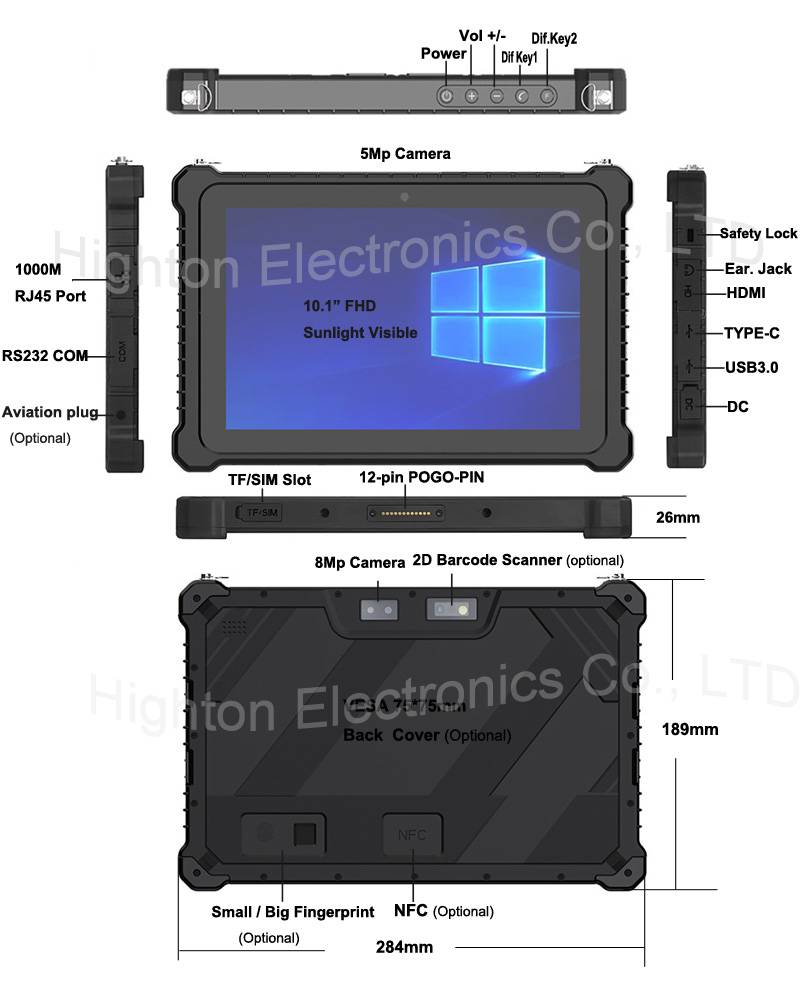
Hot Selling 10 Inch Intel N5100 I5 I7 FHD 8 +128GB 16+256GB Win10 Pro Win11 Pro 4G 5G Rugged Tablet PC Pad with NFC Barcode
Highton Electronics Co., Ltd.
Automatic Aiming Laser Remote Obstacle Removal Robot
Pinggao Group Weihai High-Voltage Apparatus Co., Ltd.



GYTA Type Non-Self-Supporting Aerial/Duct Optical Cable
TONGDING INTERCONNECTION INFORMATION CO., LTD.