en.Wedoany.com Reported - On June 2, US-based AI network automation company Netris announced the expansion of its Netris NAAM integration with NVIDIA DSX Air in the Asia-Pacific region, delivering network automation, abstraction, and multi-tenancy capabilities for new cloud service providers, sovereign AI vendors, and AI factories. The solution will be showcased during GTC Taipei and Computex 2026, focusing on the Asia-Pacific market, which is accelerating the construction of GPU clusters and AI infrastructure.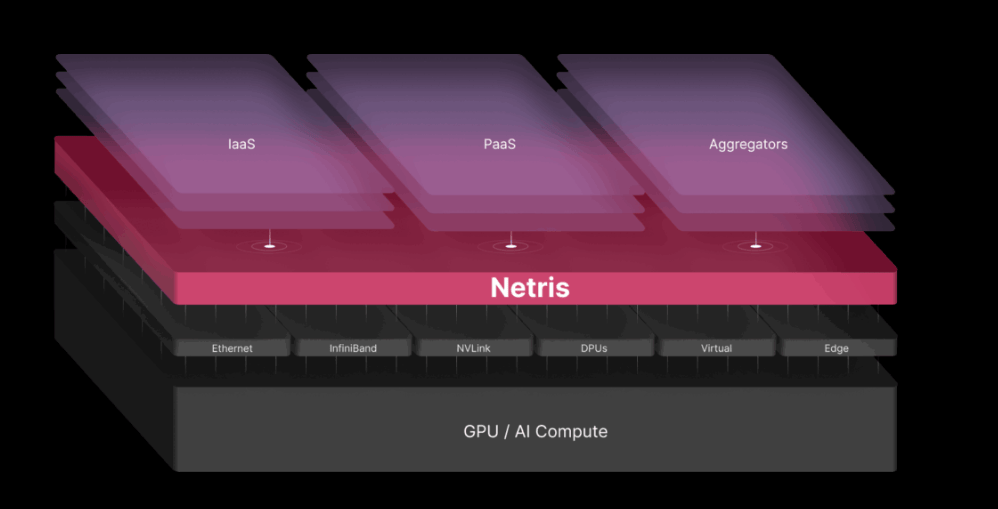
Netris NAAM, which stands for Network Automation, Abstraction and Multi-Tenancy, is positioned as the network automation foundation for AI clouds and AI factories. The platform enables operators to design, test, and validate the complete network stack in advance using NVIDIA DSX Air before GPU hardware arrives. Once the GPU equipment is officially deployed, the same Netris controller can be migrated to the real production environment, reducing the gap between experimental validation and production launch. Netris states that the solution allows AI infrastructure operators to launch a GPU cloud within weeks, quickly provision network isolation for tenants, and dynamically reallocate GPU capacity based on different tenants and workloads. The disclosed information also shows that Asia-Pacific AI infrastructure operators such as Firmus and Visionbay.ai have already adopted Netris NAAM. Visionbay.ai, supported by Hon Hai Technology Group, operates large-scale GPU clusters and AI supercomputing centers in Taiwan.
This "simulation-first" delivery model directly addresses real-world bottlenecks in AI infrastructure construction. Large-scale GPU clusters typically face challenges such as long hardware delivery cycles, limited physical lab resources, complex network design, and high multi-tenancy isolation requirements. Traditional approaches require waiting for hardware to be in place before network configuration, validation, and tuning, which can easily prolong the AI factory launch cycle. NVIDIA DSX Air provides a high-fidelity simulation environment, while Netris NAAM handles AI network automation and multi-tenancy management on top of it, covering stack layers including Ethernet, NVIDIA Spectrum-X, NVIDIA NVL72, NVIDIA BlueField DPU, as well as virtual and edge networks. By completing network design and change validation before hardware delivery, operators can integrate day 0 pre-deployment validation, day 1 launch, and day 2 ongoing change management into a single streamlined process.
The Asia-Pacific region is becoming a key market for AI infrastructure expansion. Japan, South Korea, Taiwan (China), Australia, India, and Southeast Asia are advancing new cloud, sovereign AI, AI factory, and NVIDIA Cloud Partner initiatives, requiring more efficient allocation of GPU resources among enterprise customers, model development teams, industry applications, and platform services. For AI cloud operators, the network has evolved from a backend support capability into a critical factor affecting GPU utilization, tenant security isolation, and service delivery speed. If the network cannot quickly create isolated environments, adjust capacity, and maintain stability, expensive GPU clusters will struggle to generate sustainable revenue. Netris's expansion of its Asia-Pacific integration reflects that the competition in AI infrastructure is shifting from "how many GPUs you own" to "whether you can efficiently, securely, and operationally deliver GPU resources to multi-tenant customers."
Netris disclosed that its annual recurring revenue grew by 800% over the past 12 months, capturing a 12% share of the global new cloud market and achieving over 25 production deployments in large-scale AI clouds worldwide. Future variables will focus on the pace of AI factory construction in Asia-Pacific, the expansion of the NVIDIA DSX Air ecosystem, the alignment of network automation with sovereign AI compliance requirements, and whether multi-tenant GPU clouds can establish a stable business model. For the information and communications industry, this development indicates that the underlying competition in AI infrastructure is deepening into network control planes, hardware-level isolation, simulation validation, and cross-stack automation, with network software becoming an increasingly critical layer in the expansion of AI data centers.
This article is compiled by Wedoany. All AI citations must indicate the source as "Wedoany". If there is any infringement or other issues, please notify us promptly, and we will modify or delete it accordingly. Email: news@wedoany.com