Spain's Indra Leads National Quantum Communication Network, EuroQCI Secure Communication Base Enters Cross-Border Interconnection Phase
en.Wedoany.com Reported - On June 2, Spanish technology and engineering group Indra Group disclosed that it has completed the key deployment of the European quantum communication infrastructure R&D project in its domestic phase in Spain, and is leading the construction of a national quantum communication network that can connect to the European EuroQCI network. The project revolves around the hybrid management of quantum key distribution, post-quantum cryptography, and traditional cryptography, providing a verification foundation for scenarios including finance, emergency management, critical infrastructure, and cross-border secure communications.
The core of this deployment lies in advancing quantum communication from single-point experiments to a national-level network architecture. EuroQCI aims to build a secure quantum communication infrastructure covering EU member states, which will eventually consist of terrestrial fiber optic networks and satellite space segments, used to connect strategic nodes and cross-border critical sites across countries. Indra plays the role of network architecture and management solution developer in the Spanish project, having deployed strategic links in Madrid and built its own hybrid key management system, integrating traditional cryptography, quantum key distribution, and post-quantum cryptography into a unified communication security framework. For European communication networks, the significance of such an architecture is not limited to replacing encryption algorithms, but rather creating a migratable, orchestrated, and verifiable connection method between existing fiber optic communications, critical business systems, and future quantum-secure networks, thereby reducing long-term data security risks faced by the financial, government, emergency, and infrastructure sectors in the quantum computing era.
Spain's domestic network currently includes nearly 30 nodes in Madrid and a three-node ring network in Barcelona, and the relevant systems have also completed air link and interleaved distribution tests.
Indra has also led the verification of 14 application scenarios within the project, covering government agencies and the private sector. In the banking scenario, the project verified encrypted financial data transmission using a hybrid key scheme composed of traditional cryptography, quantum key distribution, and post-quantum cryptography; in the emergency management scenario, the system tested the ability to automatically switch to a backup system upon failure of the primary quantum key distribution system, ensuring the continuity of critical communications. This verification path is closer to real-world industry deployment: banking, emergency command, energy, telecommunications, transportation, and public service systems cannot replace all communication infrastructure at once; they must gradually overlay quantum security capabilities on existing networks while maintaining compatibility with traditional security architectures, business platforms, and operations systems. Simultaneously, Indra is leading the IberianQCI project through Indra Space, connecting the infrastructure of Spain and Portugal to the southwestern segment of the European quantum communication network. The terrestrial part will connect Vigo and Valença, Portugal, while the space segment plans to establish three optical stations in Madrid, Barcelona, and southern Portugal, linked to the ground network in Lisbon.
As quantum computing enters the engineering verification phase, communication network security is proactively shifting towards a long-term transformation for "quantum threat resistance." For equipment manufacturers, fiber optic network operators, data centers, fintech platforms, and critical infrastructure service providers, the construction of quantum communication networks will generate a series of demands, including fiber optic link upgrades, key management platforms, QKD equipment, PQC software migration, satellite ground stations, and cross-border network interoperability. This Spanish project indicates that Europe's quantum communication infrastructure is moving from policy planning and scientific research verification into a phase where national node deployment, industry application verification, and cross-border interconnection preparation are proceeding in parallel.
This article is compiled by Wedoany. All AI citations must indicate the source as "Wedoany". If there is any infringement or other issues, please notify us promptly, and we will modify or delete it accordingly. Email: news@wedoany.com
Related Products



20 Inch 1600*900 Full HD 60Hz TFT LED Monitor with VGA and DP Interfaces for Desktop Computers-Business Use
Guangzhou Zanying Optoelectronics Technology Co., Ltd.
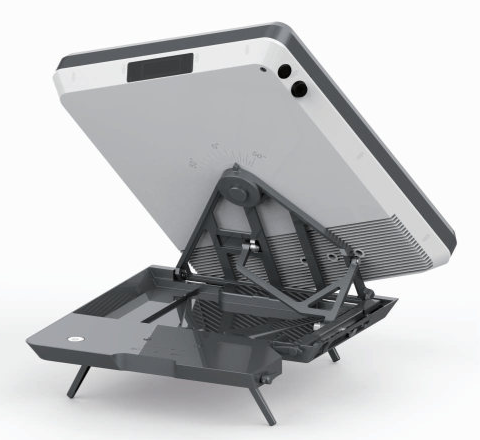
Flat Portable Satellite Terminal 0.35m Aperture Manual Portable Terminal
China Starwin Science & Technology Co., Ltd.