Wedoany.com Report on Mar 6th, In the field of mechanical design, angular contact ball bearings can simultaneously withstand axial and radial loads, and are therefore often regarded as a universal solution. However, this perspective may lead to improper selection, especially in applications with strict requirements for load-bearing performance.
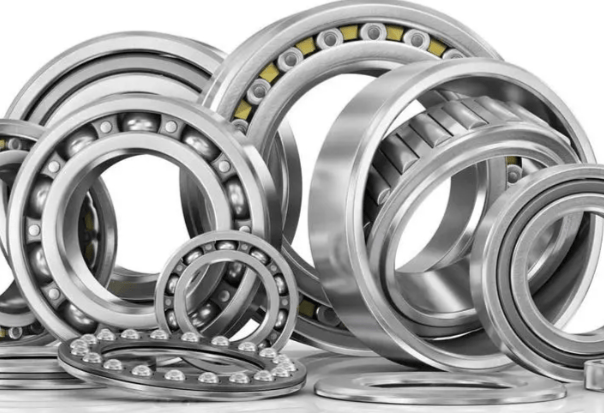
The radial load capacity of angular contact ball bearings is generally not as good as that of deep groove ball bearings. When an application is dominated by radial load and accompanied by slight axial force, deep groove ball bearings are not only more cost-effective but also offer superior performance. For example, in the motor industry, mainstream configurations often use deep groove ball bearings or cylindrical roller bearings. Deep groove ball bearings can stably withstand axial forces of about 25% of their radial dynamic load rating, meeting the needs of most small and medium-sized motors.
To avoid a single selection method, it is recommended to adopt the following logical judgment based on the load situation: when the axial load is small, prioritize deep groove ball bearings to balance economy and reliability; when the radial load increases significantly, switch to cylindrical roller bearings to improve radial support stiffness; when the axial force exceeds the capacity of deep groove ball bearings, then consider introducing angular contact ball bearings; under extreme axial conditions, it is necessary to pair with thrust bearings or select specialized structures such as spherical roller thrust bearings.
Accurate bearing selection not only helps extend system service life but also effectively controls costs. For transmission system and motor design engineers, understanding the actual capability limits of different bearing types is more important than relying on common options.