US FCC Proposes Vote to Accelerate Phase-Out of Copper Networks, Promoting Fiber Upgrades
Wedoany.com Report on Mar 10th, The U.S. Federal Communications Commission (FCC) announced on March 10 local time that it plans to hold an open vote on March 26 regarding a new rule aimed at accelerating the retirement of traditional copper wire networks and promoting the deployment of high-speed networks. This move is seen as a key turning point in the upgrade process of U.S. communications infrastructure.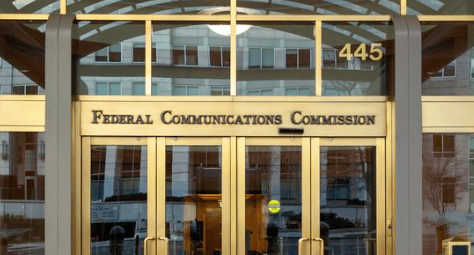
The FCC stated that the core content of this vote is to establish new rules allowing telecommunications service providers to gradually phase out outdated copper wire networks under specific conditions. According to the agency's estimates, this move is expected to free up tens of billions of dollars annually for telecom operators, enabling them to reinvest in the construction and upgrade of modern communication facilities. Although the FCC's statement did not explicitly specify the type of replacement network, the industry widely believes that fiber optic networks, with their high bandwidth and low latency physical characteristics, will become the primary replacement direction.
FCC Chairman Brendan Carr explained the significance of the decision in a statement: "This decision by the FCC will unleash tens of billions of dollars in private capital, allowing Americans across the country to upgrade from old, slow copper to modern, high-speed networks. Outdated regulations have long forced service providers to keep consumers trapped on outdated networks. With this decision, we will cut this red tape. This FCC vote will ultimately benefit those Americans with next-generation infrastructure upgrades." He emphasized that removing regulatory constraints is key to stimulating market investment and driving technological iteration.
While promoting network upgrades, the FCC also emphasized the safety bottom line of regulatory adjustments. The agency stated that while updating the regulatory framework to meet market demands, it will retain necessary safeguards, particularly ensuring that the continuity of public safety services and 911 emergency calls is not affected by network transitions.
This plan has received positive responses from telecommunications industry organizations. Jonathan Spalter, President and CEO of USTelecom, issued a statement expressing support: "Kudos to the FCC — on the 30th anniversary of the Telecommunications Act, the Commission has taken a key step to free consumers from legacy copper networks and the rules that govern them. Through this draft order, the FCC is working to update rules to reflect reality and accelerate America's transition from outdated copper infrastructure to the modern, high-speed networks consumers consistently choose and rely on."
In fact, several major U.S. telecommunications companies, including AT&T, have previously actively promoted the transition from copper networks to fiber deployment to enhance network speed and reliability and meet growing data traffic demands. The FCC's rule adjustment this time is expected to clear obstacles for this industry trend at the policy level, accelerating the nationwide popularization of high-speed broadband networks.
Related Products





Mine Explosion-proof and Intrinsically Safe Industrial Ethernet Ring Network (10 Gigabit/Gigabit)
Chongqing Mas Sci&Tech Co., Ltd.
Comprehensive Mining Automation Control System
Beijing Tianma Intelligent Control Technology Co., Ltd.
MUX Series Communication Interface Device for Security and Stability Control System
Nanjing NR Electric Co., Ltd.
GYTA Type Non-Self-Supporting Aerial/Duct Optical Cable
TONGDING INTERCONNECTION INFORMATION CO., LTD.
G.652.D Wavelength-extended Non-dispersion Shifted Single-mode Optical Fiber
HONGAN GROUP CO., LTD.

Multi-function Marine Monitoring Low-altitude Detection Radar Sea-air Boundary Ocean Dynamic Environment Measurement
Chengdu Dixin Technology Co., Ltd.