NVIDIA Releases Nemotron 3 Super Open-Source Model: Powered by MoE Architecture, Boosts Enterprise AI Inference Efficiency Fivefold
Wedoany.com Report, On March 11 local time, NVIDIA announced the launch of the new-generation open-source large language model Nemotron 3 Super. This model is specifically designed for enterprise-level multi-agent systems and adopts a novel Mixture of Experts (MoE) architecture, achieving a breakthrough in inference throughput—more than five times that of the previous generation model.
The release of Nemotron 3 Super marks a further enrichment of NVIDIA's product line in the field of large models. Unlike models aimed at general conversational scenarios, the Nemotron series has focused on enterprise-level application scenarios from its inception. This newly launched 3 Super version is specifically optimized for key enterprise demands such as multi-agent collaboration and high-concurrency inference. Its core architecture has been upgraded to the Mixture of Experts (MoE) mode. This technical approach decomposes the model into multiple "expert" sub-modules, activating only the parts relevant to the current task during inference, thereby significantly improving processing efficiency without substantially increasing computational resources.
According to NVIDIA, the optimization based on the MoE architecture has increased the inference throughput of Nemotron 3 Super to more than five times that of the previous generation product. This means that when deploying large-scale AI applications, enterprises can handle more concurrent requests under the same hardware conditions or significantly reduce response latency. For complex business scenarios that require running dozens or even hundreds of AI agents simultaneously, this performance improvement holds substantial commercial value.
As an open-source model, the release of Nemotron 3 Super also provides enterprise customers with greater customization flexibility. Enterprises can perform fine-tuning and private deployment on its foundation, meeting both data security and compliance requirements while leveraging NVIDIA's ongoing optimization of underlying computing power. This release continues NVIDIA's strategic approach of a full-stack layout of "hardware + software + models" in the AI field, further consolidating its niche in the enterprise AI market.
Related Products


GYTA Type Non-Self-Supporting Aerial/Duct Optical Cable
TONGDING INTERCONNECTION INFORMATION CO., LTD.
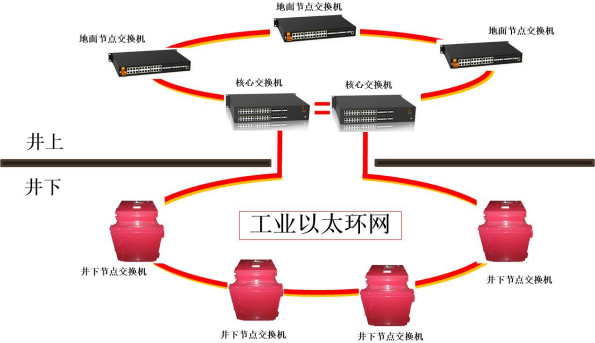
Mine Explosion-proof and Intrinsically Safe Industrial Ethernet Ring Network (10 Gigabit/Gigabit)
Chongqing Mas Sci&Tech Co., Ltd.
Multi-function Marine Monitoring Low-altitude Detection Radar Sea-air Boundary Ocean Dynamic Environment Measurement
Chengdu Dixin Technology Co., Ltd.
G.652.D Wavelength-extended Non-dispersion Shifted Single-mode Optical Fiber
HONGAN GROUP CO., LTD.


MUX Series Communication Interface Device for Security and Stability Control System
Nanjing NR Electric Co., Ltd.
Automatic Aiming Laser Remote Obstacle Removal Robot
Pinggao Group Weihai High-Voltage Apparatus Co., Ltd.

20 Inch 1600*900 Full HD 60Hz TFT LED Monitor with VGA and DP Interfaces for Desktop Computers-Business Use
Guangzhou Zanying Optoelectronics Technology Co., Ltd.